
Reading Rivers
Learning to See What the Teign Is Really Doing
Most people stand on a bridge over the Teign, glance down and think: “Water. Going that way.”
Technically correct, but not very satisfying.
Spend a bit more time with the river and you start to realise it’s doing far more than just heading towards Teignmouth. It’s sorting gravels, feeding trout, hiding smolts, cooling itself down, eroding here, rebuilding there, and quietly telling you exactly how it’s coping with everything we continue to throw at it.
This is an article about learning to read all of that with your eyes, a bit of curiosity, and the occasional willingness to get your socks wet.
Why Bother Learning a River’s Language?
The Teign catchment isn’t a lazy lowland system that flows through pasture and nudges its way to the sea. It’s a moorland-born river with big ideas.
Headwaters run fast off granite, tributaries rise and fall more quickly than your phone signal disappears on the B3212, and in summer, some stretches can go from lively to non-existent in a matter of hours. For salmon, sea trout and wild brown trout, this isn’t scenery - it’s survival.
Suddenly, the river starts making sense: trout aren’t just hanging out in picturesque spots, they’re sitting where things works out for them. Salmon aren’t holding at random; they’re resting below obstacles and waiting for the right flow. Redds (the nests where Salmon deposit their eggs) don’t appear just where the gravels look right, but where depth, oxygen and flow are just right.
And once you understand it, you’re halfway to knowing where the problems, and in turn, the opportunities really lie.
From the Moor to the Sea - The Teign in 3 Acts…
Think of the Teign as a story told in three main acts…
Act I – The Granite High Moor
Up on the moor – the North Teign, like in all the skinny, bouldery Dartmoor headwaters - the rivers are small and with short tempers. Granite, as a substrate for any river, doesn’t give you much: it’s quite selfish, keeping nutrients to itself, offering zero water retention, and sending water downhill as quickly as gravity allows.
Here, the river is:
clear
low in nutrients
high in gradient and very exposed to the elements
The trout up here, although plentiful, are often smaller, quick and extremely uninterested in how you’re feeling. Habitat is a repeating pattern of plunge pools, pocket water behind boulders and shallow runs that look like they could disappear if someone turned the tap off upstream!
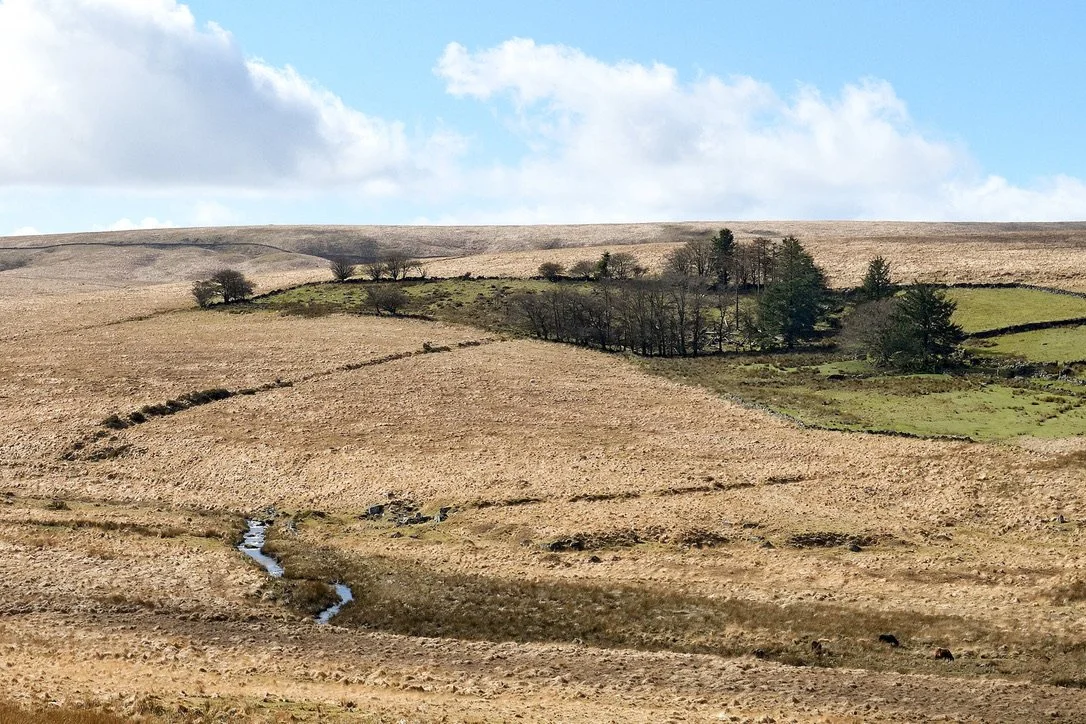
The North Teign flowing past the now-ruined Teignhead Farm
Act II – Woods and the Gorge
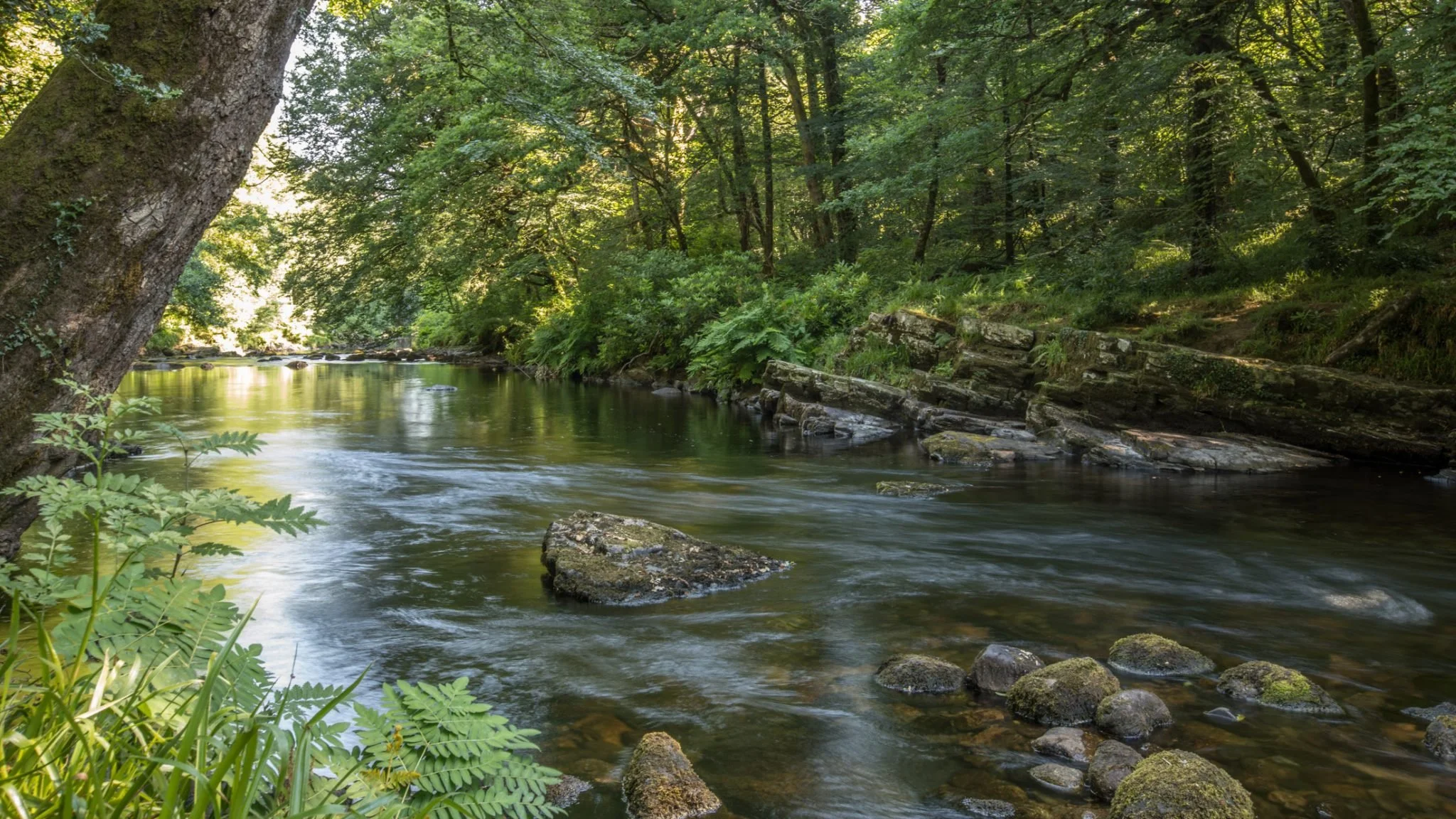
Drop down into the wooded middle reaches below Gidleigh, Chagford and on into the Fingle Gorge, and the mood shifts. Now you’ve got:
trees casting dappled shade and depositing leaf litter
felled trees creating flow variation through woody debris
deeper pools forming below rocky stepped sections
glides and runs that actually give you, and the wildlife, time to think
This is where the salmon and sea trout tend to pause on their journeys, where juvenile fish find refuge in roots and woody cover, and where you begin to see the catchment’s “engine room” really kicking into action to support a whole host of wildlife.
Act III – The Lower Valley and Estuary
Further downriver, gradients soften, fields appear, softer ground results in banks becoming more ‘erodible’ and the river starts interacting with everything humans have been up to for the last few hundred years. At this point of the journey, this is typically industry and larger towns. Then, finally, the estuary, where fresh water meets the tide and an altogether different food chain.
All the way from the very top of the moor to the harbour wall at Teignmouth, the river is continually negotiating geology, climate, land use, human interaction and tidal flow. Learning and reading the river means you can instantly tell which part of that negotiation you’re looking at and how it functions.

Junction Pool - The River Bovey going left & the River Teign going right…
The River’s Grammar - Riffles, Runs, Glides & Pools…
If the Teign is speaking a language, then riffles, runs, glides and pools are its basic grammar used to string sentences together.
A riffle is shallow, broken water over gravels. It’s the river’s oxygen factory and conveyor belt for invertebrates (Think Riverfly!). Fry and parr love it because food arrives without much travel and bigger predators tend to ignore these spots.
A run is smoother than a riffle, but still good flowing ‘knee-deep-ish’ water with a good pace in normal flow. This is a young wild trout’s version of a street front café… Food passes by, the current isn’t exhausting, and there are usually rocks or woody bits to tuck behind and hide out.
A glide is that smooth, flat piece where the surface becomes a mirror and fish behave like they’ve read all thats been written on how to make anglers feel inadequate! Great for selective dry fly fishing, but terrible for clumsy wading.
A pool is deeper, often formed below a natural rock step or above a human-made weir - often with a cushion of slower water and some structure: boulders, tree roots, undercuts. Adults and good fish tend to rest here, especially the migratory fish during their epic journey upstream, but so do the young smolts descending down the river on their journey out to sea. As we’ve already learnt, these holding pools are perfect living buffets for predators. Survival is an ongoing cost-benefit calculation!
On the Teign, or any river, these habitat sections repeat and remix constantly in any order. One minute you’re looking at a textbook riffle–run–pool, the next you’re standing in something that looks like someone dumped a trailer of car-sized boulders into a stairwell!
Once you know what each bit does, you can start to predict where fish - and problems - are likely to appear…
The River Buffet & Why Bubble Lines Matter
Trout on the Teign are essentially CEOs of their own high-risk, low-margin businesses. They can’t afford to sprint after every potential snack. Instead, they sit still and let the river bring the food to them.
Next time you’re standing looking at a good stretch of water, watch a riffle feeding into a run, and you’ll often see a line of bubbles weaving downstream. That’s the food lane – not just bubbles, but bits of leaf, insects, invertebrates and generally anything small and edible that’s been dislodged upstream and channelled together in underwater turbulence that creates a great big tube of food.
Any fish holding just off that line is playing the margins and biding its time: one tail-flick into the flow of food, grab something, and then one tail-flick back. Minimal energy out, Maximum energy in - a bit like my own tactics in most pubs!
Once you see those lanes and seams of current, you suddenly understand why fish choose to occupy strange spots. A perfect balance of evolution & economics.
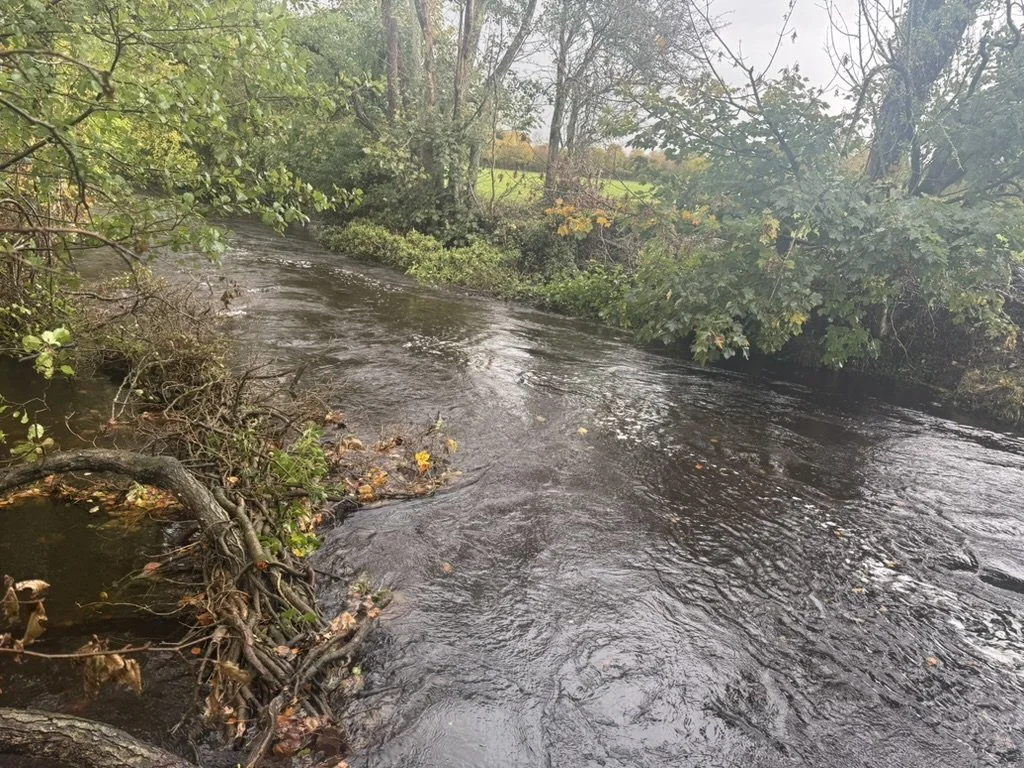
An exaggerated bubble lined formed by pinching the flow using woody debris…
Reading Water Without Looking Like You’re Overthinking It…
Here’s a simple exercise next time you’re wandering by the Teign:
Pick a short stretch – ten metres of river is enough.
Then, Think Fish - Ask yourself: “If I were a trout, where would I be today?”
Now work out why
Is there woody debris offering cover from predators above? Is there a crease where fast and slower waters meet, forming an easy feeding station? Is there a root ball or log jam turning one long, uniform glide into a series of smaller fishy lies?
You don’t need waders or a fly rod for this. In fact, you’ll learn faster without them because you’re not distracted by thinking about fishing, You’re just reading and ‘Thinking Fish!’
And once you’ve got your eye in, you start to see other things too:
which gravels are suitable and where a redd might be formed
where smolts might congregate and bottle-neck on their way downstream to the sea
where a single fallen tree has created new feeding lies and a refuge pool behind it
where a rootless bare bank is quietly eroding and silting up what could be tomorrow’s spawning gravels
Opening this approach is kind of like switching from black & white to 4k colour! Reading the river means noticing a larger seasonal script, not just today’s weather.
What Reading Rivers Tells Us About Recovery
Once you start seeing all this, our work - and that of our valued partners – begins to make a lot more sense.
You notice where woody debris has turned a previously featureless run into a sequence of holding lies, refuge spots and improved invertebrate habitat. You see tree planting not as decoration, but as future shade for temperature stressed juveniles. You see tree felling, not as destruction, but as long term development. You recognise a fenced-off bank or a moved footpath as a deliberate attempt to protect future spawning gravels from human pressures.
And you’ll also spot where things are still out of balance and not quite right…
pools acting as bottlenecks below structures
over-exposed sections with no in-river debris that juvenile fish can’t occupy safely
eroding banks that are donating more soil and run off than that part of the system can handle
long, uniform stretches that offer very little feature for salmonids at any life stage
You don’t have to diagnose everything. Just noticing it is a powerful start. Remember, Awareness comes first, and then Action can follow naturally.
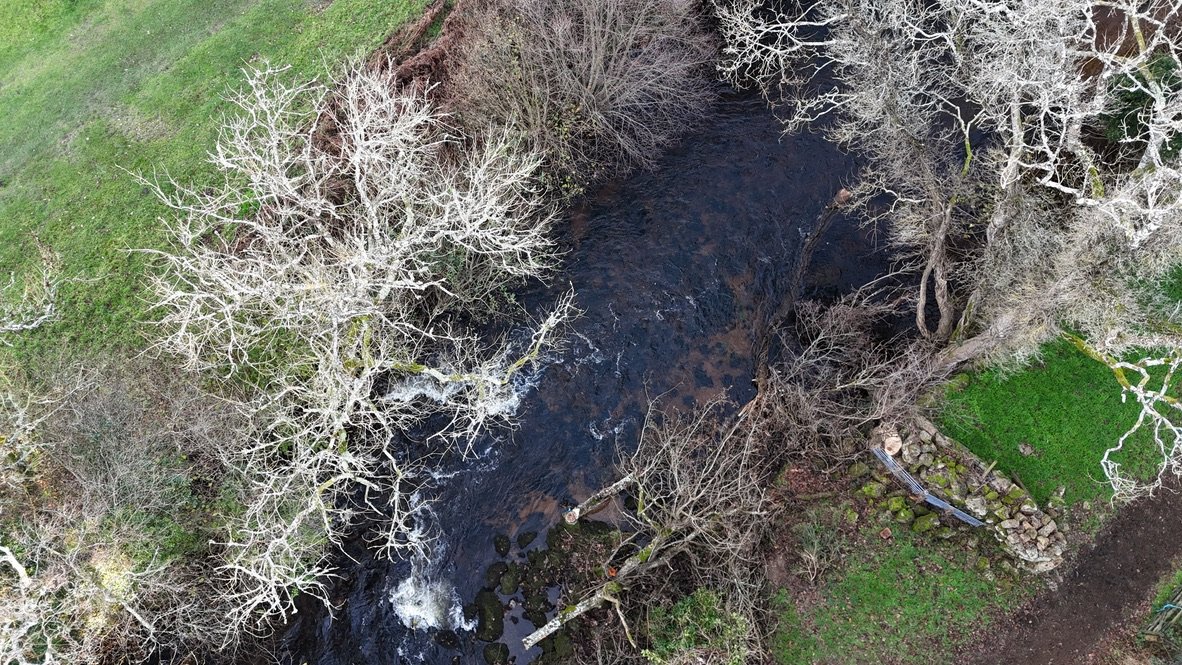
Thanks to the mighty Kier Collings for the use of his extra long selfie stick!
A Lens You Get to Keep
The nicest thing about learning to read a river is that nobody can take it away from you once the switch has been flicked. Once you have the lens, every walk along a River feels a little richer. You begin to read the stories in the water: where a tree fell last winter, where a gravel bar is slowly migrating, where a fish almost certainly lives year after year, even if you never see it.
For us at TACA, people with that lens are invaluable. They become the eyes and ears of the catchment: spotting redds, noticing barriers, reporting predators, joining survey days, or simply starting conversations in local pubs about what they’ve seen that day.
So next time you’re standing on a bridge, by all means, enjoy the view below. But maybe ask yourself, “What is this bit of river actually doing?” The answers, once you learn to read them, are far more interesting than just saying, “water, going that way.”