
The River Doesn’t Lie
At this time of year, while most sensible people are probably enjoying the arrival of spring with dry shoes and more sensible hobbies, we find ourselves back out on the river retrieving temperature loggers from across the catchment.
Cold hands, the occasional overtopped wellie and conversations with sheep! You know, usual May behaviour!
For TACA, this marks the quiet end of another monitoring year, with our loggers recording river temperature every two hours, every day, from March through to March again. And while these little bits of kit may not look particularly exciting tucked away and tied to bits of riverbank, what they tell us is incredibly important. Because the river doesn’t lie.
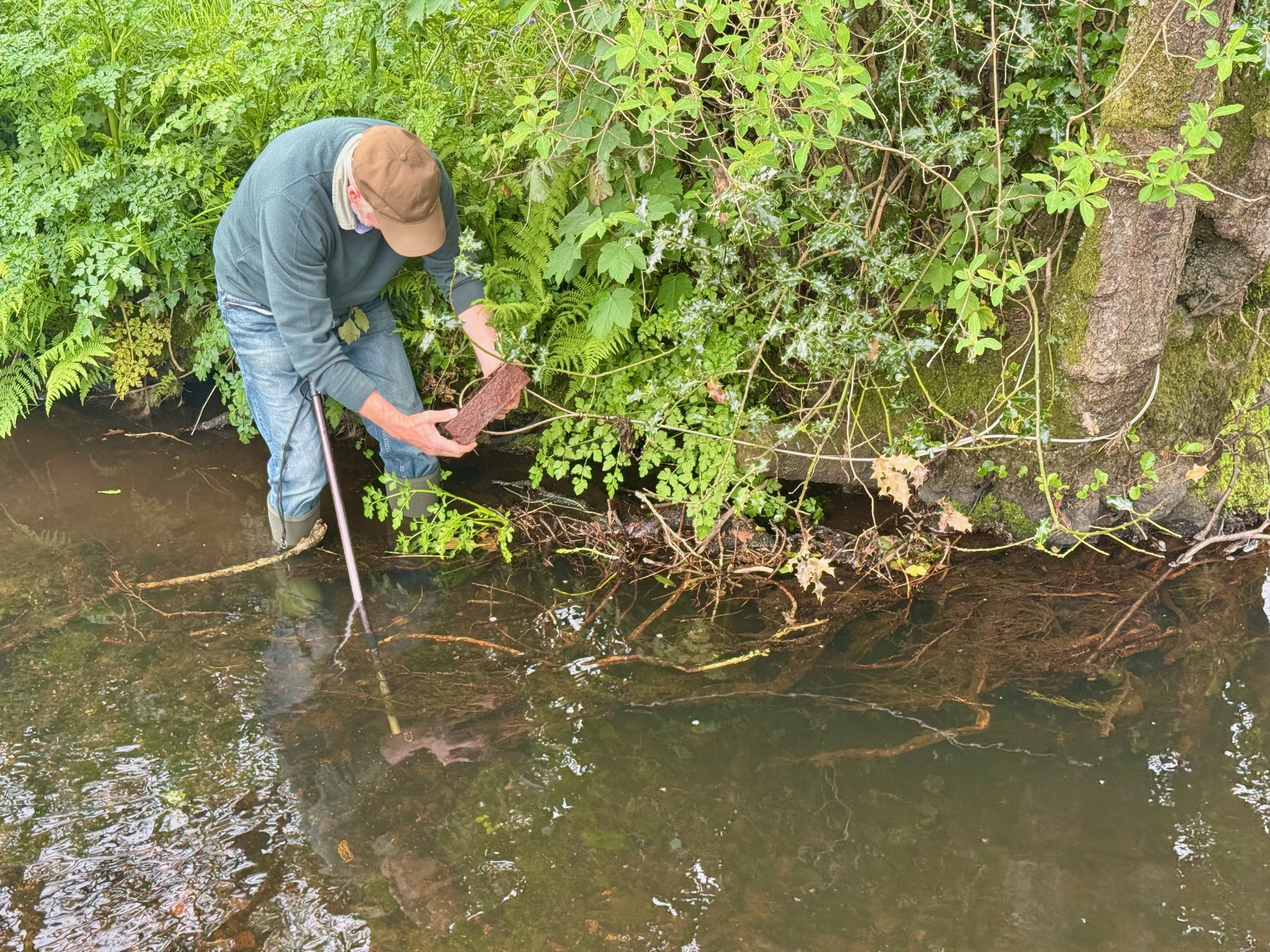
Good old Bill Blake doing things properly…
Why temperature matters
When people think about river health, they often picture pollution incidents, flood damage or drought, and yes, these are all important, but temperature quietly sits underneath almost everything. For our returning Atlantic salmon in particular, it matters hugely.
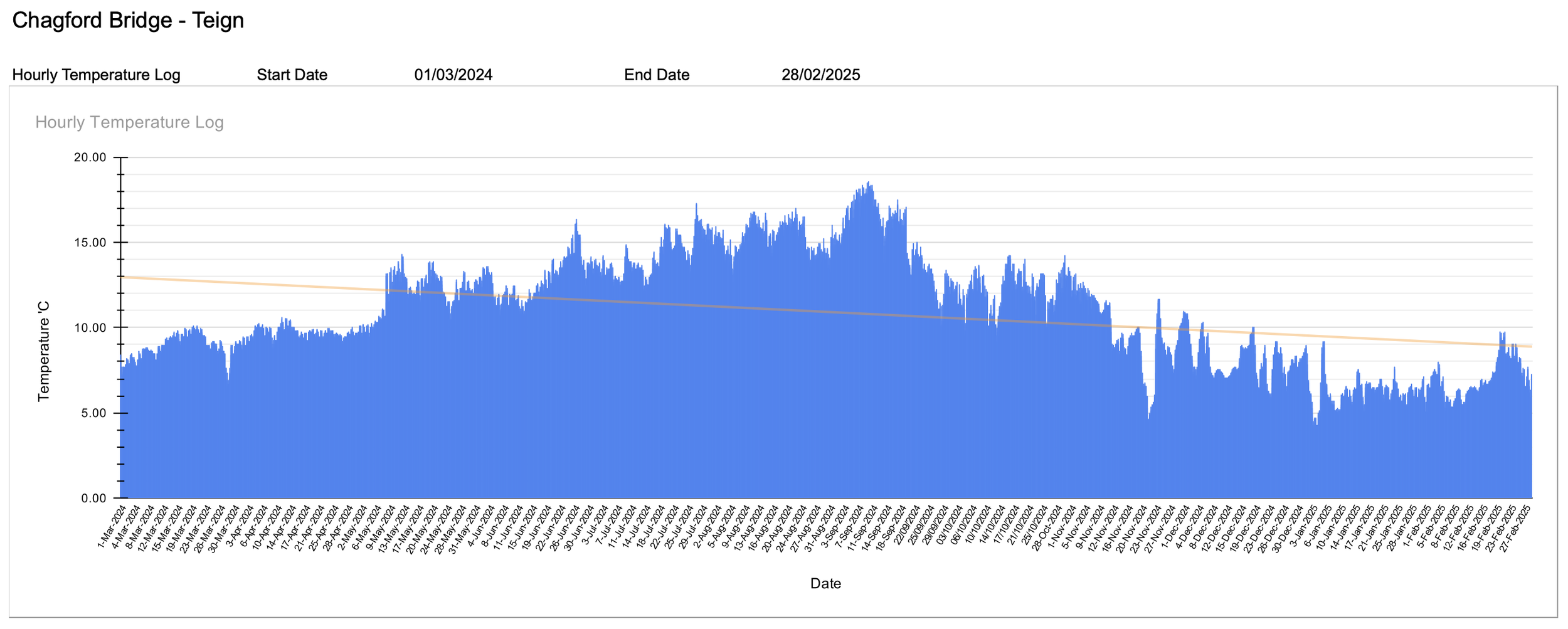
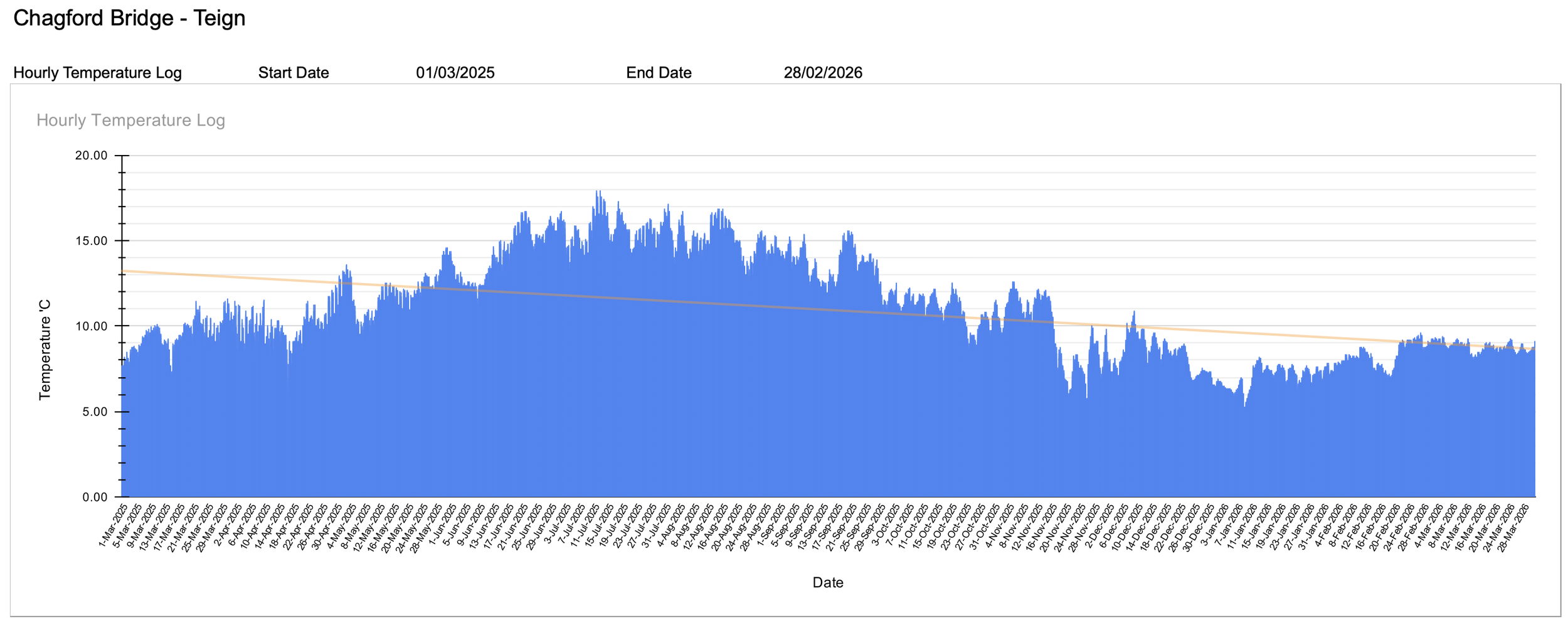
One of the key figures we keep a very close eye on is 12°C. That’s because once temperatures begin consistently pushing above this point during salmon egg development, mortality rates and deformities begin to increase significantly. That makes the colder months really important.
Thankfully, for now at least, Dartmoor still gives us a helping hand here. Altitude matters. Cold groundwater matters. And despite everything our rivers are facing, we continue to see the period from salmon entering the river through to roughly April staying relatively cool. The data from recent years continues to show winter temperatures generally nudging around the 10°C mark rather than pushing far beyond it. And for salmon eggs buried down in those spawning gravels, that’s a good news story worth sharing.
Me doing things ‘not so properly!’ - All in the name of science…
Where there’s cold, there’s also hot!
Because while winter temperatures are still holding relatively steady… summer is becoming a very different conversation. Only recently, temperatures exceeding 23°C were recorded on parts of the high moor.
Now that should genuinely make people stop and think for a moment. Twenty-three degrees. On Dartmoor!
For cold-water fish species like salmon and trout, temperatures like that are not just uncomfortable; they become physiologically stressful. Dissolved oxygen levels in the water plummet. Fish become lethargic. Feeding changes. Disease risk rises. And during prolonged warm spells, parts of the river can simply become unsuitable habitat altogether.
Suddenly, all those conversations about shade, woodland and river resilience stop being theoretical. They become very real!
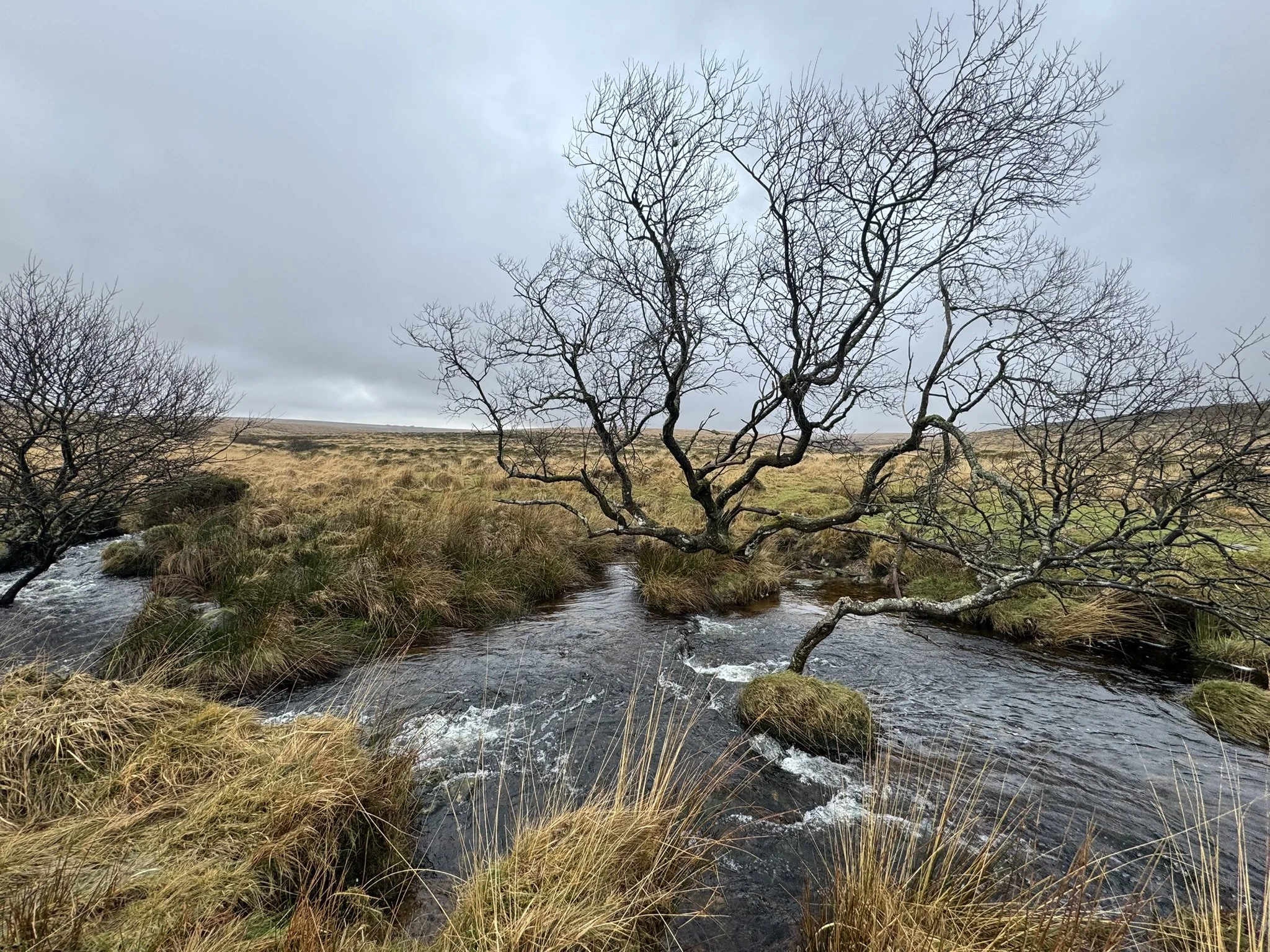
Small pockets of tree cover still exist on the highmoor - We just need a bit more of it to make a real difference…
Why trees matter more than ever
This is where riparian woodland becomes such an important part of the conversation. Not solid tunnels of dark shade. Not a scorched-earth baron landscape either. Balance. Proper dappled shade.
Broadleaf trees positioned in the right places can significantly reduce solar gain, helping keep rivers cooler during the hottest periods. And increasingly, that cooling effect may become one of the most valuable forms of habitat protection we can give the rivers on Dartmoor. It’s funny: when talking with anglers, they notice how much cooler the water is in the Fingle Gorge than on the open moorland when dipped with a thermometer. The simple reason for this is the tree canopy and cover that is afforded lower in the river.
It’s also why future thinking matters now. Because the trees capable of helping rivers in 2050 ideally needed planting yesterday.
The bigger picture
What’s encouraging is that when you lay the yearly data side by side, trends begin to emerge. See the snippets from 2023, 2024 and 2025 from our logger near Chagford Bridge on the upper river.
Patterns. Warm spells. Seasonal shifts. The river slowly reveals how it behaves and shows, despite what the environment throws at it, just how resilient and consistent it is year after year.
And this is exactly why long-term monitoring matters. Not because one hot day tells you everything, but because years of information allow you to understand where resilience still exists… and where it may need strengthening.
That understanding feeds directly into everything else we do and how we continue building a catchment capable of flexing with the demands of the future.
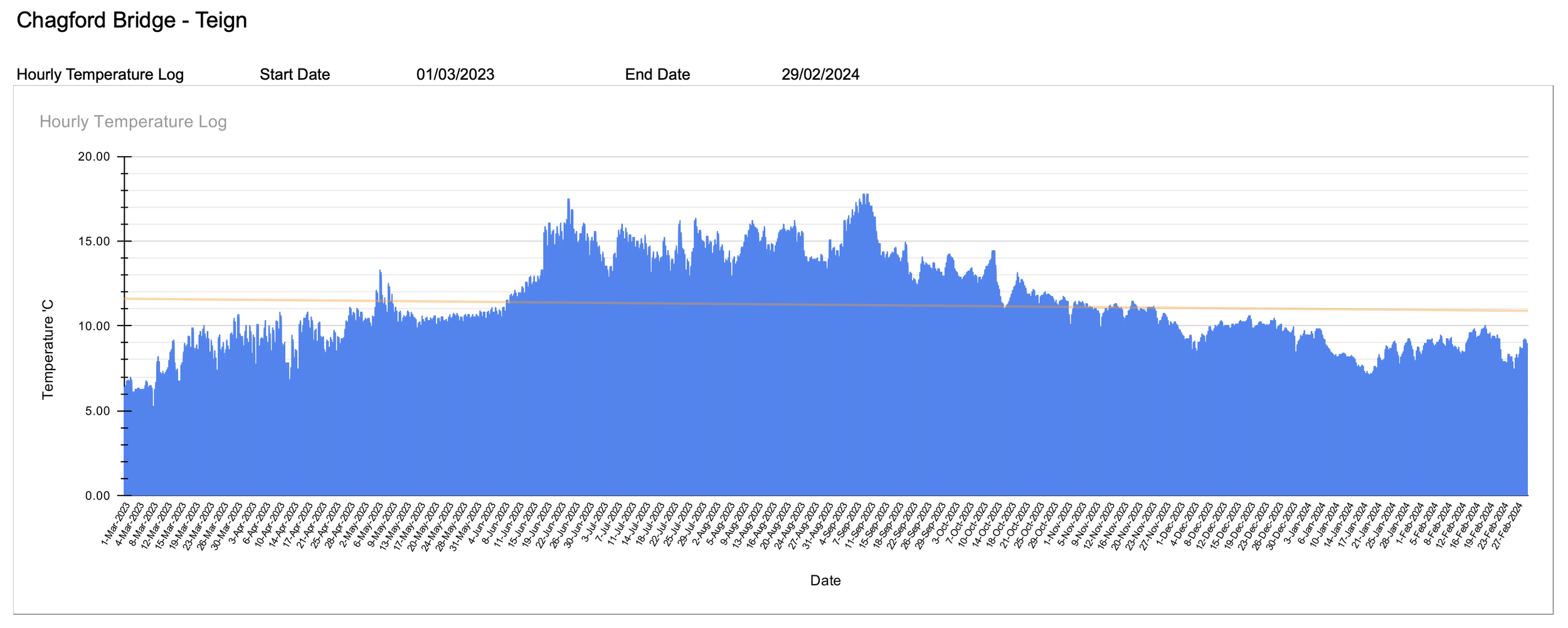
2023/24
2024/25
2025/26 - The latest data lift just completed.
Our Quiet work
A lot of river conservation probably looks quite uneventful from the outside. A couple of volunteers walking around with backpacks and wondering what’s for lunch! Pulling odd-looking devices from the river and waving their phones in the air, looking for a bit of signal.
But this is the work. Quietly building datasets. Quietly understanding our rivers better. Quietly planning what comes next. Because rivers tend to change slowly… until suddenly they don’t.
And the more we understand them now, the better chance we have of helping them cope with what comes next.
Even if it does occasionally involve explaining to passing dog walkers why you’re waist deep in a river, talking lovingly to a temperature logger just to get it to switch back on!