
Completing work on the Heltor Brook
There’s something satisfying about going back to a place to finish what we started. Not to admire it. Not to tick a box. But to keep shaping it.
Recently, alongside our partners at the National Trust, TACA volunteers returned to the Heltor Brook to continue the steady, careful work of improving habitat and building resilience into this small tributary in the Teign catchment.
If you haven’t yet seen it, we’ve captured the day in a short film — Return to the Heltor Brook — which you can watch below. It gives a real sense of what was achieved and, more importantly, how and why it was achieved.
Small stream. Big influence.
Heltor Brook, like so many of the small Dartmoor tributaries, may not shout for attention, but it plays an important role in the health of the wider catchment. Last week, in Building a Catchment for 2050, we talked about slowing water down - about smoothing out spates rather than trying to stop them. About creating a landscape that absorbs stress instead of amplifying it. These simple leaky dam works are what that looks like in practice.
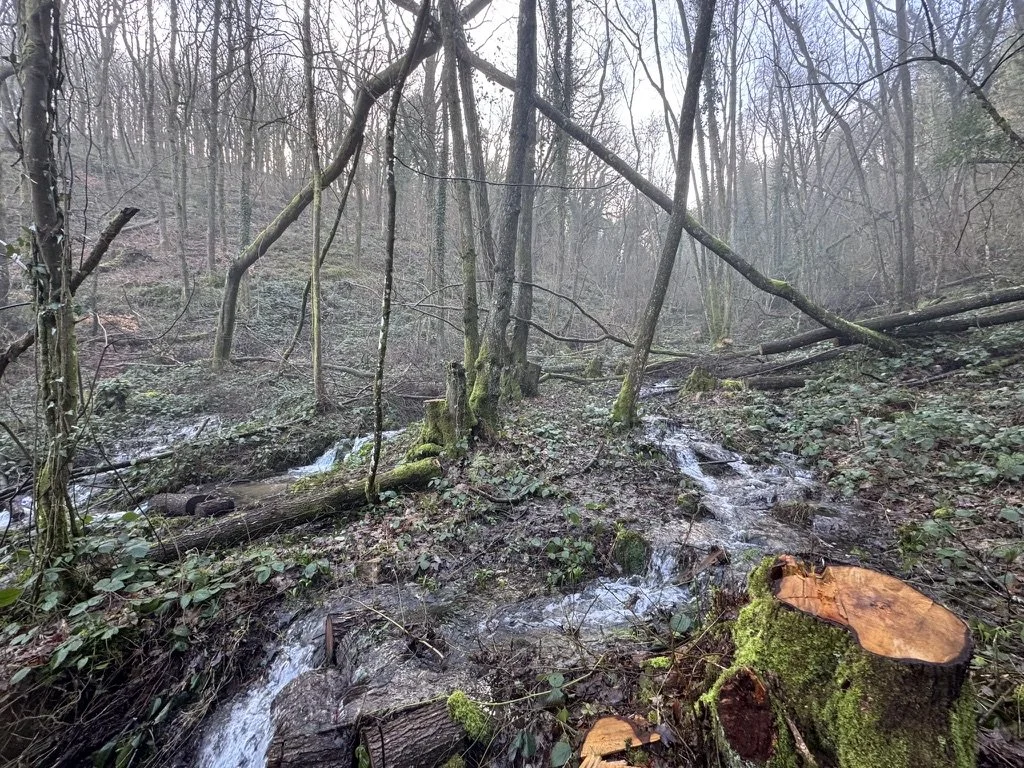
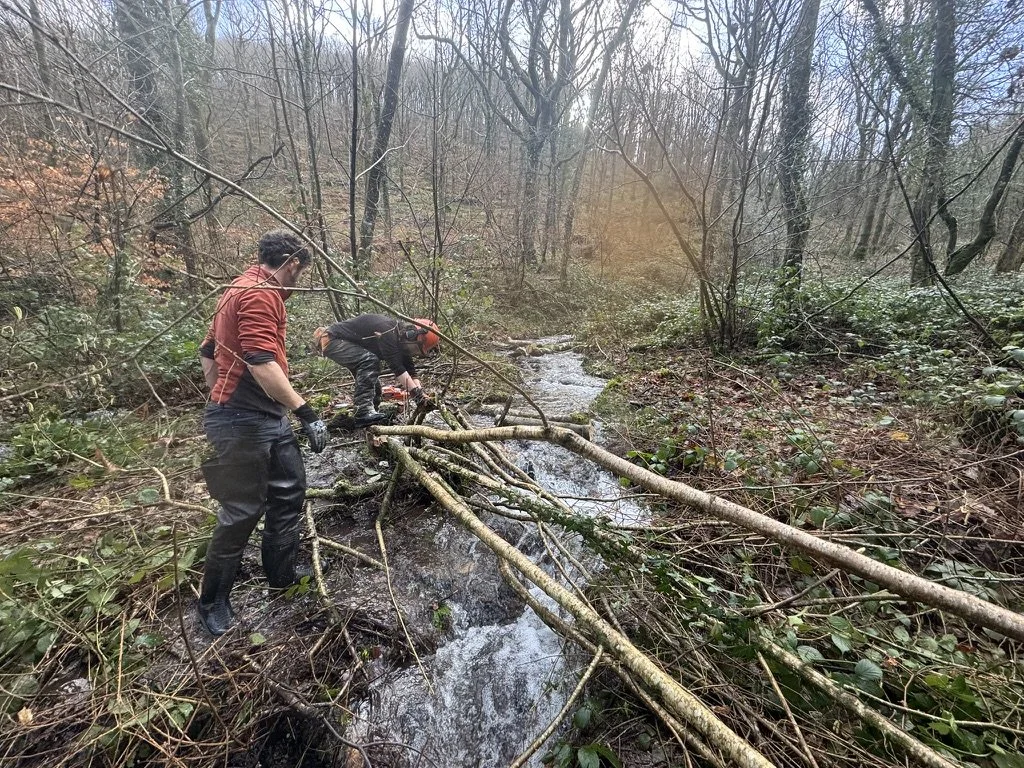
Our work focused on introducing natural structure into the channel - carefully placed woody material and habitat features that encourage flow diversity, create pockets of slower water, and allow the brook to behave more like a living system and less like a drain funneling rainfall straight into the main river.
Throughout the day we saw a single incised tributary, barely a metre wide in places, encouraged to spill out and reconnect with its margins - eventually rewetting an area stretching to roughly 15 metres across. Watching that happen was a quiet reminder of how responsive these systems are when given the opportunity… and that’s not just water spreading sideways - That’s floodplain reconnecting. That’s moisture returning to soils that haven’t felt it in a while. That’s the beginning of change at ground level.
Building resilience
All of these upper tributaries matter. They are where water first gathers pace. And if you can nudge behaviour here - even slightly - the benefits ripple downstream.
Slowing flow here means:
cleaner gravels - Less silt deposition. Silt is captured in the newly created pools
less aggressive scouring - Channels resist the temptation of becoming overly incised.
improved habitat complexity & diversity
and a system that feels just a little less brittle during heavy rain
Again, with the recent weather, it’s clear there is little we can do to stop the heavy downpours. It’s more about rounding off their edges.
And when a one metre channel can rewet fifteen metres of woodland floor, you start to see what “holding water back” really means in physical terms.
I genuinely can’t wait to visit the site again in spring and summer to see what that extra moisture does for the forest floor - the flora that responds first, the invertebrates that follow, and the quiet shifts that will undoubtedly follow.
Volunteers - the quiet engine
None of this happens without people willing to turn up, lift, carry, think, adjust, and occasionally stand back and say, “That feels about right - I like that!”
A huge thank you to every volunteer who gave their time and energy, not only on this day, but on every day we’ve organised. Whether you’ve been involved for years or this was your first habitat session, your contribution matters.
These autumn and winter workdays - carefully planned outside of bird nesting season - are how resilience is built in steady, repeated actions. It’s been brilliant to see new faces working alongside familiar ones. That blend of experience and fresh energy is exactly what keeps this work moving forward. And I like to think that anyone who’s got involved takes away new knowledge and a fresh perspective on seeing firsthand how parts of the catchment function as a whole.
Partnership in practice
Working alongside the National Trust continues to be a genuine pleasure. There’s a shared understanding that good river restoration is about planning, patience and process, not quick fixes. We’d like to think this recent session on Heltor Brook is only the beginning of an ongoing programme of habitat works we can deliver each autumn and winter, carefully building resilience year on year.
And we’re already looking ahead - working with the National Trust to develop a suitable scope for other stretches of river in the not-too-distant future. Because the vision of a stronger functioning catchment isn’t built on theory. It’s built here. And now, piece by piece. It’s built in places like the Heltor Brook - where a one-metre channel can be encouraged to breathe again and quietly rewet fifteen metres of woodland floor. It’s built in small tributaries that most people walk past without noticing. It’s built by hands willing to lift timber, ask questions, and come back again just to make things better.
The river doesn’t change because of a single grand gesture. It changes because enough people, together, decide to nudge it in the right direction - consistently. To me, that’s what makes the difference.
And if this sort of approach resonates with you, if the idea of helping a small stream make a big impact feels worthwhile, then we’d love you to get involved. Every pair of hands, every curious mind, every person willing to show up adds to something far bigger than the task in front of them.
Because holding water back isn’t just about hydrology. It’s about building a better catchment - together.