
Building a Catchment for 2050
The seed for this article wasn’t planted beside the river. It was planted in a room, listening to Sam Manning from the Woodland Trust, talking about trees, time, and how landscapes remember what they used to be - even when we’ve spent a few centuries, and no small amount of effort, convincing them otherwise.
Some of it echoed the work I’ve already been quietly obsessed with: the Woodland Trust’s long-term thinking and approach at Halls Cleave in the Fingle Gorge, and what happens when you stop treating woodland as a scenic backdrop that rivers pass through, and start treating it as a functioning system in its own right.
So I did what most of us do after a good talk - I left inspired. Reflected on my notes afterwards (which made no sense at all). Went away… and pulled on the threads!
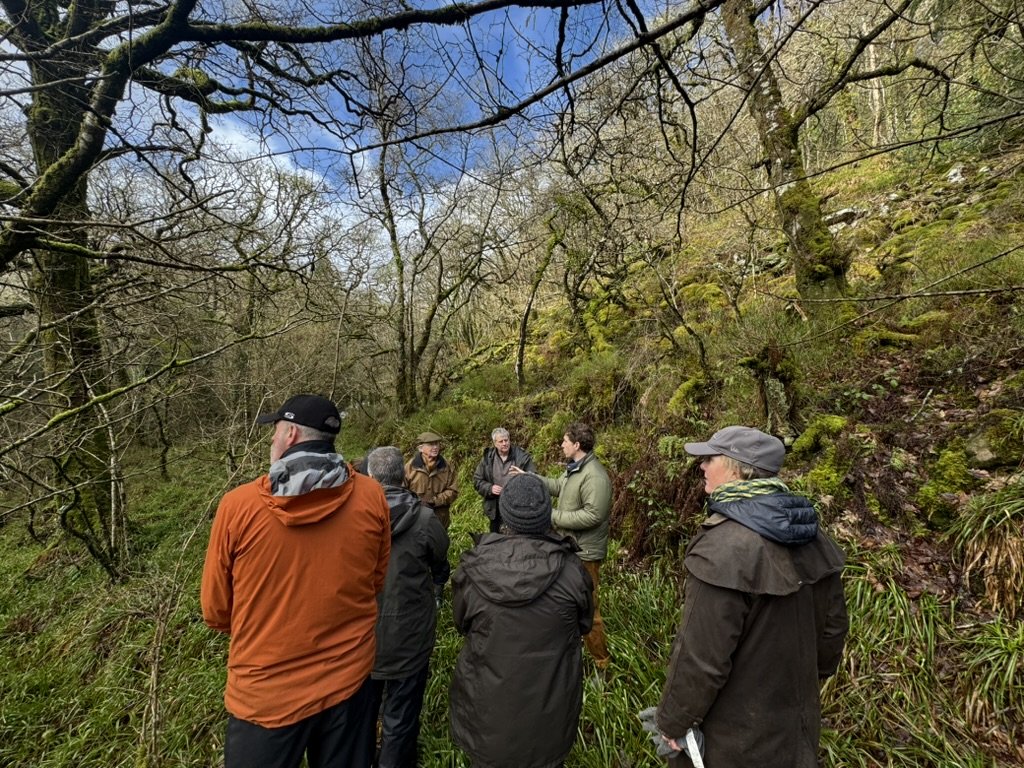
Sam Manning explaining the concept in some Dartmoor Temperate rainforest…
Dartmoor didn’t always look like this
And that’s not an accusation, so let’s get this out of the way early. This is not a “bring back the wildwood and sack all the farmers” piece. Those of you who know me will know that my respect for the farming community runs deep - after all, it helped shape who I am. Dartmoor looks the way it does now because of centuries of use, much of it deliberate. Moorland was drained. River valleys were opened up to extract tin. Land was made productive for grazing, and Rivers were encouraged to move water off the land quickly.
That kind of backstory and history matters. Hell, food and livelihoods matter. But so does a simple truth: A landscape modified to shed water fast behaves very differently in a warming, wetter and more chaotic climate.
So when we talk about Building a Catchment for 2050, we’re not talking about undoing Dartmoor - God no. We’re talking about adjusting the dials a bit for a better reception.
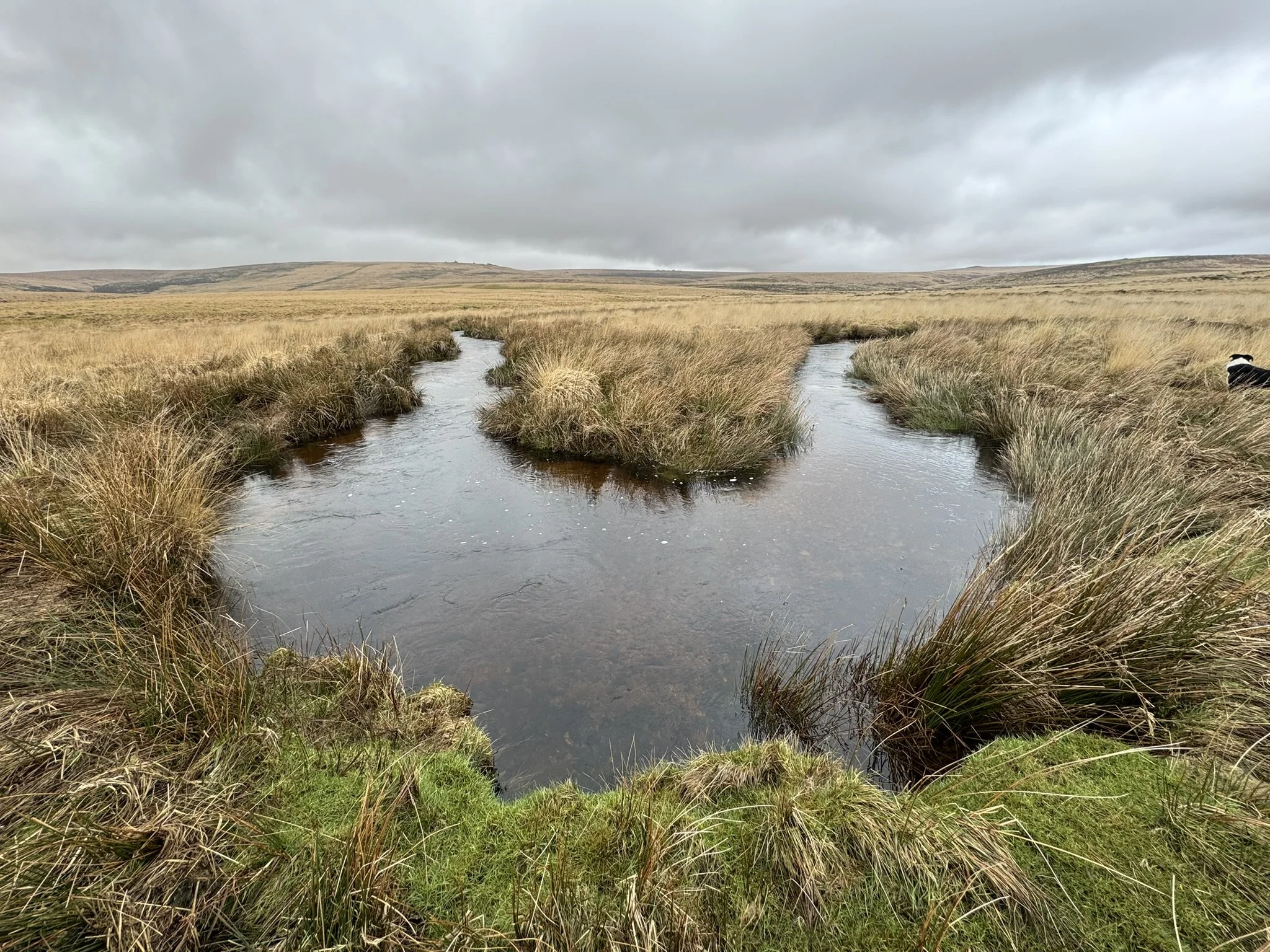
The Walla Brook high on the North Moor. An example of a tin extracted river valley…
A Teign-shaped woodland future (not a blanket of trees)
If we focus on the Teign catchment - the Teign and the Bovey rivers in particular - the vision isn’t “trees everywhere”. It’s more trees in the right places, doing specific jobs.
This could look like:
Riparian woodland pockets on the high moor, where small streams are born and exposed
Allowing natural regeneration where grazing pressure can be effectively managed
Continuing to thin conifer plantations in the Fingle Gorge, favouring broadleaf species that interact more dynamically with the soil, water and light
Treating tributaries and brooks as water holding assets, not highways that shift water away quickly into the main river
This way of thinking isn’t radical. It’s properly targeted. And it respects the reality that not every hectare wants, needs, or should be woodland. But where trees do belong, and can be reintroduced, they punch well above their weight.
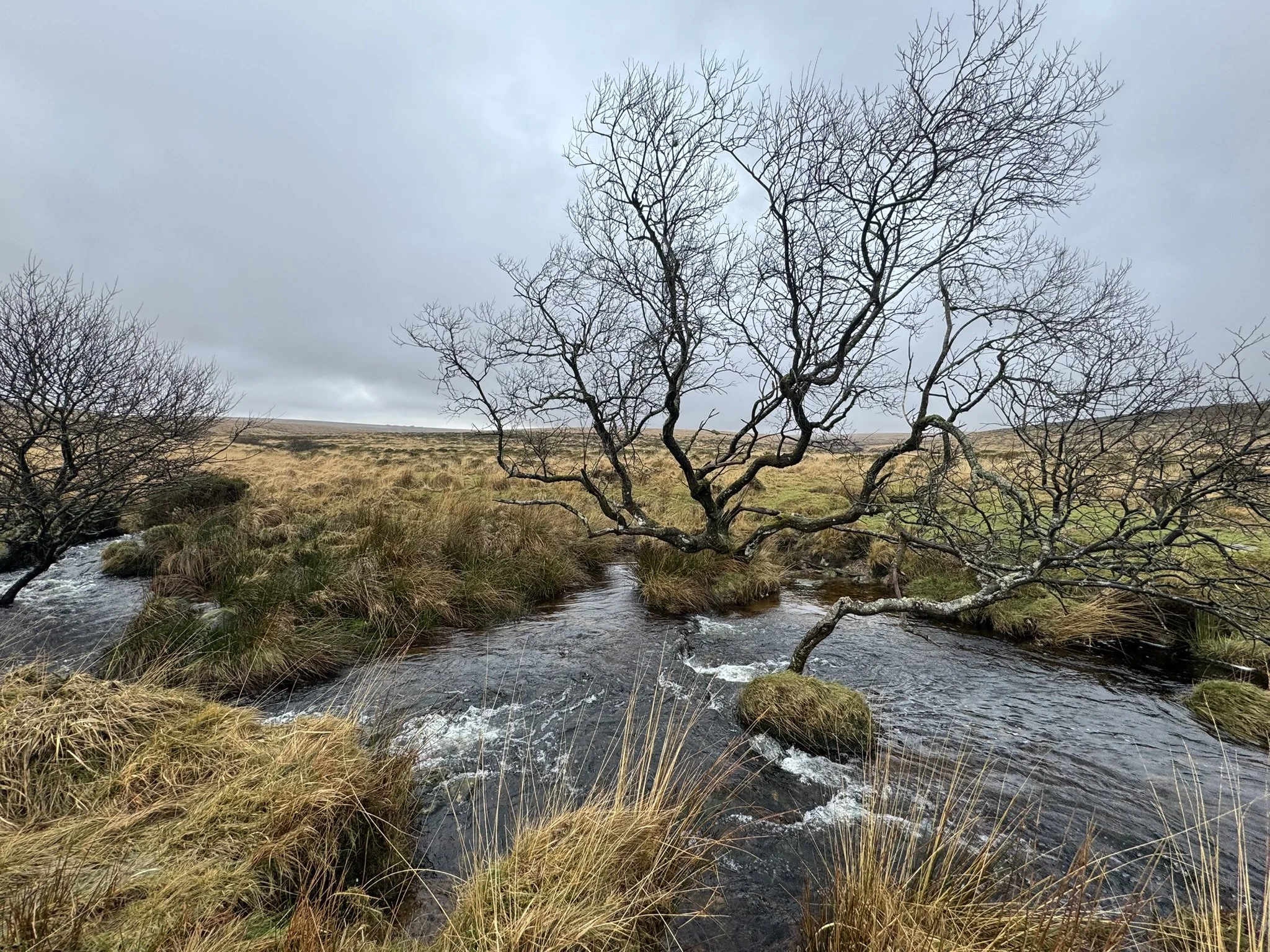
Some pockets of native broadleaf still exist on the high moor rivers…
Why broadleaf - and why Willow keeps coming up
One thing that really stuck with me when digging deeper into riparian woodland is just how dominant willow still is as a species.
During our restoration days, we’re constantly using and replanting willow slips where we can as they root quickly to help stabilise banks and give the river something living to work with. Depending on how it’s measured, willow species still make up around 10% of all riparian woodland in the UK - probably a reflection of just how well suited they are to wet, dynamic river and floodplain margins. (It’s a broad figure rather than a neat statistic… and I did already confess that my notes were a bit coffee-stained!)
As a species, Willow does a lot of heavy lifting:
It grows fast
It has flexible root systems
It can provide bank stabilisation
Its leaf litter feeds invertebrates
Creates dappled shade without total light loss
Which, at this moment in time, leads on to an awkwardly interesting question…
The beaver in the room!
Beavers are already here in the South West. Not everywhere. Not quite yet. But they’re established in parts of the UK, now protected by law, and beginning to stretch their four furry legs, whether we feel ready for them or not. So here’s a deliberately provocative thought… If we know beavers favour willow (amongst some other species), should we not be designing future riparian woodland with that reality in mind?
Now, this isn’t a call to unleash beavers onto Dartmoor tomorrow morning. It’s more a question of planning. If beavers are going to be part of Britain’s ecological future - and all signs suggest they will be - then planting landscapes that can ‘absorb’ their behaviour makes more sense to me than pretending they don’t exist.
Surely it’s better to prepare a catchment in advance than scramble to make one work?
Draining, slowing, and letting water behave
Much of Dartmoor’s historic modification continued well into the Industrial Revolution, and whatever the industry, the plan was pretty much the same: drainage - getting water off the land quickly to make it more usable for other things.
Woodland quietly does the opposite. Leaf cover slows rainfall before it ever reaches the ground. Root systems improve infiltration and stabilise banks from erosion. Water is held, filtered, and released gradually, rather than arriving all at once. A catchment with more woodland doesn’t stop spates. It smooths them off. And by 2050, that subtle difference may prove to be the fine line between rivers that cope and rivers that unravel.
Couple this with the ongoing and planned peatland restoration on Dartmoor, and the picture becomes even more encouraging. Healthy peat acts as a vast natural sponge, holding water high in the catchment, slowing its release, and keeping headwaters cooler and more stable through dry periods. Where woodland works along the margins and valleys, peat works quietly at the source - storing carbon, regulating flows, bringing lost habitat back and rebuilding resilience from the very top of the system. Together, trees and peat don’t just manage water; they give the river time - time to recover, adapt, and keep doing what it’s done for centuries.
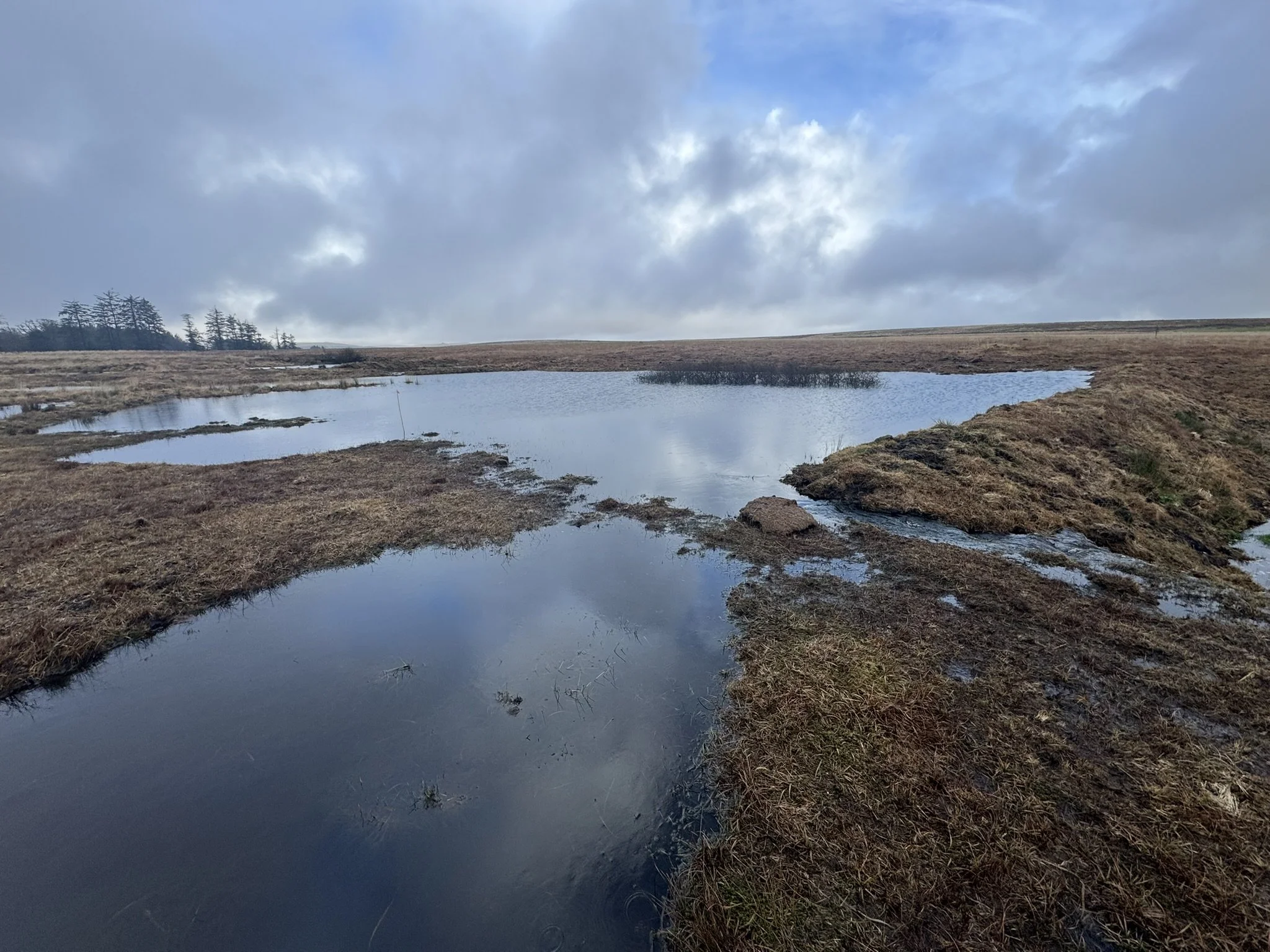
Tor Rayal an example of Peatland Restoration - overtime these pools will cover in Sphagnum Moss…
From Dartmoor to the sea - a wider connection
One of the most fascinating threads I pulled on after Sam’s talk led far beyond Dartmoor. In fact, it went all the way to the coast and way out to sea!
Research in Japan, most notably associated with a little-known figure called Katsuhiko Matsunaga, has explored how healthy broadleaf forests influence not just rivers, but marine productivity.
The short version (without too much science)… Forest supplies organic compounds that bind with iron, allowing rivers to transport these organic compounds downstream in a form that phytoplankton out in the sea can use. The Phytoplankton thrive. Food webs strengthen, and fish populations, in turn, respond.
In other words, Healthy forests upstream can help support life far out to sea.
Now, I’m not suggesting we plant an oak on Dartmoor and instantly fix the North Atlantic. But it’s a powerful reminder that catchments don’t end at the estuary, and what we do at the top echoes far beyond any catchment boundary.
Industry, trees, and grown-up conversations
There’s another reality in the Teign catchment that can’t be ignored either. Some industries have and still need to remove trees to expand or operate. In my opinion, this is a very sensitive territory that deserves grown-up thinking. So here’s an unbiased question that could be worth exploring. If trees are removed in one part of the catchment, should there be a clear expectation to improve the catchment as a whole elsewhere? Not as punishment, but to restore balance. Handled properly, this could mean:
woodland creation in higher-impact locations (improve the headwaters and improve more)
riparian restoration where it matters most
a net gain in catchment resilience, even where local losses could occur
That’s thinking for the catchment and thinking with the total system in mind.
So what does a 2050 Teign catchment feel like?
If I were to put my money where my mouth is, a 2050 catchment isn’t wilder. It isn’t tidier. It’s just simply less brittle.
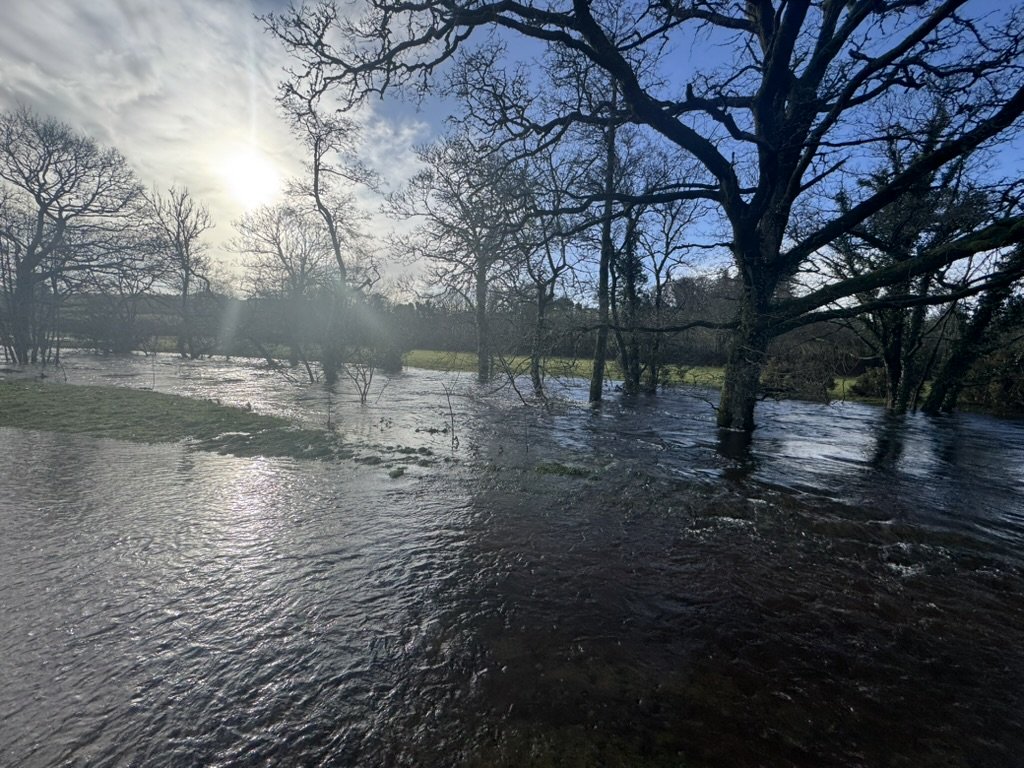
Water runs cooler through hot summers, shaded and slowed down before it ever reaches the main river channels. Heavy rains still come, but instead of everything arriving at once, flows are steadier, silt events are fewer, and the river has time to breathe in between spates. Insects, too, are more abundant, with life at the margins more active, and fish have options - shade to slip into, structure to hold behind, refuge when conditions turn.
There are fewer moments when the whole system feels like it’s been turned up to eleven, and more days when the river quietly does what it’s always been good at doing. And perhaps most importantly of all, it’s a catchment that can absorb the stress rather than amplifying it.
A quiet conclusion
Standing in ancient woodland on Dartmoor, it’s hard not to feel that the system still remembers a different rhythm - one where trees, water and fish were collaborators, not competitors.
Building a Catchment for 2050 isn’t about nostalgia. It’s about giving rivers the tools they need to survive the century we’re already in - and doing it carefully enough that people, livelihoods, wildlife… and yes, maybe even a beaver or two, can all find their place in it.