
There's something about the sound of rain that affects me rather differently these days. For most people, a wet night means checking the forecast, wondering whether the dog really needs another walk or perhaps enjoying the comforting sound of rain against the bedroom window.
For me, however, it now triggers an entirely different set of thoughts. Are those knots still holding? Has that hinged tree stayed where we left it? Is the live laid hedge still attached to the bank? And, perhaps most importantly, have several days of hard work just disappeared somewhere downstream towards Newton Abbot?
Welcome to the slightly peculiar world of river restoration! After months of watching our rivers struggle through prolonged dry weather, we've finally had some proper rain. And while that's undoubtedly good news for the catchment, it's also the moment when some of our recent habitat improvements begin facing their first real tests.
Which, as it turns out, is both exciting and mildly terrifying!
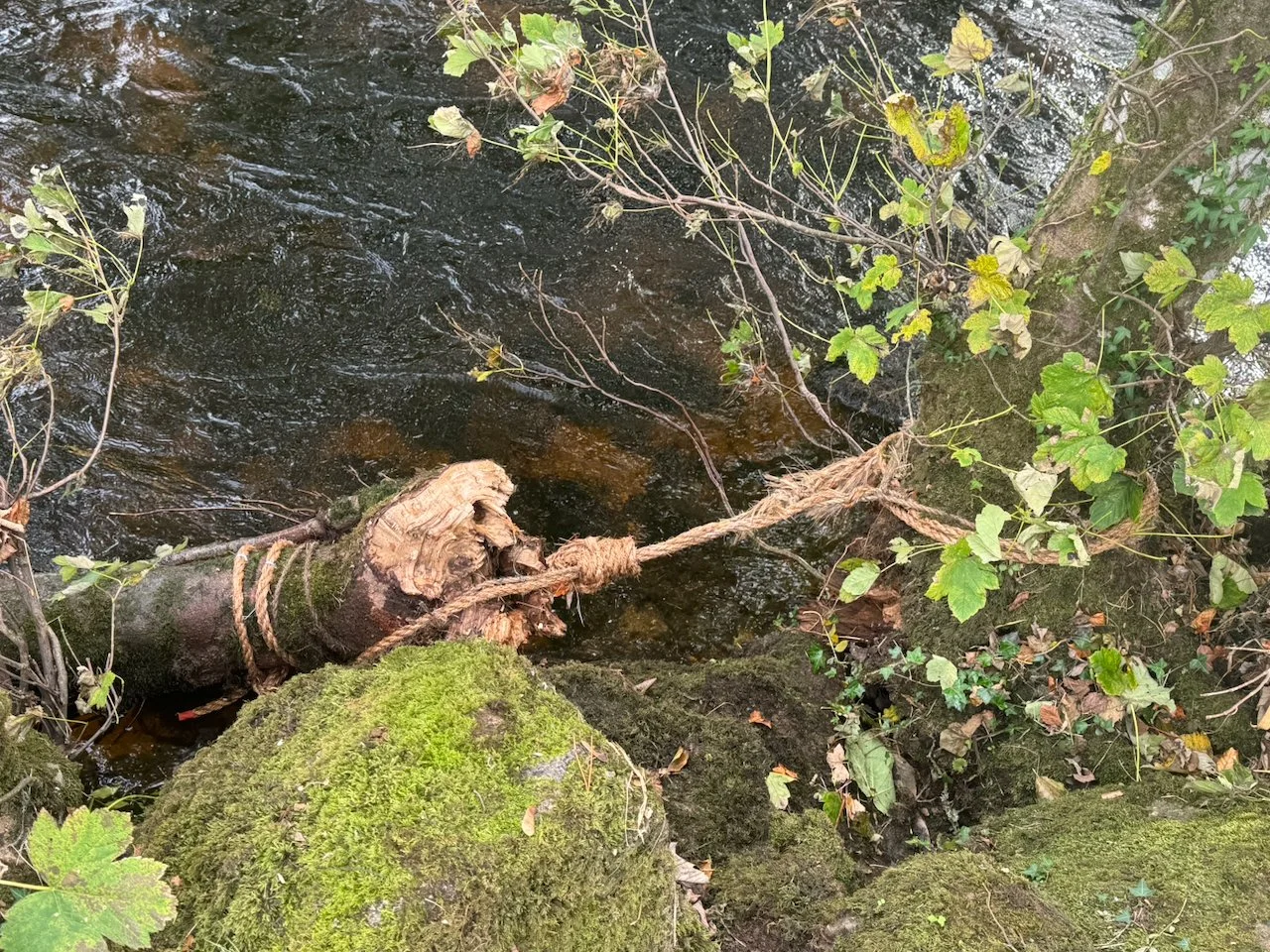
Many a sleepless night has been had thinking about the knots as river levels rise!
Waiting for water
Over recent weeks we've talked quite a bit about the habitat improvement work we've completed at Rushford on the upper River Teign, supported by the Environment Agency's Fisheries Improvement Programme, the Upper Teign Fishing Association and TACA. A few days of practical work alongside Kier and Finn from Kier Collings Estate Management, supported on several occasions by our volunteers, saw us tackling eroded banks, managing bankside trees and using natural materials to help restore some of the complexity that this section of river had been losing.
And then we waited…. Because however much effort goes into these projects, there's one rather important ingredient we can't supply ourselves... Water! Not the gentle trickle we'd become accustomed to over the summer, but the sort of flows that begin moving sediment, rearranging gravels and reminding you just how much energy a river can generate. And now, finally, in late October we had some!
A river with a mind of its own
One of the things I find endlessly fascinating about rivers is their ability to move enormous quantities of material without appearing to put much effort into it. Water is extraordinarily powerful. Increase the flow with a glut of rainwater and suddenly stones that haven't moved for months begin rolling along the riverbed. Gravel is picked up and transported downstream. Banks are scoured, sediment is cleared from weed throngs and deposited elsewhere, and the shape of the channel begins to change. It's a completely natural process, and one that's been shaping our rivers for thousands of years.
But problems can arise when a river becomes trapped in an over modified channel, or when its banks have lost the vegetation and structure that would ordinarily help them withstand the kind of energy that is on display when the river is in full spate.
At Rushford, we had one particular section that demonstrated this rather well. Year after year, the river had been eating away at the same stretch of bank. The soil was exposed, with very little vegetation or established root structure holding it together. Each significant rise in water level had the potential to remove a little more material, gradually pushing the natural bank line further back.
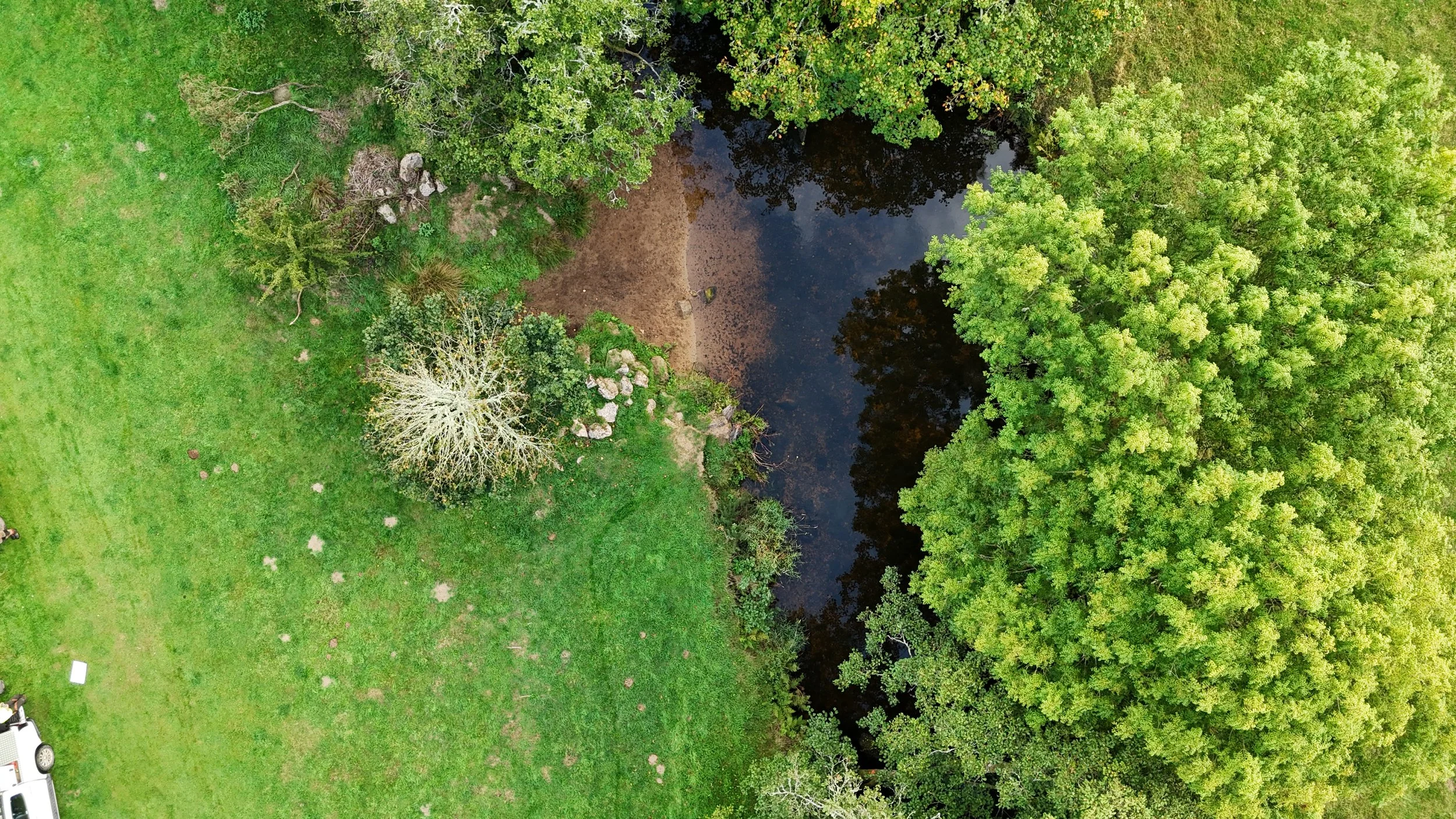
Thanks to Kier for this great pic showing one of the major erosion points.
There's another pressure here too. This particular stretch forms part of the Two Moors Way, bringing a considerable number of walkers along the river throughout the year.
And while it's wonderful that so many people get to enjoy the upper Teign, repeated footfall along vulnerable banks can gradually compact the soil, wear away vegetation and leave exposed ground increasingly susceptible to erosion. We've talked about this recently in our Freed from Desire article, looking at how the routes people naturally follow can have unintended consequences for river habitats.
At Rushford, we're seeing how those pressures can combine with the river's own energy to create a particularly vulnerable section of bank. And standing just behind that eroding edge were several trees.
In this picture you can see our very own John Wilding standing beside the exposed area, with those trees immediately behind him. Left unchecked, continued erosion could eventually undermine them, sending the whole lot into the river during a significant spate. Which raises an interesting question.
If those trees are likely to end up in the river anyway, could we make better use of them before that happens?
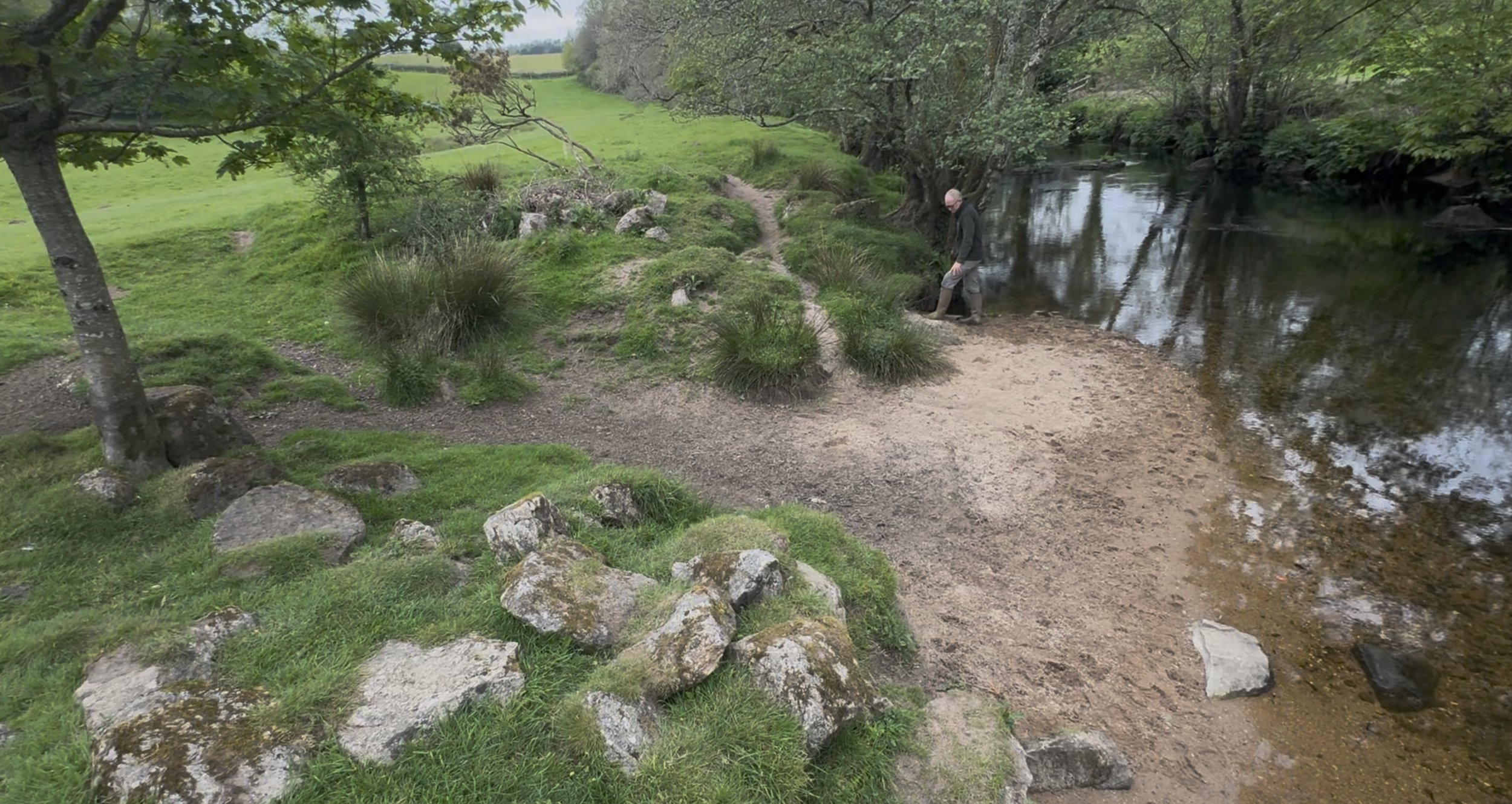
This particular area has changed constantly over the years…
Making use of an asset
We spend a great deal of time talking about the importance of trees alongside rivers. They provide shade, stabilise banks, contribute woody material and create the habitats that fish and countless other species depend upon. So making a deliberate decision to fell one might initially seem rather contradictory.
But sometimes there's a very good reason. At Rushford, we could see that continued erosion was progressively undermining the bankside trees. Given another couple of years and more forceful spates, there was a very real possibility that some of them would simply be lost.
And when a tree falls into a river during a flood, we don't get to choose where it ends up. It might lodge somewhere useful and create wonderful habitat, which has happened in the past. Or it might be carried downstream, potentially causing problems elsewhere. So rather than waiting for the river to make that decision for us, we decided to make use of the timber while we still had the opportunity!
It’s a case of ‘Use the asset before we lose it’.
By carefully selecting trees that were already threatened by erosion, we could put their timber to work protecting the very bank from which they were likely to be lost.
And that's something I particularly like about this approach. We're not simply removing trees. We're giving them another job.
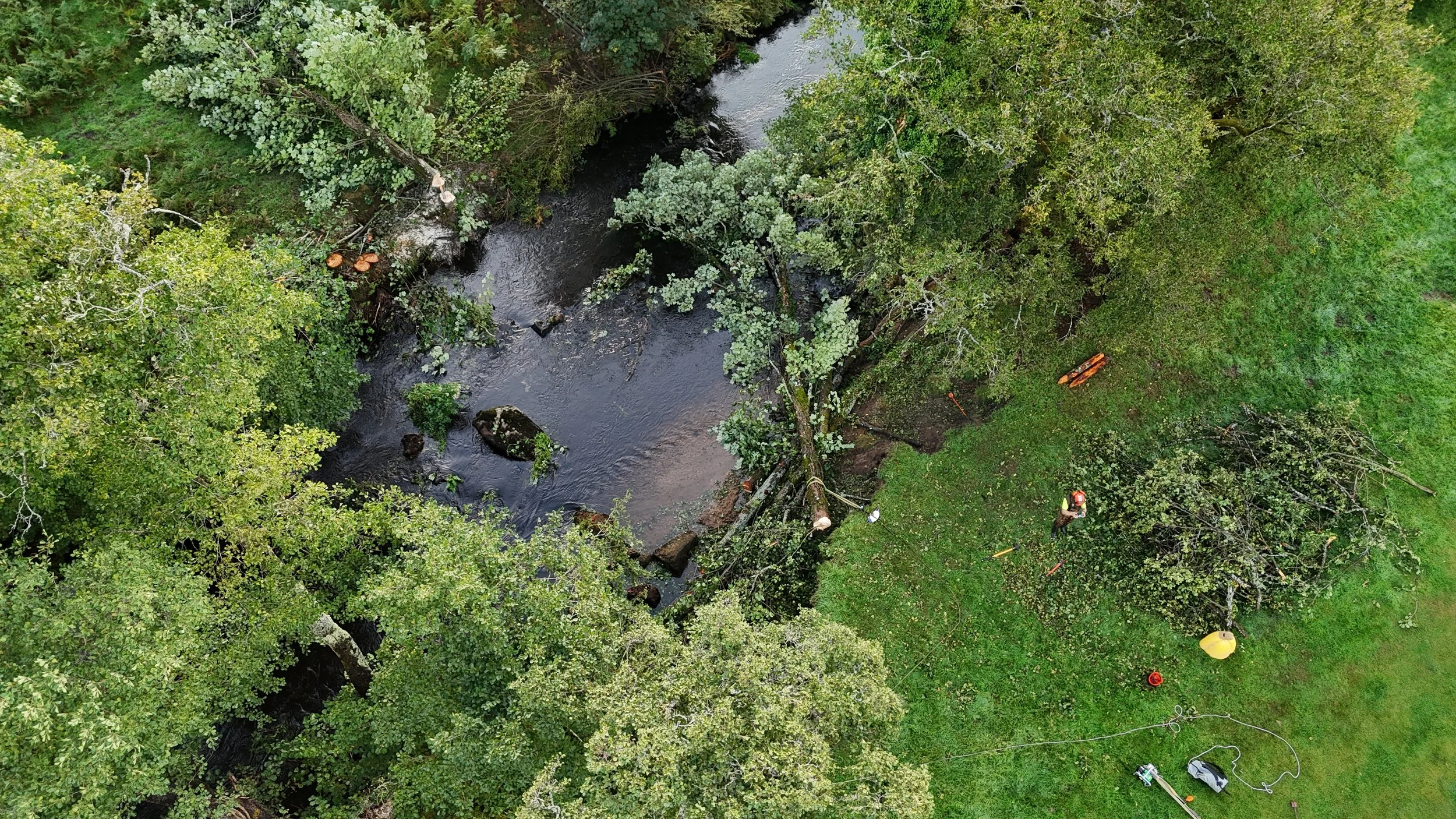
Again, another one of Kier’s pics from his massively long selfie-stick!…
Changing the shape of things
Rather than attempting to build an immovable barrier against the river, we looked at how we could encourage the water to behave differently. The work involved reforming the eroded bank line, using the felled timber and natural materials to create a more gradual, structured margin and reduce the concentration of flow against the exposed soil.
Where appropriate, timber was hinged or secured into position, helping it remain part of the bank rather than becoming another piece of material travelling downstream. The idea was to change how water moved around that section.
Instead of allowing the current to continue attacking the same vulnerable edge, we wanted to create conditions where the flow would lose some of its energy and begin depositing material. And that's an important distinction.
We weren't trying to stop the river from moving sediment. We wanted to encourage it to put some of that sediment back in a useful place. The timber, hinged trees and other natural materials provide the initial structure. Over time, vegetation and root systems should help strengthen the restored margin. But the really interesting part is what happens when the river starts using its own energy to do some of the heavy lifting for us.
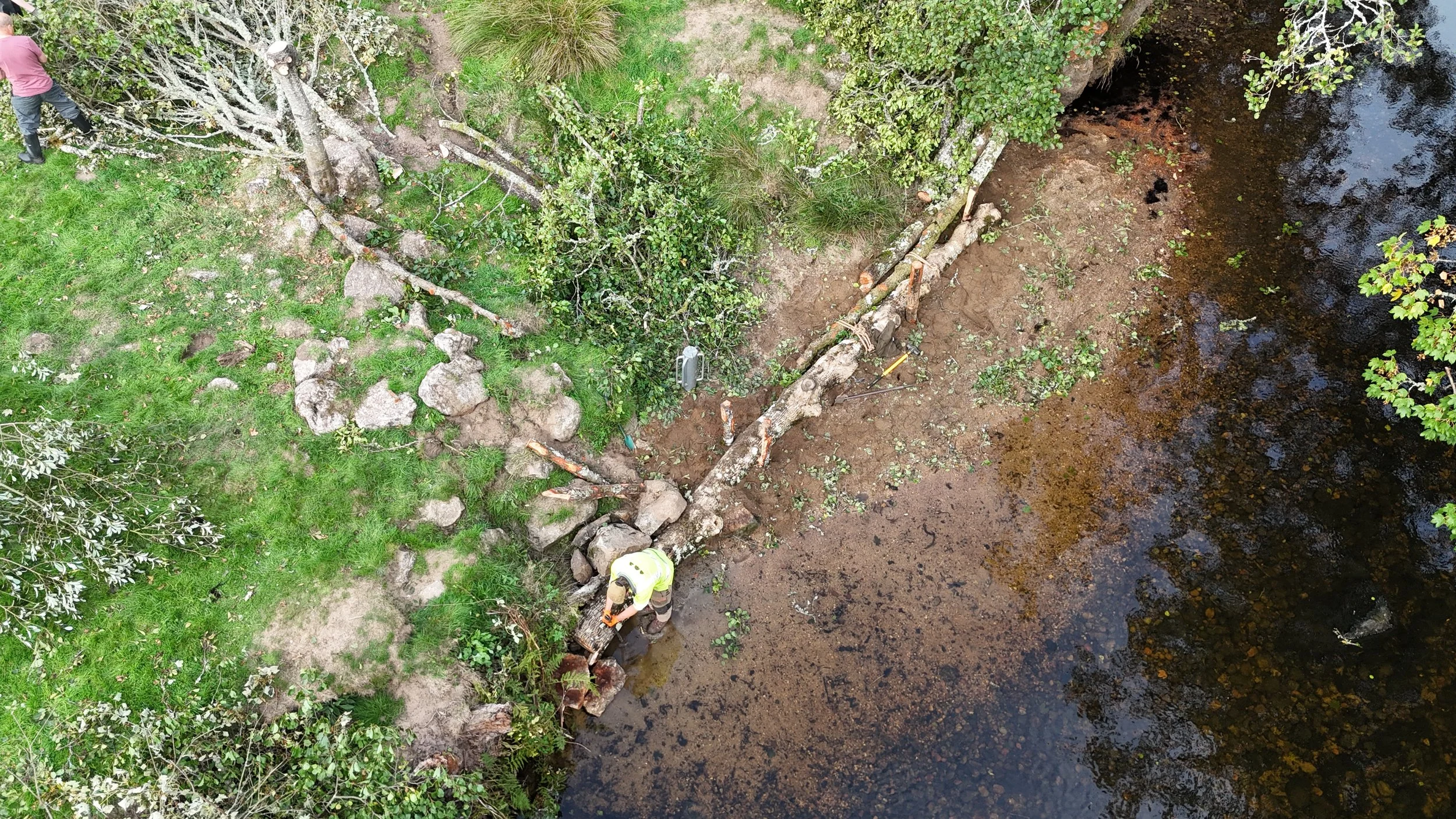
Finn busy on restoring the bank line using felled timber and existing boulders…
The river gets to work
Having walked this stretch several times since we finished the project, it's been fascinating to see how things are developing. And the recent rise in river levels has given us our first proper glimpse of what we hoped might happen.
Gravel and other material are beginning to accumulate around the restored bank line. In the photographs, you can see the difference between the exposed margin before the work and the subsequent changes as water levels have risen.
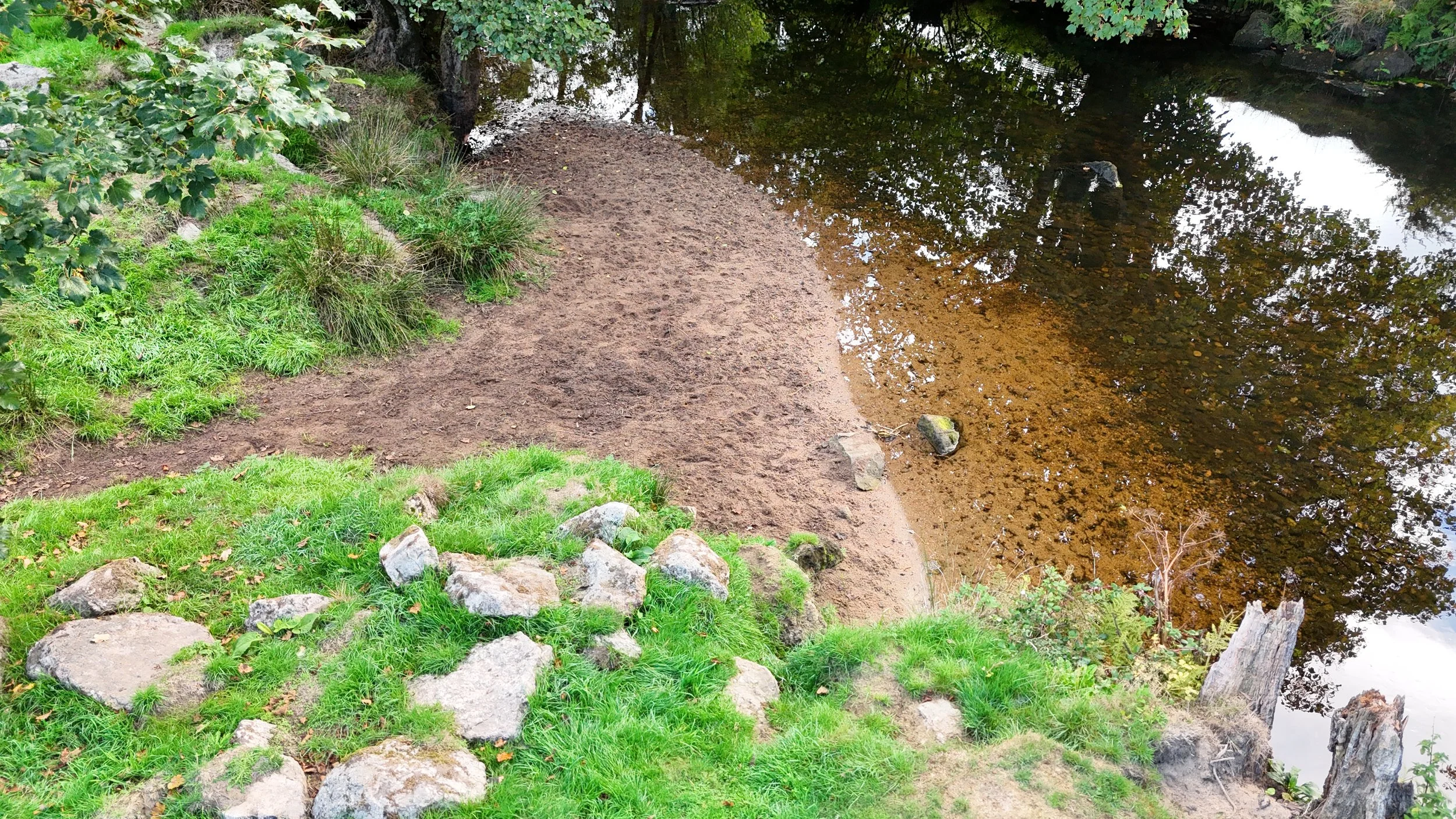
Before we started…
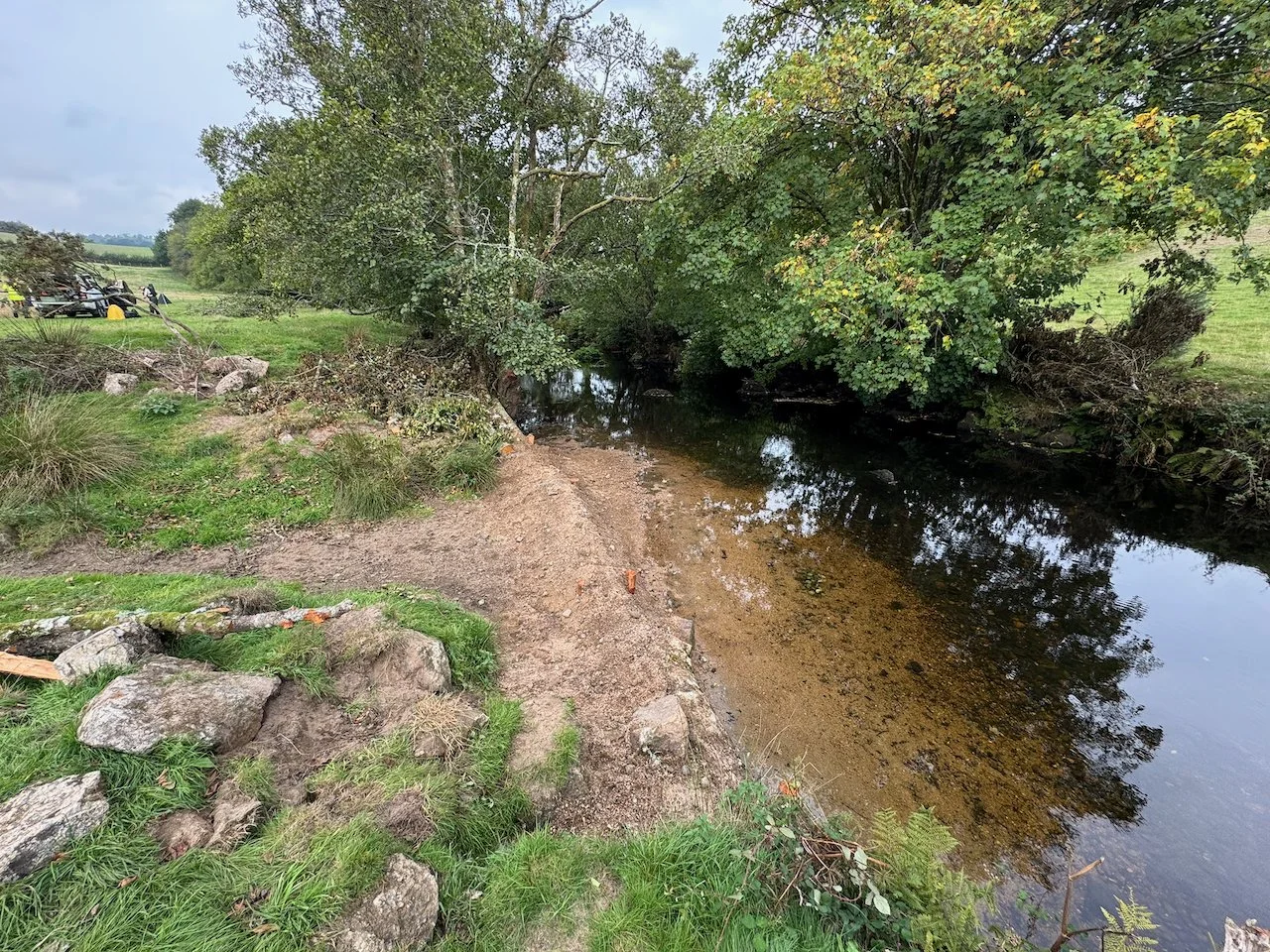
The bank line restored upon completion of the works…
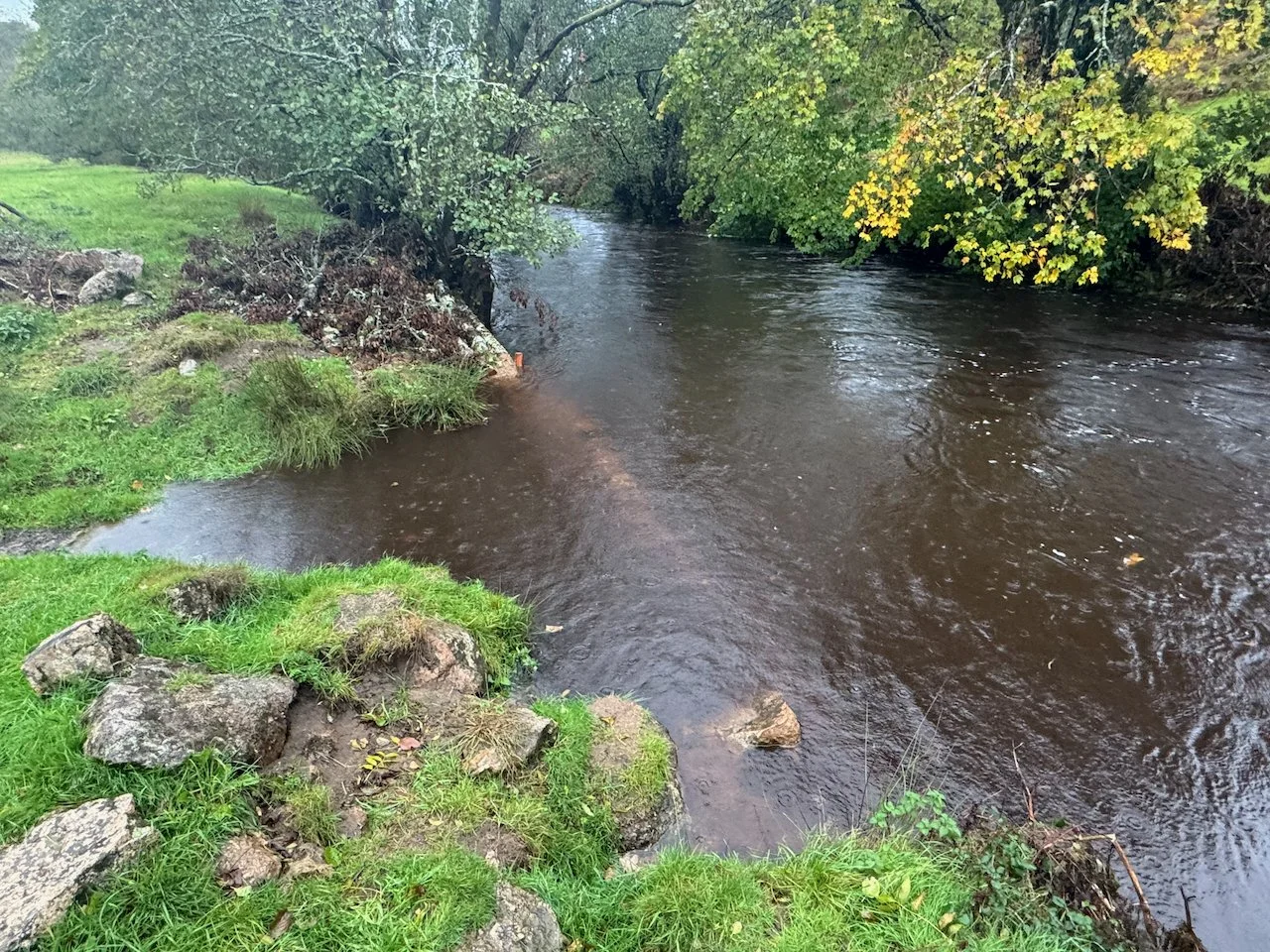
The same area during the recent spate…
Where the bank had previously been losing material, we're now seeing the early signs of deposition. And I must say, there's something enormously satisfying about that. We've spent days moving timber, positioning material and trying to understand how the river might respond. Then the water arrives and starts doing the heavy lifting for us. No wheelbarrows. No shovels. No complaints about the weight of the next log. Just the river moving material around and, hopefully, beginning to rebuild a little of what had been lost.
Of course, we're not declaring victory just yet! One spell of higher water doesn't tell us everything we need to know, and there's a considerable difference between seeing the first deposits and having a stable, vegetated bank that can withstand future winter flows.
We'll need to keep watching how the area responds, particularly after larger spates.But these early signs are encouraging. And they reinforce something we've been talking about for quite some time. Sometimes the best thing we can do for a river is create the right conditions and then allow natural processes to take over.
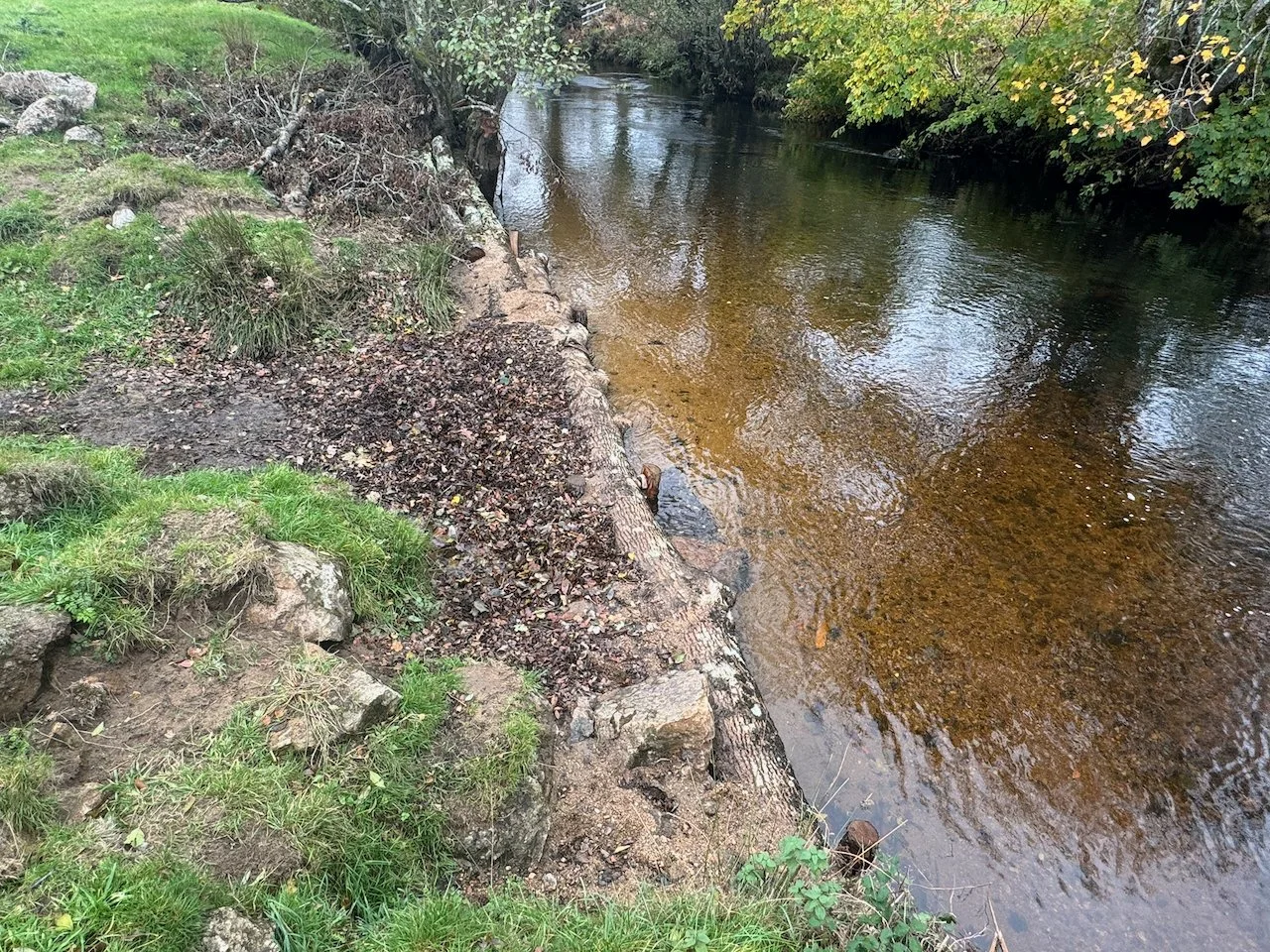
After the spate, the initial sediment deposits are very encouraging…
Not all sediment is bad
We've written plenty about the problems caused by sediment entering our rivers, particularly when fine material finds its way into important salmon and sea trout spawning gravels. And quite rightly so. Excessive fine sediment can clog the spaces between gravel particles, reducing the movement of oxygen rich water around developing eggs. But it's worth remembering that sediment itself isn't the enemy.
A healthy river is constantly moving material. Gravel is transported, deposited and rearranged. Banks naturally erode in some places while building up in others. Pools deepen, riffles move and new habitat develops. It's this movement that helps create the variety of conditions needed by fish, invertebrates and other river wildlife.
The challenge is understanding where those processes are beneficial and where they may be contributing to an existing problem. At Rushford, the aim was to reduce excessive erosion at a vulnerable bank while encouraging the river to deposit material in a more useful way. And the important thing is that we're not trying to freeze the river in place. Quite the opposite. We're trying to give it more opportunities to behave naturally, but in ways that help rebuild resilience rather than continually stripping it away.
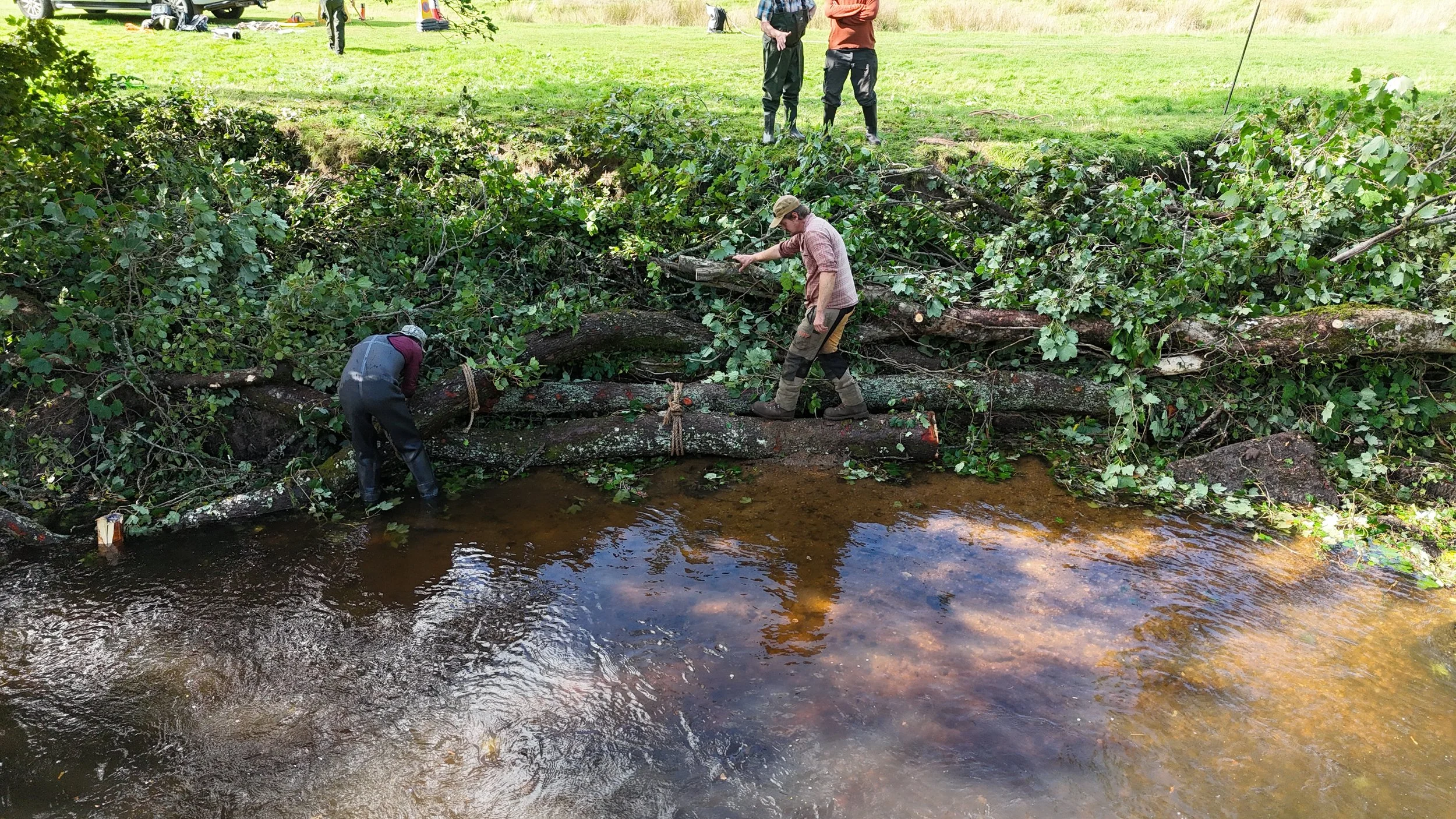
Tying in the woody material to prevent further bankside erosion…
Some welcome travellers
And while I've been keeping a rather obsessive eye on our recent handiwork, there's been another very welcome development. Our salmonid friends are on the move!
With the return of more substantial flows, we've had sightings of fish making their way upstream, including over Drogo Weir. After such a long, dry summer, that's wonderful news.
For Atlantic salmon and sea trout, autumn rainfall can provide the increased flows needed to help them negotiate shallower sections, overcome obstacles and continue their journeys towards the spawning grounds. And after spending so much of this year worrying about water temperatures, low flows and disconnected habitats, it's rather reassuring to know that these extraordinary fish are still making their way home.
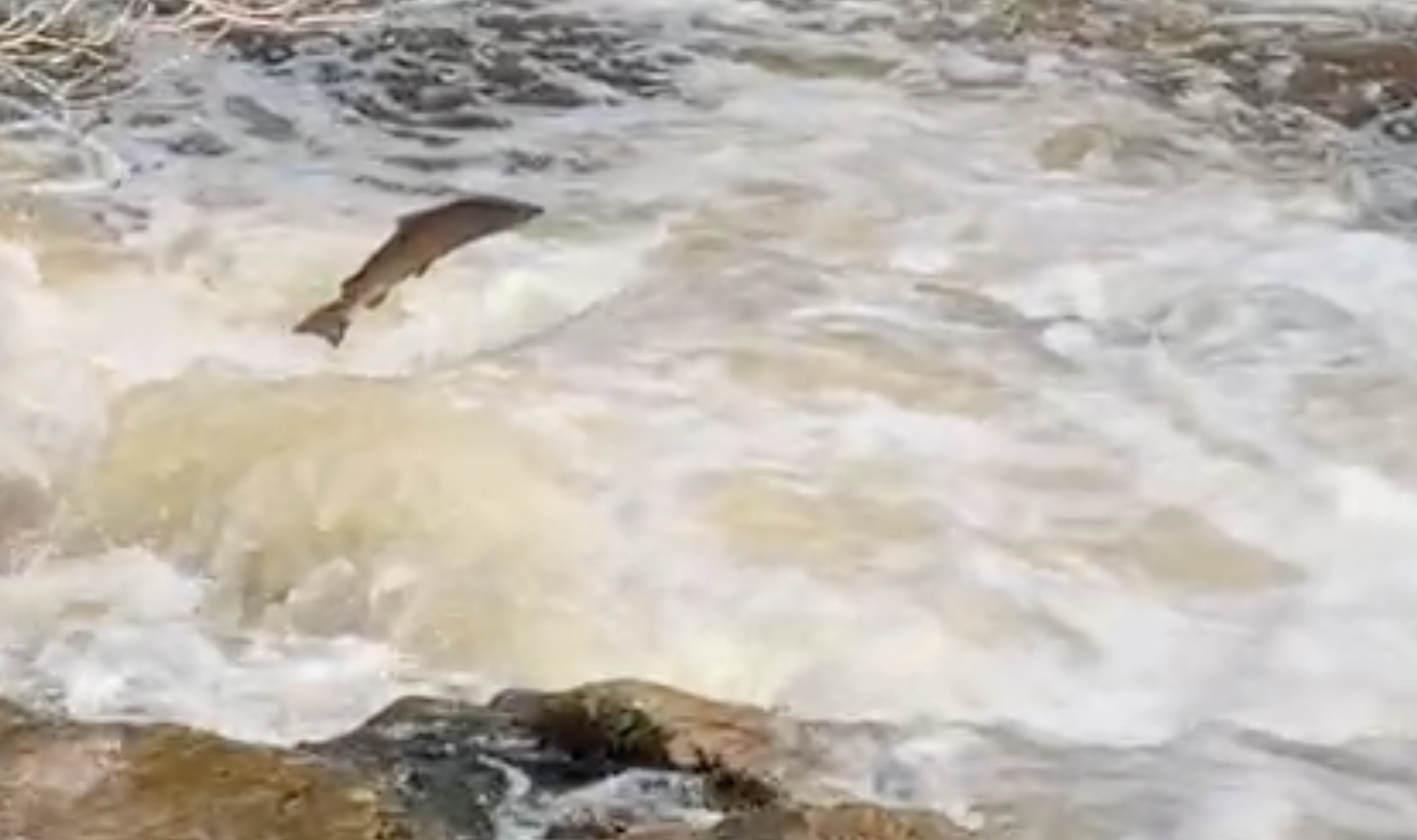
Thanks to Bryan Quinn for capturing this image…
There's something remarkable about the thought that a salmon which has spent years feeding in the North Atlantic can return to the Teign, negotiate its way upstream and eventually reach the gravels where the next generation might begin.
It also puts our own efforts into perspective. We're moving a few trees around and securing them with knots in the hope of making things a little better. Meanwhile, these fish are navigating thousands of miles of ocean and an increasingly complicated freshwater environment just to complete their life cycle. I know which job I'd rather have. Although, having said that, I suspect a salmon might take one look at Kier's groundwinch and reconsider!
The real test is still to come
One of the most important lessons from practical river restoration is that completing the work isn't the end of the project. In many ways, it's the beginning. The first proper rises in water level tell us how our interventions respond. They show where flow is concentrating, where material is accumulating and whether the structures are behaving as intended.
And sometimes they tell us that something needs adjusting. That's not necessarily failure.
It's part of working with a system that is constantly changing. Unlike a building or a bridge, a river is never really finished. It responds to rainfall, sediment, vegetation, fallen trees and countless other influences across the catchment. Our job is to understand those processes as best we can, make sensible interventions where they're needed and then keep learning from what happens afterwards.
Which is why I'll continue returning to Rushford after the rain. Partly to check the work. Partly because I genuinely enjoy watching the river change. And partly because I'd rather discover a loose knot while it's still attached to something than receive a phone call from somebody in Dunsford asking why a tree has turned up in their garden!
A little help from the river
I think that's what makes this sort of work so rewarding. We can spend months planning, securing funding, talking to landowners and arranging the practical work. We can bring together volunteers, contractors and people with the knowledge to help us make sensible decisions. But ultimately, we can't rebuild a functioning river by ourselves. We need the river to participate.
We need water moving through the catchment, carrying sediment, reshaping margins and allowing vegetation to establish. And we need to give those natural processes the space and opportunity to do their work. The recent changes at Rushford are a small but encouraging example of what that can look like. There's still plenty to learn, and no doubt a few more anxious moments ahead when the next proper spate arrives. But for now, it's rather nice to see gravel accumulating where we'd hoped it would.
Even nicer to hear that salmon and sea trout are making their way upstream. And perhaps nicest of all is the reminder that, given the right conditions, the river is capable of doing an extraordinary amount of the work itself. Although I still reserve the right to get a little twitchy whenever the forecast turns to rain!