
Some Like it Hot… Rivers Don't
Well, it has been hot… Not ‘find a shady spot and enjoy an ice cream’ hot, but proper hot. The sort of heat that sees otherwise sensible people sleeping with every window open, strategically positioned in front of a fan, muttering Peter Kay's immortal words: "I like it warm, but I don't like it this warm!"
The sort of heat that sees temperature records nudged, families enjoying al fresco dining into the long evenings, and otherwise warm-blooded folk enthusiastically seeking refuge in cool tiled rooms! For our rivers, however, prolonged hot weather presents a rather different picture.
Over recent years, our temperature monitoring installed across the catchment has shown that even rivers born high on Dartmoor can exceed 20°C during prolonged warm spells. In some locations, temperatures have even been recorded comfortably north of that figure! For those of us who spend far too much time thinking about rivers, fish and water temperature, those numbers command our attention. Because while twenty degrees may sound perfectly pleasant to us, for salmon and trout it represents something altogether more challenging.
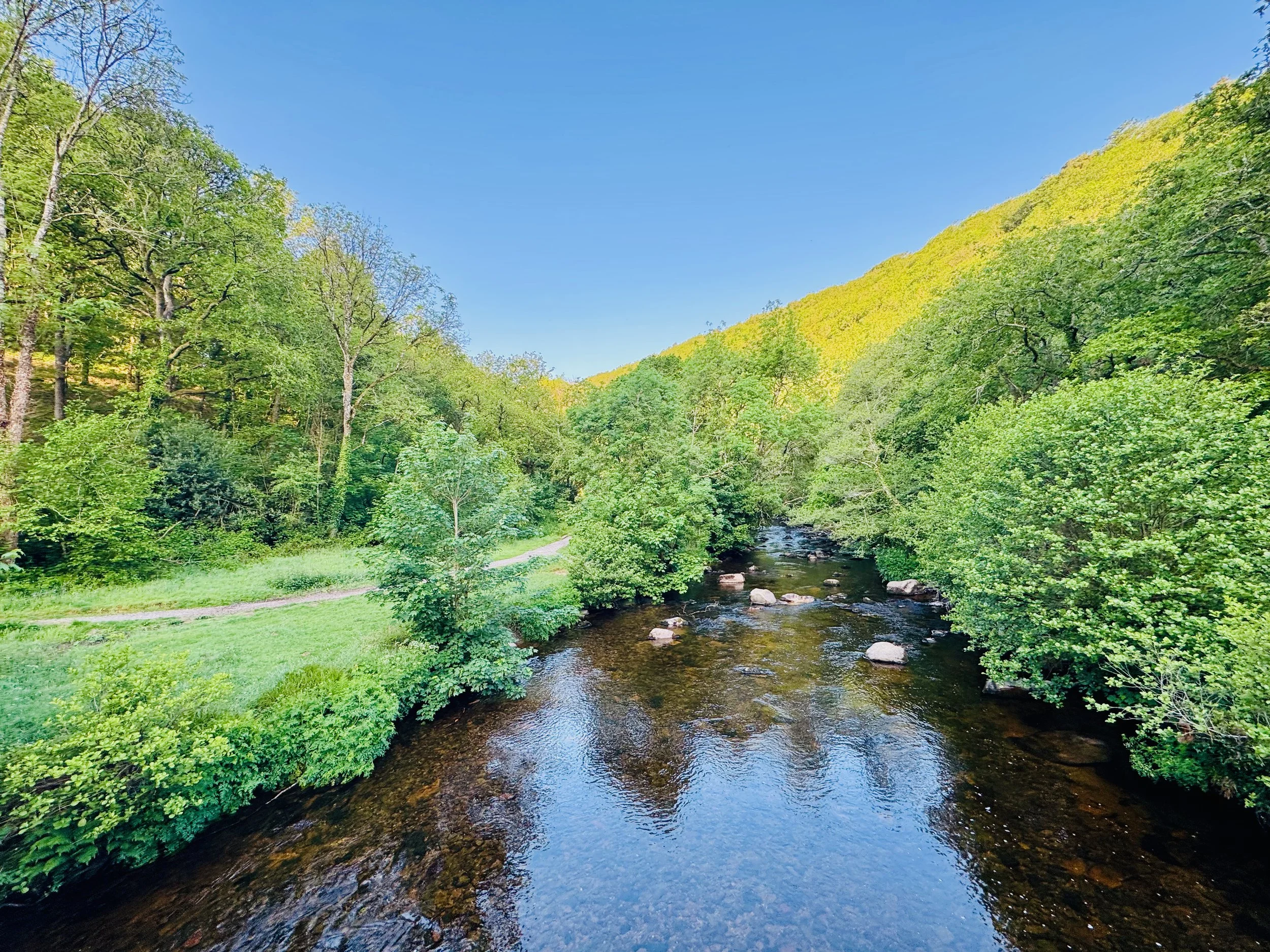
Dawn at Fingle Bridge…
Cold water fish in a warming world
Atlantic salmon and brown trout are what we class as cold water species. They evolved in the world's cool, well-oxygenated rivers. However, as water temperatures rise, dissolved oxygen levels in the water begin to fall, fish become increasingly stressed, feeding behaviours change and their finite energy reserves are tested.
Prolonged periods with water temperatures above 20°C can be particularly challenging, while temperatures nudging towards 23°C and beyond begin pushing fish towards their absolute physiological limits. Put simply, warm water and our salmonid friends are not the best of companions!
And with climate change projections suggesting that hot, dry summers may become more common, the conversation around building resilience into our catchments is rapidly moving from "nice idea" to "absolute necessity" territory. Thankfully, in all of this there is some good news… because there are things we can do.
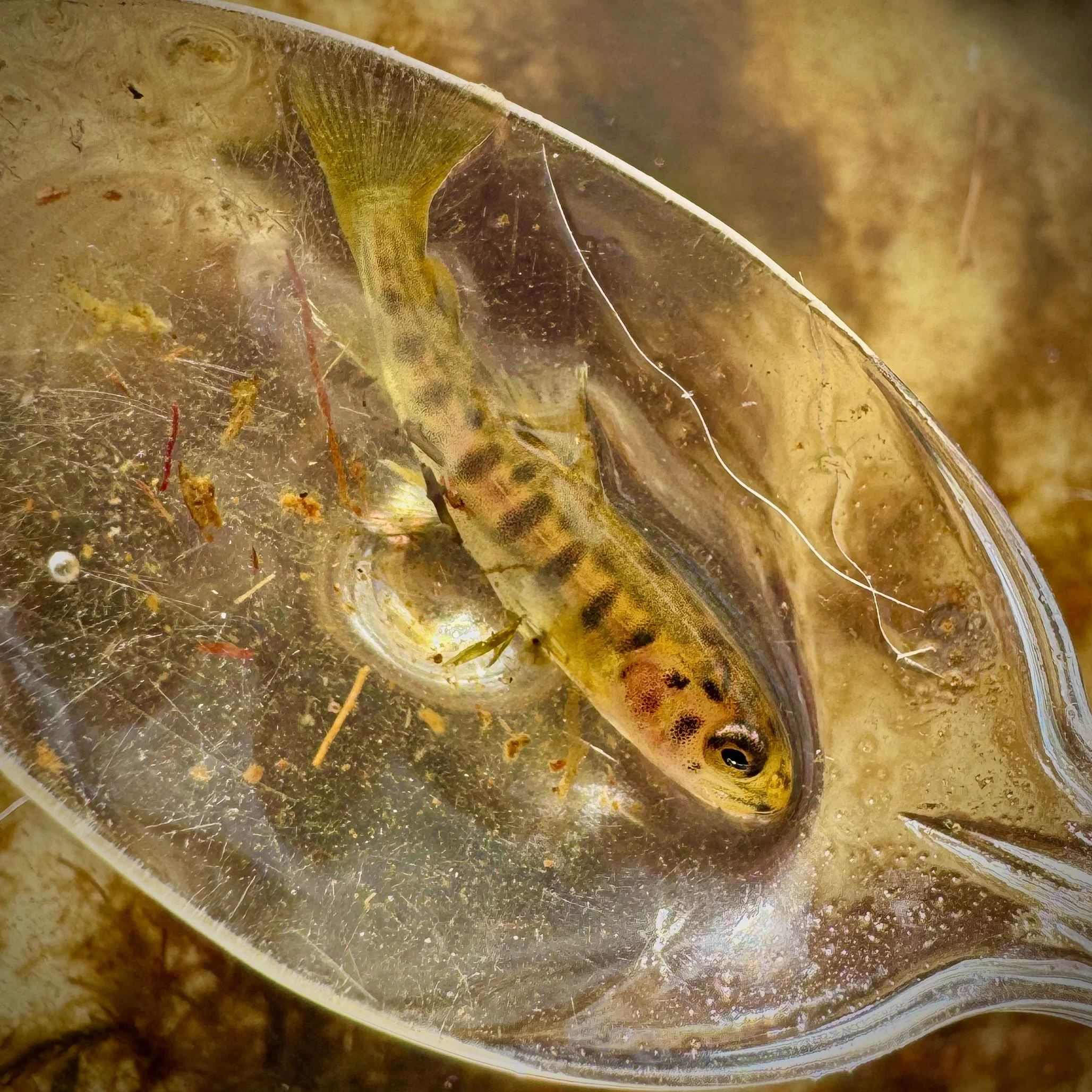
A Brown Trout Fry found during a recent Riverfly survey - And yes, that’s a 5ml spoon it’s cradled in!…
Ancient answers to modern problems
Coincidentally, while sheltering from the heat recently, I stumbled across an article in The Telegraph highlighting the UK's remaining fragments of temperate rainforest. And it was no great surprise to discover that both Wistman's Wood and Fingle Woods made their shortlist.
Quite extraordinary to think that within the Teign catchment, we have one of Britain's rarest habitats sitting quietly on our doorstep. Temperate rainforest once covered huge areas of western Britain, although today less than one percent still remains. Yet these ancient woodlands still offer clues about how landscapes functioned before we became quite so hellbent in draining, straightening, simplifying and heating them up!
And one of the things these rare pockets of woodland do exceptionally well is hold onto water. Trees intercept rainfall. Woodland soil absorbs and stores moisture. Shade reduces evaporation, meaning that water moves more slowly rather than racing downhill at its first opportunity.
In short, woodland creates resilience. Exactly the sort of resilience our rivers increasingly need if these trends of hotter summers and wetter winters are to become more common.
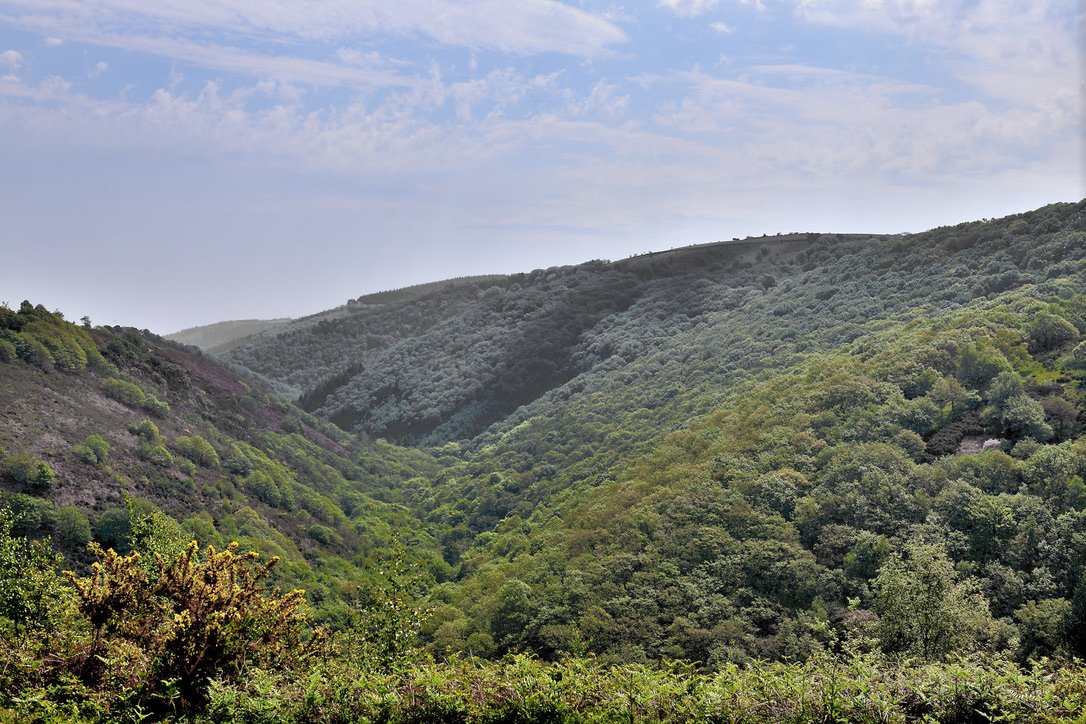
The Fingle Gorge viewed from the Hunter’s Path…
Revisiting the Toilet Brook
During the hottest part of this recent weather, slathered in Factor 50 and carrying water like a camel, I decided to wander back up to revisit the "Toilet Brook" above the old Fingle Mill. For those unfamiliar with the name, yes, there is a story there. Rivers, much like anglers, occasionally acquire strange names and these names tend to stick!
Last winter, alongside the National Trust and an enthusiastic group of volunteers, we carried out a programme of rewetting works here. Using woody material already on site, we installed a series of leaky structures designed to slow water, reconnect floodplain and encourage the brook to behave more like a natural system. Standing there during the recent heatwave, in a puddle of my own sweat, was a genuinely encouraging experience… honest!
Despite air temperatures nudging 30°C, many of the areas we had reconnected remained noticeably softer underfoot. What had once been a comparatively dry woodland floor now supported a carpet of lush green vegetation. Water that would previously have rushed off the hillside and quickly found its way downstream was still being held onto. Proof, if ever it were needed, that these small interventions really do work.
And perhaps more importantly, they continue doing their work when conditions become difficult.
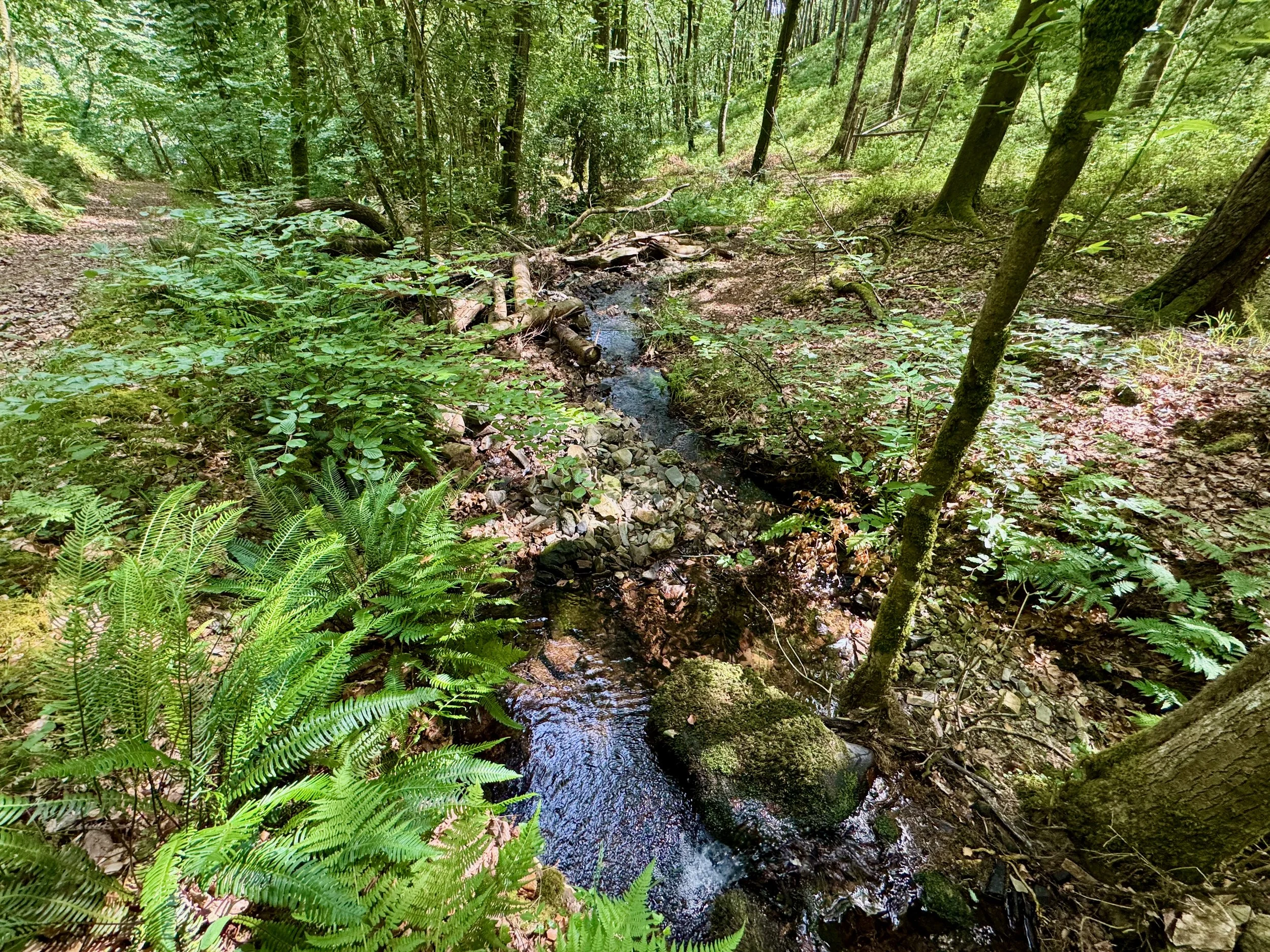
Water still being held…
Building a buffer
I often think that this is exactly the sort of resilience we need to be building across the wider catchment. Not everywhere and not all at once, but wherever suitable opportunities exist.
Small headwater streams. Woodland tributaries. Areas where floodplain reconnection is possible with minimum risk and investment. Places where water can be encouraged to pause for just a little longer before continuing its journey downhill and eventually out to sea. Because every drop held back higher in the catchment - held, if only briefly, against gravity - is potentially a drop available when we really need it. And this thinking doesn't stop at the treeline…
The ongoing work of the South West Peatland Partnership across Dartmoor is another hugely important piece of a massive puzzle. Healthy peatlands act like giant sponges, storing water and slowly releasing water back into the system during drier periods. In many ways, peatland restoration and river restoration are simply two pages from the same story. Together, they offer us a chance to rebuild some of nature's natural buffering capacity that our landscapes once had.
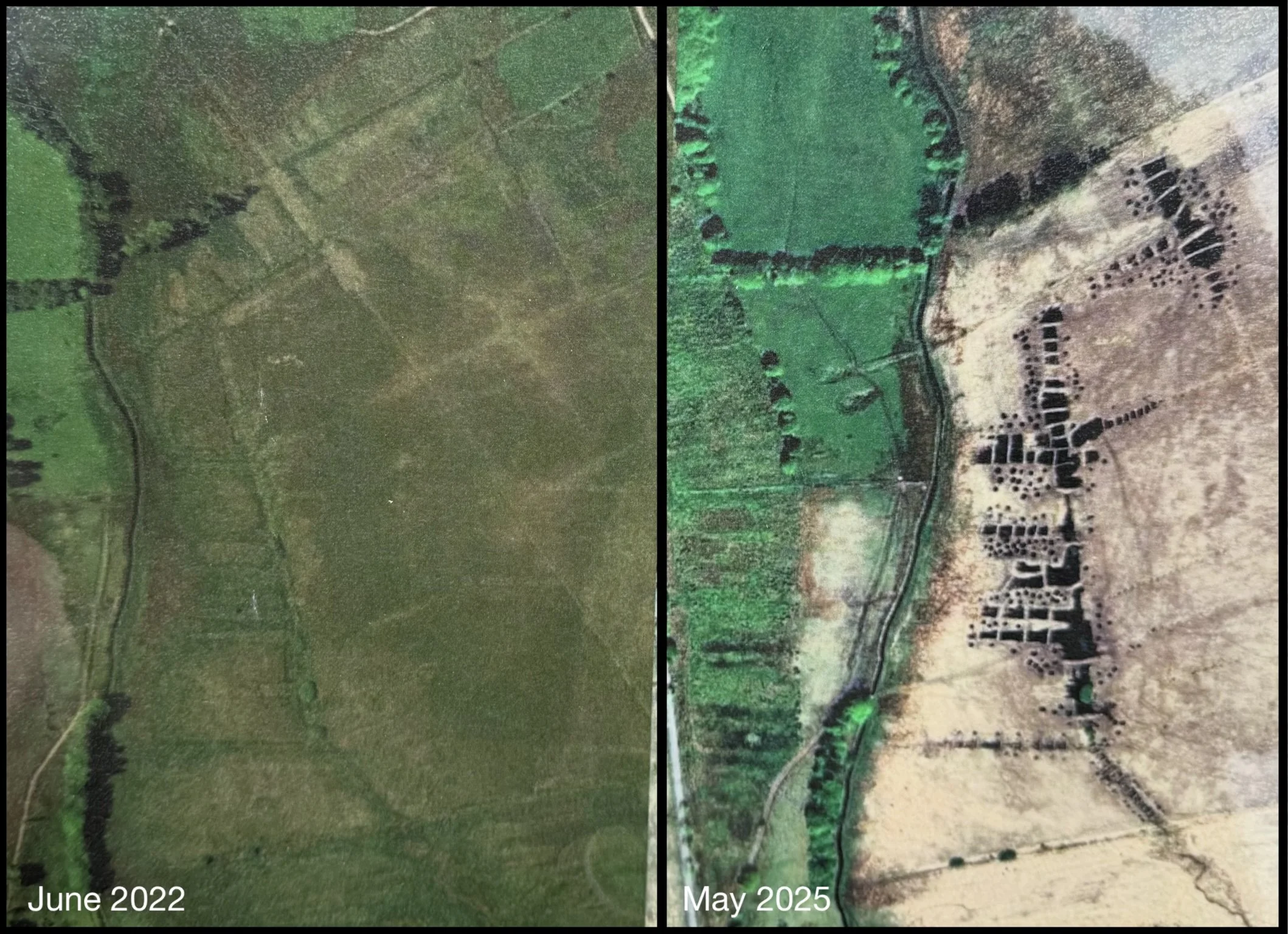
The Works at Tor Royal showing the extent of the peatland restoration carried out to store and hold onto water…
Thinking ahead
None of this means we can stop hot weather arriving. After all, most of us rather enjoy a spell of sunshine after prolonged periods of Dartmoor grey! But if rivers like the Teign are to continue supporting Atlantic salmon, trout, invertebrates and everything else that depends upon cool, clean water, then we need to think carefully about how these landscapes function.
The encouraging thing is that many of the answers are already out there: ancient woodland, healthy peat, connected floodplains and water held high catchments. Perhaps the future of our rivers and proper resilience lies not in inventing something entirely new, but in remembering how these landscapes worked before we forgot.
And if a small brook in the Fingle Gorge can still be holding onto water during one of the hottest spells of the year, then I reckon this is a pretty good place to start.