
The Toilet Brook - Logs, Bogs & Leaky Dams…
If you’ve ever walked through the Fingle Gorge and wondered what keeps the old toilets flushing at Fingle Bridge, wonder no more - with the National Trust we lovingly christened this small tributary running down the hillside as The Toilet Brook. Naturally, the name stuck immediately, because us river folk are apparently ‘very serious professionals’ with limitless creative abilities!
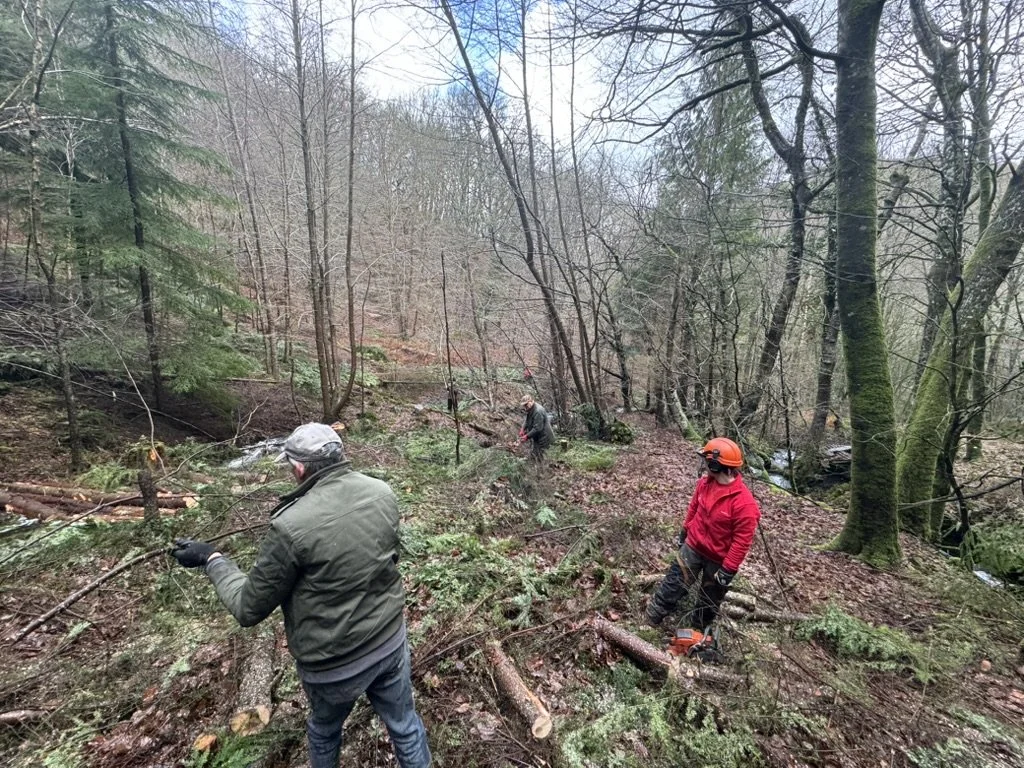
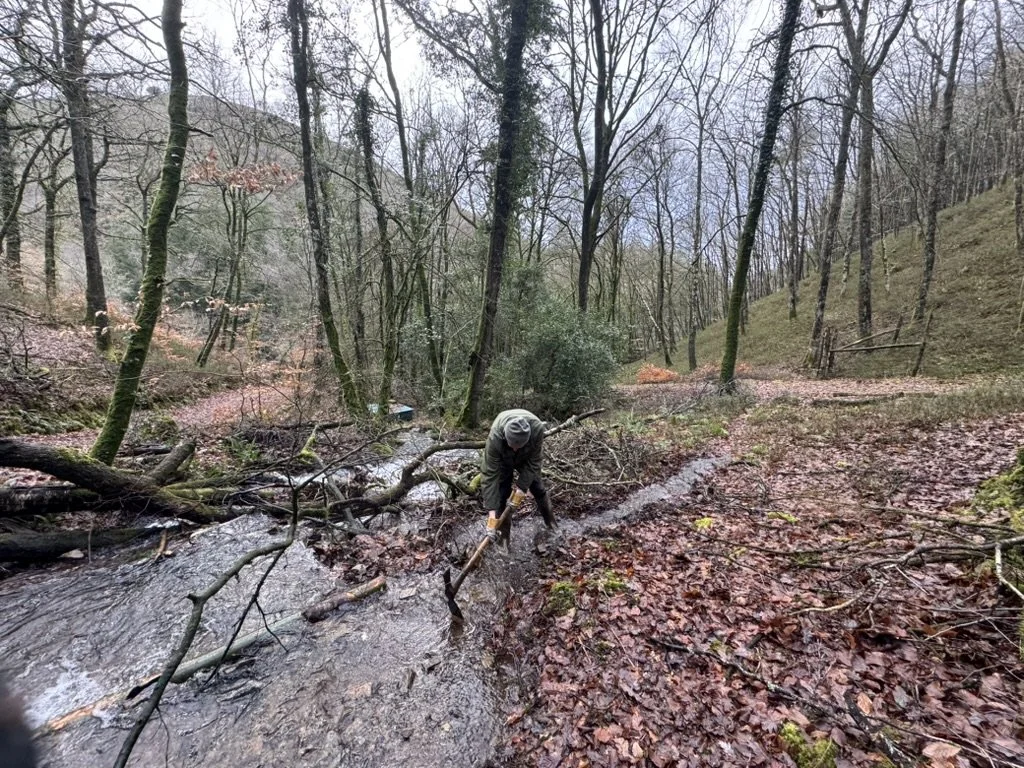
Last week, a group of TACA volunteers, joined by our friends at the National Trust, spent a day working along roughly 100 metres of this small brook. The mission was simple: build leaky dams, reconnect side channels, and help the forest floor hold onto water for longer rather than firing it downhill quicker than it arrived.
And yes - we’ve got a video below so you can watch the magic and work unfold.
Why Slow Water Matters Now
Not so long ago, the national strategy for water management was basically, “Get it off the hills and into the sea as fast as possible.”
The climate has since responded to this with its own update, “Deliver a month’s rainfall in an afternoon.”
In flashy catchments like the Teign, that means brooks turn into water conveyor belts, main rivers go into spate, and downstream communities tend to get nervous. The newer thinking is refreshingly simple: keep water higher up the catchment for longer so it can soak, leak, filter, and buffer before joining the main river. It’s not complicated, it’s just different to how we used to think.
But why not just Dam Everything?
A Good question and one that usually comes from someone who hasn’t thought about our fishy friends lately.
Some of these tiny brooks are still crucial spawning and nursery habitat for salmonids. If you were to dam them up completely, you’d slow the flow, yes, but you’d also create a queue of confused fish wondering who signed off on the new piece of civil engineering.
So the rule of thumb is:
leave the bottom 50–100m untouched - allowing fish to move and feed
install leaky dams higher up - where slowing and re-wetting helps without stopping fry and small fish from moving through the structures
It’s not beaver cosplay - it’s fish-respecting engineering using, in most cases, slightly bigger sticks.
Woods Need Light Too
Part of the work involved thinning out old conifer plantation so native broadleaf species and all of the mosses, ferns and lichens can get back to doing their jobs. Opening up the canopy means the forest floor can regenerate and rebuild.
The good news? The felled conifers provided the timber for the leaky dams. Wood recycled. Habitat restored and native forest reactivated.
The Best Bit? It Already Works
Because the brook was flowing enthusiastically, thanks to the rain the day before, we could see in real time:
side channels reconnecting
shallow basins filling
water slowing and spreading rather than racing off downhill
Our volunteers also got wet, a little muddy, overtopped at least one welly boot in record time (proving both that leaky dams work and optimism is definitely not waterproof), and ended the day very satisfied - the four key pillars of a successful day on the river.
Want to Get Involved? Come Help at Heltor Brook
We’re heading back to the Heltor Brook with the National Trust to continue our work there and to see how the November structures have settled in. Expect tools, logs, laughter, mud, and the quiet joy of retaming water.
🗓 When: Friday 13th February 2026
🕙 Time: 10:00 – 15:30
📍 Meet: ///breathed.observes.unguarded (Steps Bridge Car Park at 10am)
🌳 Where: Heltor Brook — ///poems.inclined.niece
No previous experience required — just enthusiasm, wellies, and a sense of humour. If you’re interested and would like to get involved, just register below using the button. Also, just remember the ongoing closure on the B3212 and factor this into your journey.
Final Thought
Tributaries like the Toilet Brook may look small on a map, but they punch far above their weight. Slow them up here and hold onto water, easing pressure downstream during rainfall events.
Changing how water behaves doesn’t always require massive engineering. Sometimes it just needs volunteers, wood, and an afternoon on a small brook with a great name. And occasionally it means discovering the pool you just deepened is now deeper than the top of your wellie boot!
If we want the Teign catchment to be more resilient in the decades ahead, this is the kind of quiet, practical and mildly soggy work that gets us there.