
While the Water's Low...
Over recent weeks, as with many others, I’ve waxed lyrical about the downside of this prolonged spell of hot, dry weather. Rising water temperatures, shrinking tributaries and the increasingly familiar pastime of staring hopefully at weather apps waiting for a decent blob of blue to appear over Dartmoor.
However, there is, it turns out, one tiny advantage to having so little water in our rivers. You can get an awful lot done in a pair of wellies!
And recently, we took advantage of exactly that on a small stretch of the River Bovey, where the low flows gave us the perfect opportunity to carry out some simple bank repairs and habitat improvements that we'd been planning earlier in the year.
Nothing particularly dramatic. No heavy machinery. No enormous engineering project. Just timber, willow, brash, rope, a few willing pairs of hands and, most importantly, a riparian owner keen to learn how to look after their own stretch of river for the future.
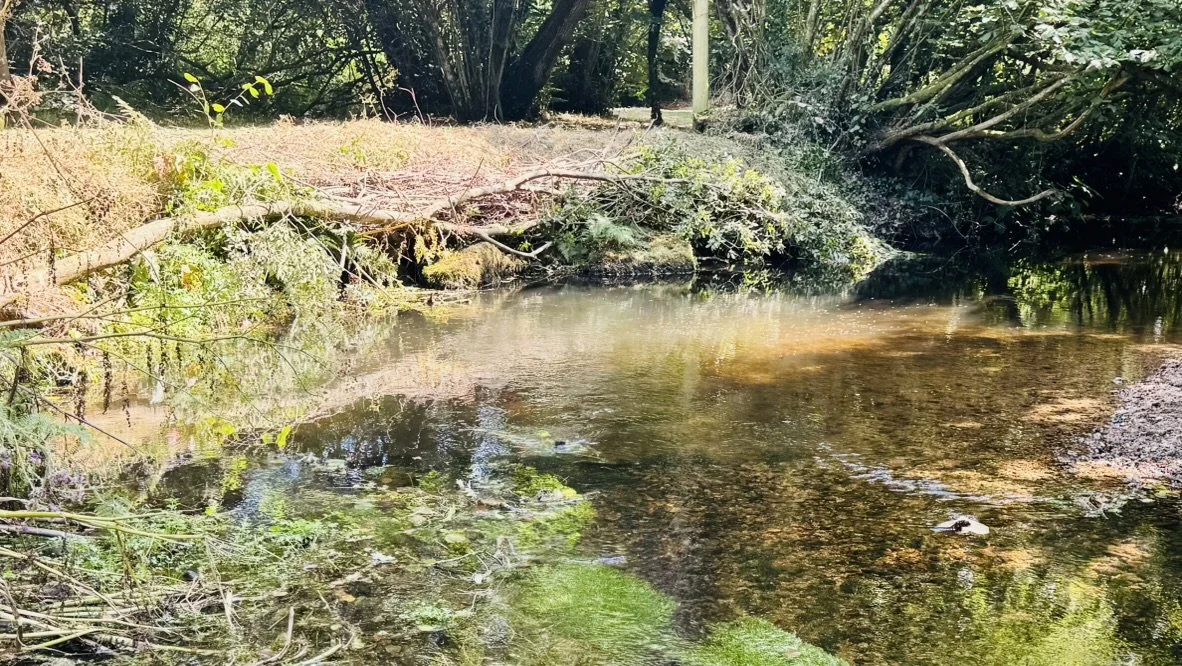
Normal water level would be around a foot higher here…
It starts with a conversation
One of the unexpected bonuses of attending local village shows and speaking to community groups is the conversations that happen afterwards - usually at the pub, but good conversations nonetheless!
People come over to talk about the river. Some remember salmon numbers from years gone by. Others want to know about Riverfly, water quality or the work going on across the catchment. And increasingly, we're also being approached by people who actually own stretches of riverbank.
Quite often the question is remarkably simple. "We've got this bit of river... and I is there anything we could be doing to improve things!?"
And that's a great question.
Because many riparian owners genuinely want to do the right thing. The thing they sometimes lack isn't enthusiasm, but the confidence to actually have a go. Where do you start? What should you leave alone? Is that erosion actually a problem? Could that fallen tree be useful? What can be done without inadvertently creating another problem somewhere else?
Sometimes all that's needed is another pair of eyes and a walk along the river together.
Making a plan
Earlier in the year, we did exactly that on this stretch of the Bovey. We walked the river with the owner, looked at the habitat and identified a handful of places where some relatively simple interventions could help. There were areas of degraded and eroding bank, places where additional structure could be introduced and opportunities to use material already growing alongside the river.
From that walkover developed a smallish plan.
Willow was coppiced earlier in the year and the cut material used to create bundles of dead brash, ready for repairing some of the more vulnerable sections of bank. Some larger timber was also retained for later use. Then we waited… And waited a bit more! And, given this summer the condition, although far from ideal for the river, were just right for what we needed to do.
Ironically, rather than rain eventually providing our opportunity, it was the complete absence of it that did the job.
Logs, sticks & string!
With the river exceptionally low, we could get into areas that would normally be considerably harder to work in. Earlier-felled timber was positioned along sections of degraded bank to begin rebuilding the original profile. Behind it, bundles of dead willow brash were packed into place before being pinned and securely tied.
Even the type of rope matters… For this sort of work we use natural manila rope, something favoured by our friends at the Environment Agency. If part of a structure eventually moves or the rope finds its way into the river, we're not introducing synthetic material into the watercourse.
It's another small detail, but one worth thinking about.
Once complete, what you're left with can initially look rather... agricultural. A few logs. A bundle of sticks. Some rope and Hardly worthy of Kevin McLeod’s voice over a la Grand Designs!
But the clever bit actually happens afterwards and is carried out by the action of the river itself.
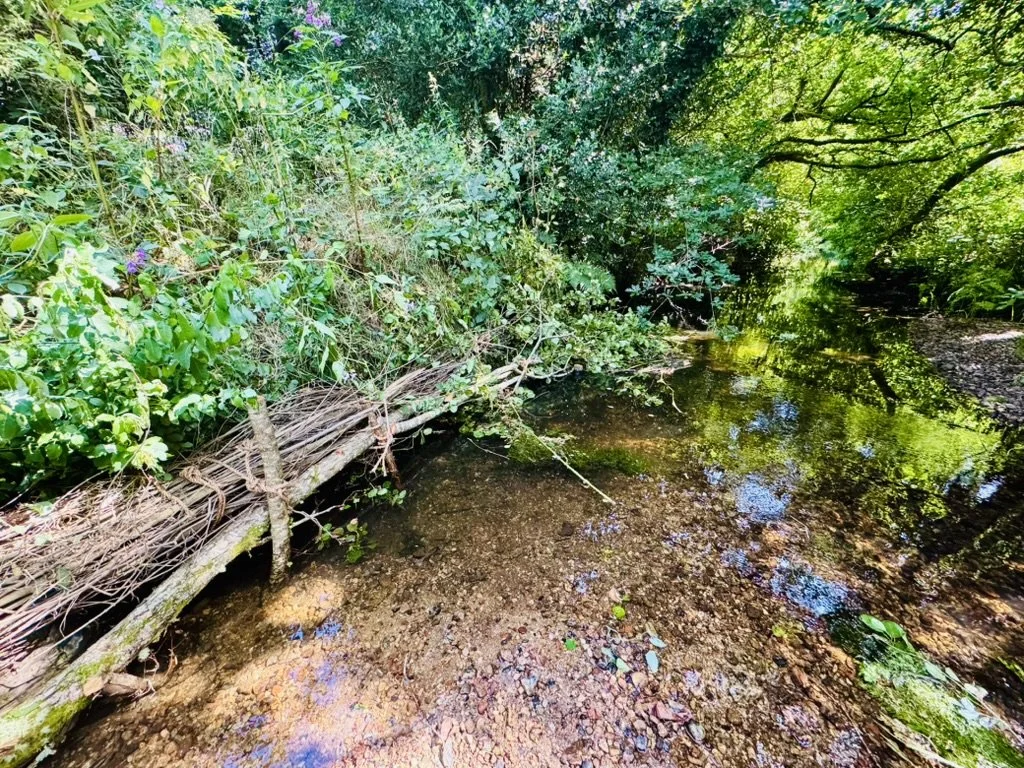
A nice bundle staked and tied back into the bank…
Let the river finish the job
When higher flows eventually return, water will begin moving through and around these structures.
Because the brash bundles aren't solid, they take some of the energy out of the flow while allowing water to pass through them. Fine sediment and organic material begin collecting amongst the branches and, gradually, those initially rather open structures start filling up with silt and sediment.
In effect, we're giving the river somewhere to rebuild its own bank. Then comes the living part…
Fresh green willow slips were also cut and bundled before being left in the river to encourage root development. Once we've finally had some proper rain and the banks are wet enough, those slips can be planted through the gaps in the brash bundles and around the repaired sections.
Willow is particularly useful for this because once established its roots help bind the bank together. Above water, the growing trees will eventually provide shade and cover; below it, their roots create additional complexity and refuge along the river margin.
Dead material provides the initial structure and living willow eventually takes over. And the river does much of the legwork in between.
Messy is always better
There's another reason I like this type of work. It isn't tidy. I feel that overtime we've become remarkably conditioned to seeing fallen branches, leaning trees and woody material beside rivers as something that needs clearing away. Yet natural rivers simply doing their thing are messy places.
Banks slump (within reason!). Trees fall. Branches collect. Sediment moves. Plants grow through everything. That mess over time creates habitat. The aim here isn't to create a perfectly straight, beautifully manicured riverbank. It's to give an eroding section enough help that natural processes can begin taking over again and the habitat can restore and heal.
In six months, hopefully, it will look different. In two years, different again. Eventually, if we've done it properly, you'd struggle to know anything had been put there at all… and this is pretty much the idea.
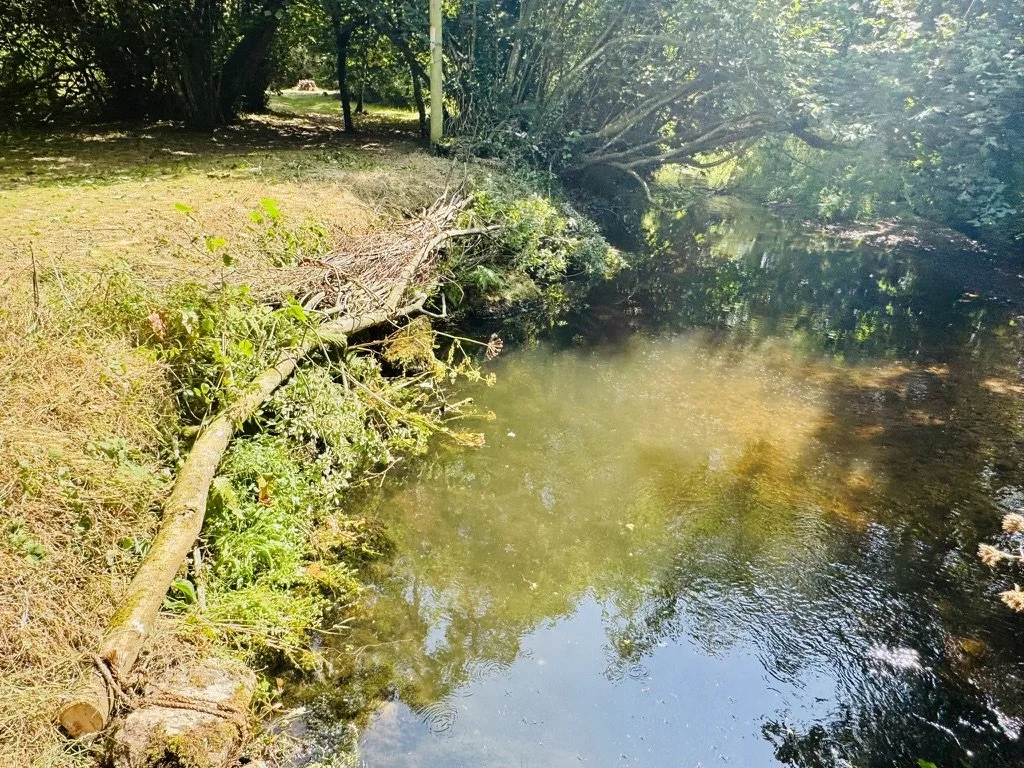
Everything working together to protect an eroding bank…
Passing on the baton
For me, though, probably the most encouraging part of the day wasn't actually the work. It was watching someone's confidence grow.
We can organise volunteer days and carry out projects across the catchment, and we'll continue doing exactly that. But there's an enormous opportunity in helping the people who actually live beside these rivers understand what they're looking at and what they might be able to do themselves. Walk a stretch together. Talk through what's happening. Demonstrate a few techniques. Explain why one area might benefit from intervention while another is probably best left completely alone. Suddenly, managing a riverbank doesn't seem quite so daunting.
And next time a tree comes down, perhaps the first thought isn't automatically "How do I get that out of the river?" It might instead be… "Could that actually be useful and help the river out?"
That small change in thinking could make an enormous difference across an entire catchment.
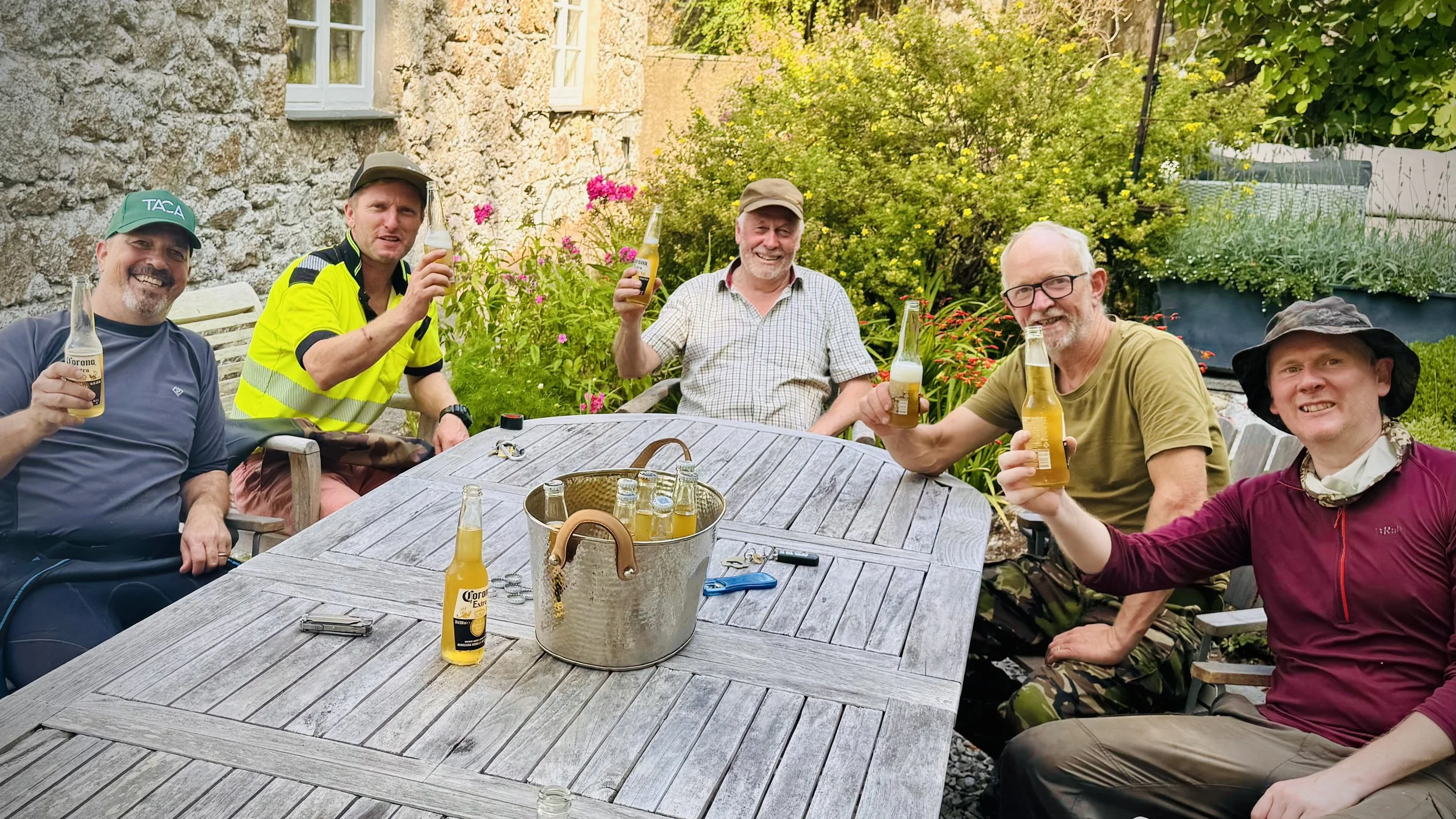
After a job well done, there’s usually beer involved…
Your bit of river
There are hundreds of individual landowners along the Teign, Bovey and their many tributaries, each looking after their own little piece of the system.
Imagine the difference if more of those stretches were managed with habitat, resilience and natural river processes in mind. Not huge projects everywhere. Just lots of small, sensible interventions, with the correct permissions, focused in exactly the right places.
So, if you are a riparian owner somewhere within the Teign catchment and have ever wondered what could be done, we'd genuinely like to hear from you. There may be some simple opportunities to improve habitat, strengthen a vulnerable bank or allow the river to behave a little more naturally. Sometimes it only takes a walkover and a conversation to spot an easy win.
And finally, a big thank you to TACA's own John Wilding and the catchment's very own Kier Collings, who very kindly provided the light chainsaw duties and expertise needed during the day. Thanks to father for demolishing the sandwiches, and of course, the owners, who made us feel welcome and kept us fuelled and going in the heat!
As always, leave it to us to provide the enthusiasm, and realise that the water is just a little bit deeper than the top of the wellie boot! The river can provide the sediment and the energy. And, at some point, hopefully, Dartmoor might just finally provide the rain we so desperately need!
Because while this summer has certainly presented our rivers with some challenges, every now and again it's worth taking advantage of the opportunities it gives us too.