
Volunteer Day – Rewetting above Fingle Mill
We’re kicking off 2026 with a really exciting bit of practical catchment work for you all to volunteer with should you wish to. On Friday 23rd January, we’ll be heading up to a small tributary above the old Fingle Mill - a narrow woodland brook that feeds down into the Teign within the Fingle Gorge. This will be our first time working on this stretch, and it offers a brilliant opportunity to improve resilience in the headwaters of the catchment.
We’ll be joined by our friends at the National Trust, who are leading woodland and tributary restoration in this and other parts of the valley. This work aligns neatly with a wider programme of environmental measures being implemented upstream and downstream along the Teign Valley.
As ever, it helps us plan if can register your interest below so we know what’s achievable on the day based on numbers. To assist, we’ve added What3Words locations to make meeting up easy…
When: Friday 23rd January 2026
Time: Meet at 10:00 am
Meet at: ///bulge.custodial.trickster (Fingle Bridge)
Finish: Around 15:00 pm
Where we’ll be working: Brook above Fingle Mill, near ///puddles.crumb.unless
Why Leaky Dams?
Leaky dams are one of those interventions that make more sense the longer you spend thinking about them - and even more sense once you see them in action. In essence, they’re a natural way of helping the landscape hold onto water for longer.
I should use this analogy more often, but think of them as adjusting the catchment’s plumbing.
Small tributaries, like this one we’ll be working on, respond fast to rainfall. In drought, they dry up pretty early, and in periods of heavy rain, they accelerate runoff downhill. Neither situation is helpful for river health. By introducing leaky dams — structures made from natural woody material -we deliberately:
slow down and lessen peak flows,
encourage water onto the woodland floor,
increase natural water storage,
reduce downstream scouring,
settle sediment in useful places,
and create small aquatic and semi-aquatic habitats.

Crucially, leaky dams do not fully block the stream. Like a well-worn pair of waders, they leak - hence the name - allowing water to pass through steadily rather than rush through all at once. Over time, they help rewet woodland soils, creating micro-wetlands, and supporting invertebrates, amphibians, fungi and plant communities that prefer damp or intermittently wet conditions.
And for a river like the Teign, the benefits don’t stay local. Headwaters are where resilience begins. A hydrated woodland today becomes a more stable main stem tomorrow. And things only improve as time ticks past.
Letting the Forest Do the Work
One of the better-kept secrets of restoration work is that nature often does the heavy lifting once you give it the right starting conditions. Leaky dams are a perfect example. Install them, and over the months that follow, wood traps more wood, sediments sort themselves, vegetation recolonises bare patches, and shallow pools begin to form.
The dams stop being installations and start becoming part of the woodland architecture - the kind you’d assume has been there for decades.
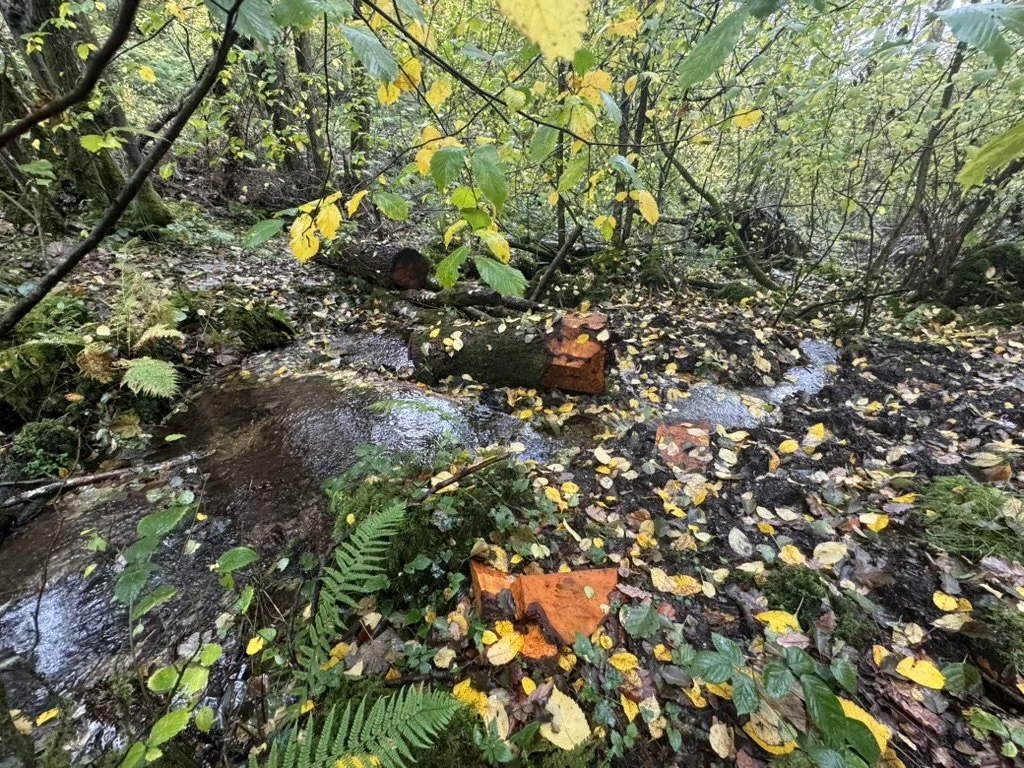
A good example of woody debris holding water back…
What to Expect on the Day
We’ll be working in and around the brook, carrying, placing and securing natural woody material in a series of locations. Once you get your eye in and see the work in action, you’ll never look at a small brook in the same way again! If you enjoy using your hands, working outdoors, and seeing immediate visual results, this is that kind of day. As with all of our planned days, no experience is required - just enthusiasm and a willingness to embrace mud as a neutral rather than hostile state!
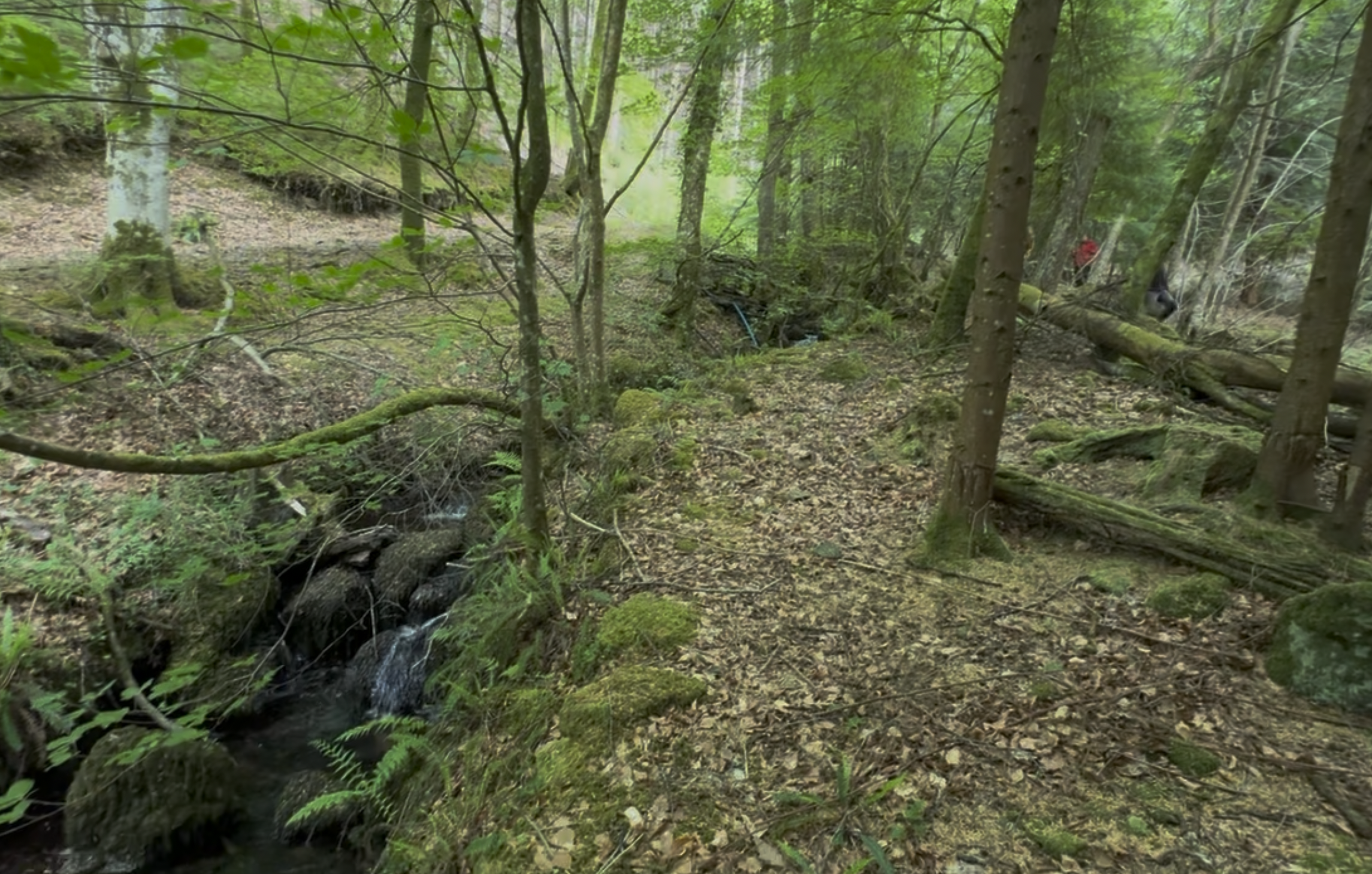
This is the actual brook we’ll be working on…
What to Bring
Wellies or waterproof boots (highly recommended)
Weather-appropriate outdoor clothing
Gloves (we’ll have spares)
Food, water and plenty of snacks
A camera, if you enjoy documenting progress
A sense of humour (not mandatory but historically useful when working with us!)
Why Small Tributaries Matter More Than You Think
Main rivers get most of the attention, but tributaries are where a lot of the magic begins. High up, they are regulators of temperature, pathways for nutrients and sediments, and early indicators of change within the catchment and lower down, they provide nurseries for young fish.
By strengthening resilience here, we support the river downstream in quiet but meaningful ways.
Join Us
If you’d like to get involved - and we’d love to have you - sign up and meet us at Fingle Bridge for 10:00 am where we’ll head to the brook as a group. Here’s to starting 2026 with muddy boots, good company, and a little more water staying where it’s meant to.