
A New Year on the River
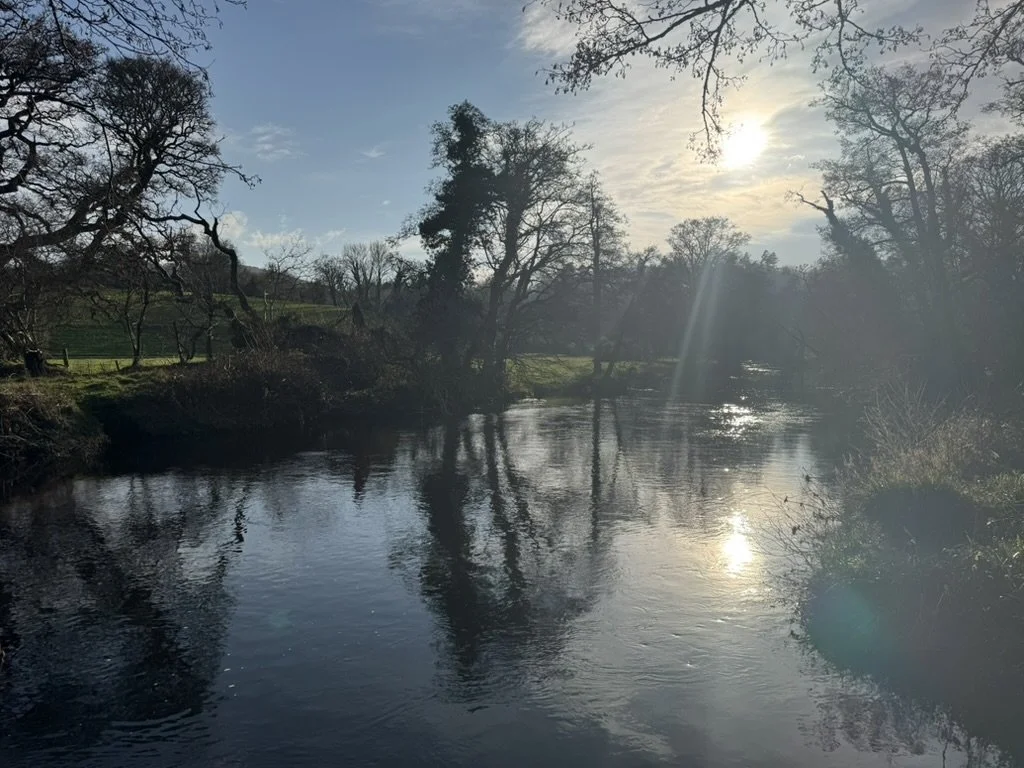
There’s something about the first days of a new year that makes rivers feel especially honest. The crowds have thinned thanks to bleak sideways drizzle, the banks are quiet, and what you see feels unfiltered — cold water, clear light filtering through the skeletons of trees, and a sense that the river is simply being what it is.
As we step into 2026, it feels like a good moment to widen the lens slightly and look beyond the Teign catchment, before bringing our focus back home again. Because while our work is always rooted here, the story of Atlantic salmon is very much a global one.
The Bigger Picture: What NASCO is Telling Us
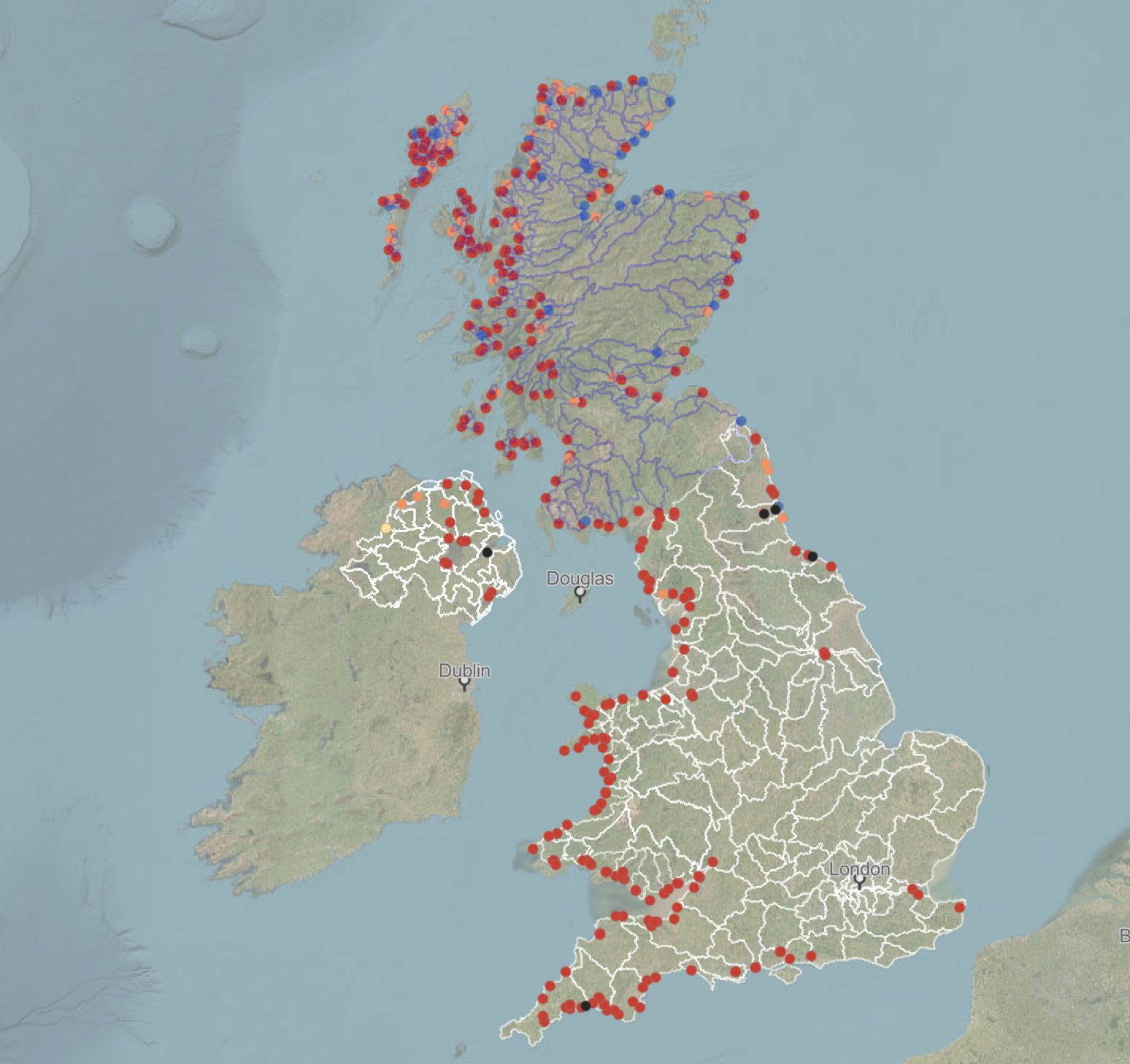
At an international level, the health of Atlantic salmon populations is tracked by the North Atlantic Salmon Conservation Organization (NASCO) - a body that brings together data from across the species’ entire range, from North America to Europe and beyond.
Their most recent work paints a picture that is, frankly - and apologies for the post-Christmas pun - sobering.
Across much of the North Atlantic, salmon populations are under pressure. Climate change, warming oceans, altered prey availability, barriers to migration, habitat degradation, and cumulative human impacts are all combining in ways that salmon have never had to endure before - at least not at this scale or speed.
Using long-term datasets up to 2023, NASCO’s mapping highlights many UK rivers - including the Teign catchment - as being in a high-risk category based on historic trends. That classification isn’t a verdict, but it is a warning. It tells us that without continued effort, protection and improvement, recovery cannot and should not be taken for granted.
In many ways, NASCO’s work reinforces something those of us connected to our Dartmoor rivers already feel instinctively: the challenges facing salmon are not isolated, and they don’t stop at national borders or estuaries.
Why Global Context Matters Locally
It would be easy to read this kind of information and feel discouraged. But the real value of NASCO’s work isn’t just in highlighting risk - it’s in reminding us why action at a local level matters so much.
We can’t influence conditions in the North Atlantic. We can’t control what happens off Greenland or in distant feeding grounds. But what we can influence is everything that happens between a river’s headwaters and the sea - and with that, at least, we have some form of control.
Cold, clean water.
Stable banks.
Connected habitat.
Accessible spawning gravels.
Safe passage upstream and downstream.
These are the parts of a salmon’s life where local action really counts. They sit on a knife-edge - often making the difference between a population that holds on and one that quietly slips away.
Back Home
Which brings us back to the Teign - and to the present moment.
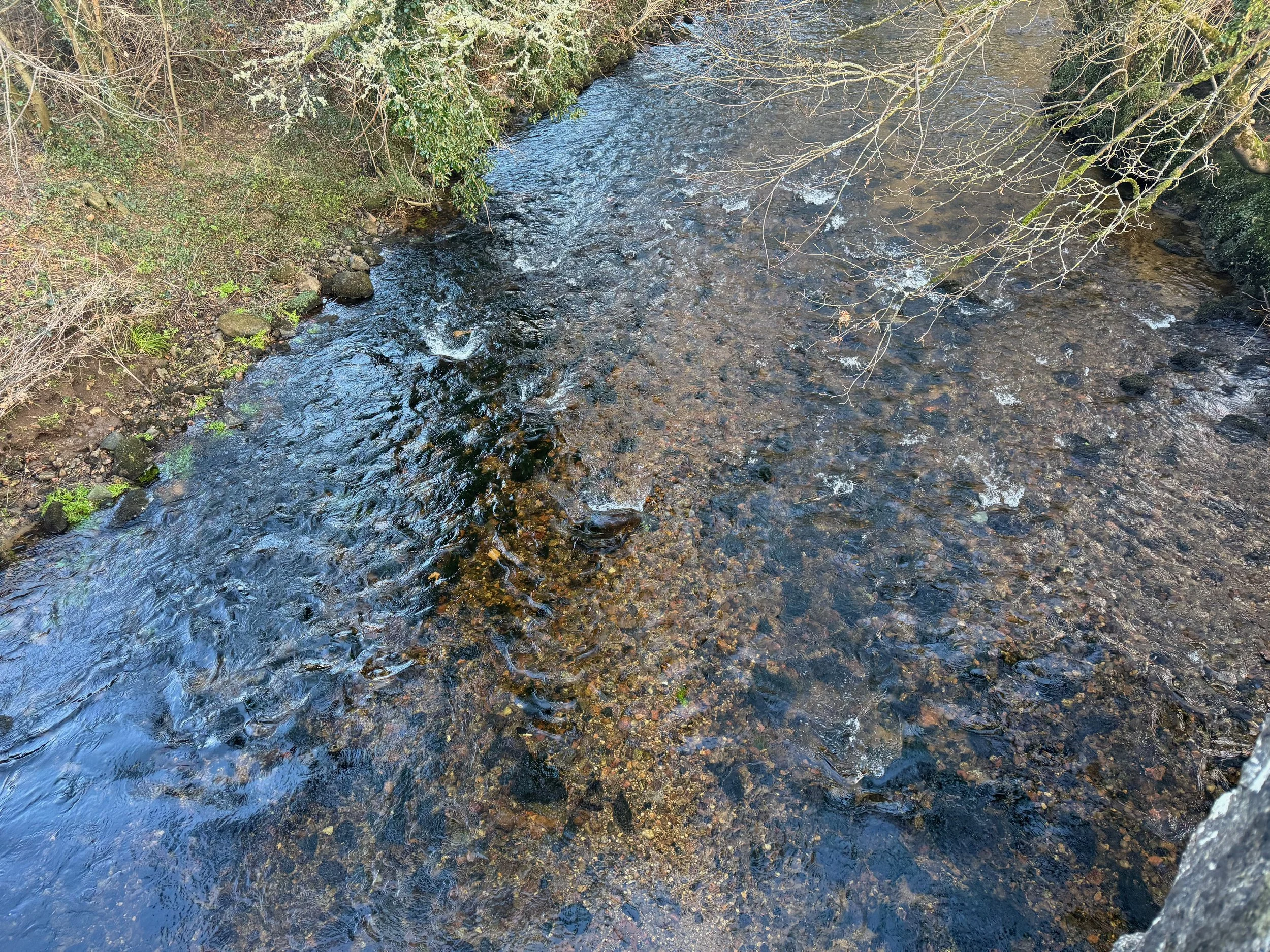
Over the Christmas and New Year period, a long-overdue cold, crisp spell settled over the catchment. River levels dropped nicely and flows slowed, allowing water clarity to improve. The result was a perfect recipe: the upper reaches felt calm in that rare way winter rivers sometimes do when conditions line up just right.
During that time, salmon were spotted well upstream - exactly where you’d hope to see them at this point in the season. And more exciting still, there have been possible redds identified on the River Bovey.
If confirmed as Atlantic salmon, that would be genuinely good news. It would mean fish not only made it back, but found suitable habitat, clean gravels, and the right conditions to spawn - no small achievement given the pressures they face.
Nothing is ever certain with rivers, and we’re always careful not to jump to conclusions. But these are exactly the kinds of signs that remind us why we do the work we do - and why it’s important to remain both positive and proactive for the future.
Starting the Year With Clear Eyes
So as we welcome in 2026, it feels right to do so with a balanced view. The global picture for Atlantic salmon is undoubtedly challenging - NASCO’s data makes that clear. The Teign’s historic classification reminds us that recovery requires continued effort, not complacency or the assumption that someone, or something else, will magically solve the problem.
But at the same time, the river is showing us reasons to stay engaged, hopeful, and committed. Fish are returning. Habitat is responding. People are paying attention. And small but important positive signals are emerging where they matter most.
To me, that combination - honest data paired with lived observation - is exactly where meaningful conservation work sits.
Projecting Forwards
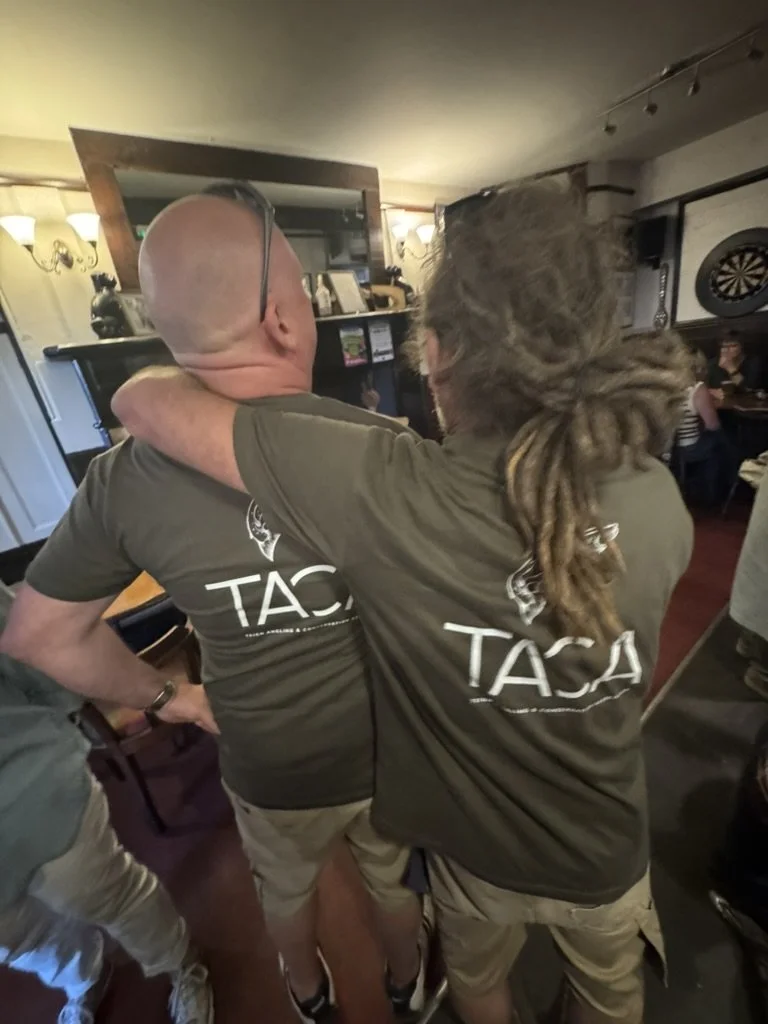
As the year unfolds, there will be surveys to complete, habitat to improve, conversations to continue, and undoubtedly a few surprises along the way. We’re looking forward to seeing many of you out and about across the catchment in the coming months - on riverbanks, at events, on volunteer days, and, of course, those informal moments (often involving a good pub) where some of the best river conversations still happen.
Here’s to a positive 2026. Here’s to keeping our eyes open. And here’s to doing what we can, where we can, for the rivers we care about.