
Casting a Longer Line
There are probably easier ways to introduce people to fly fishing than standing in the middle of a Dartmoor field during sideways rain. But where would be the fun in that?
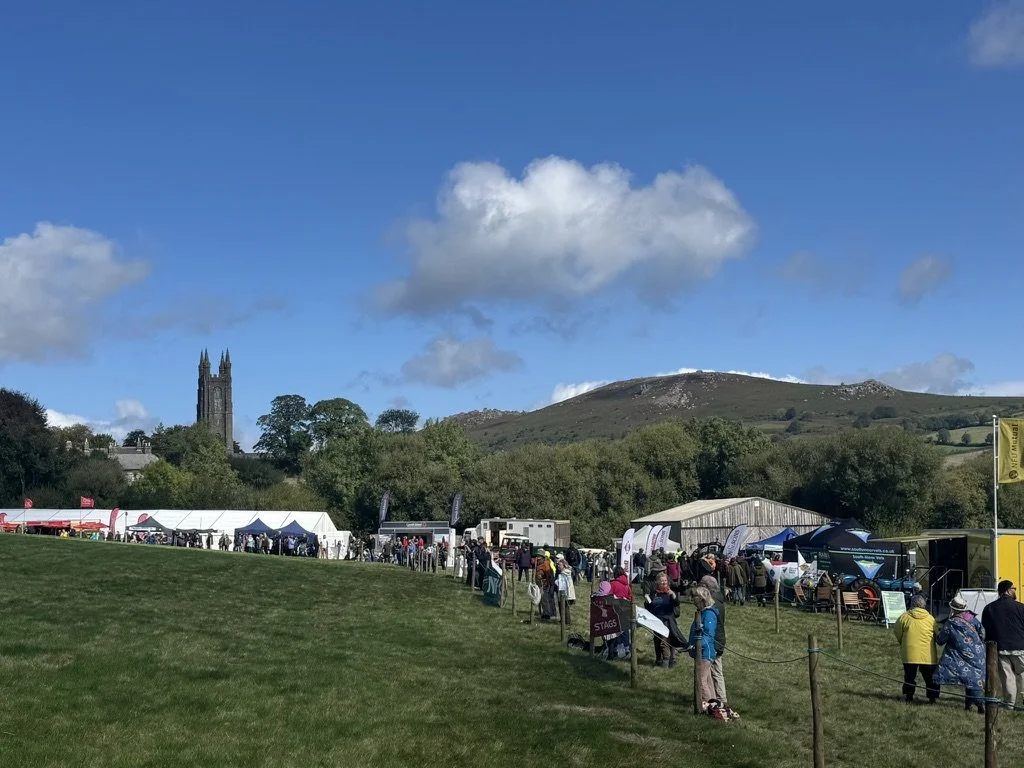
Last week saw us heading to the Widecombe Fair, and despite the distinctly traditional British approach to summer weather as we set everything up, this year’s event represented something of a first… In fact, quite a few firsts!
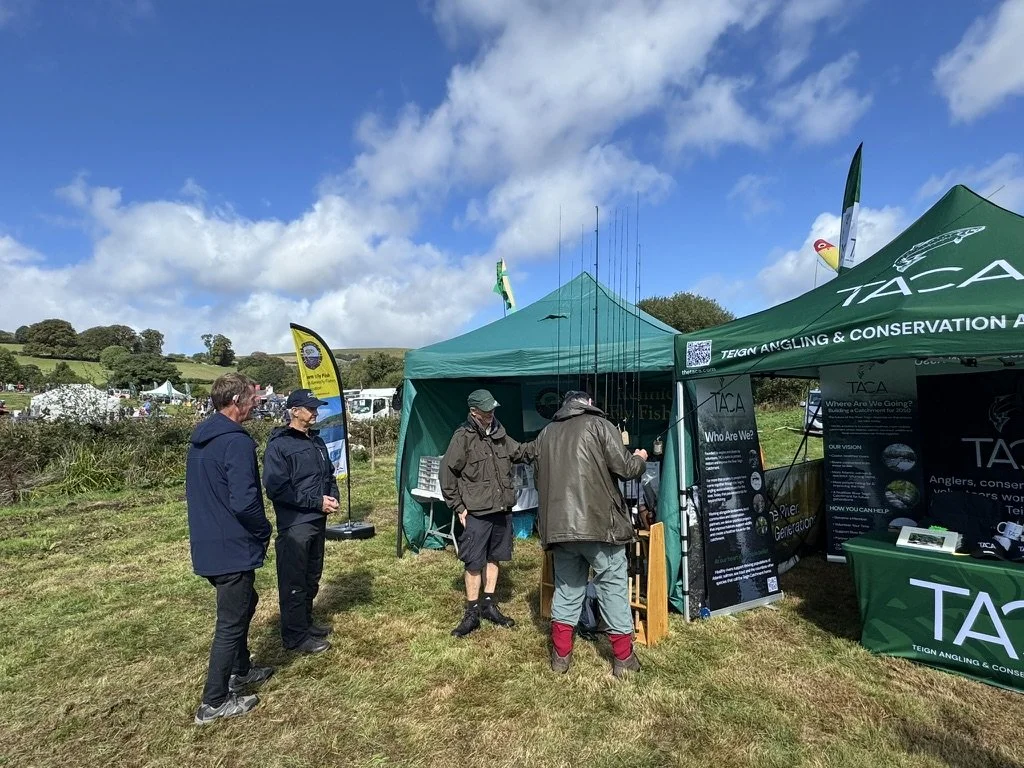
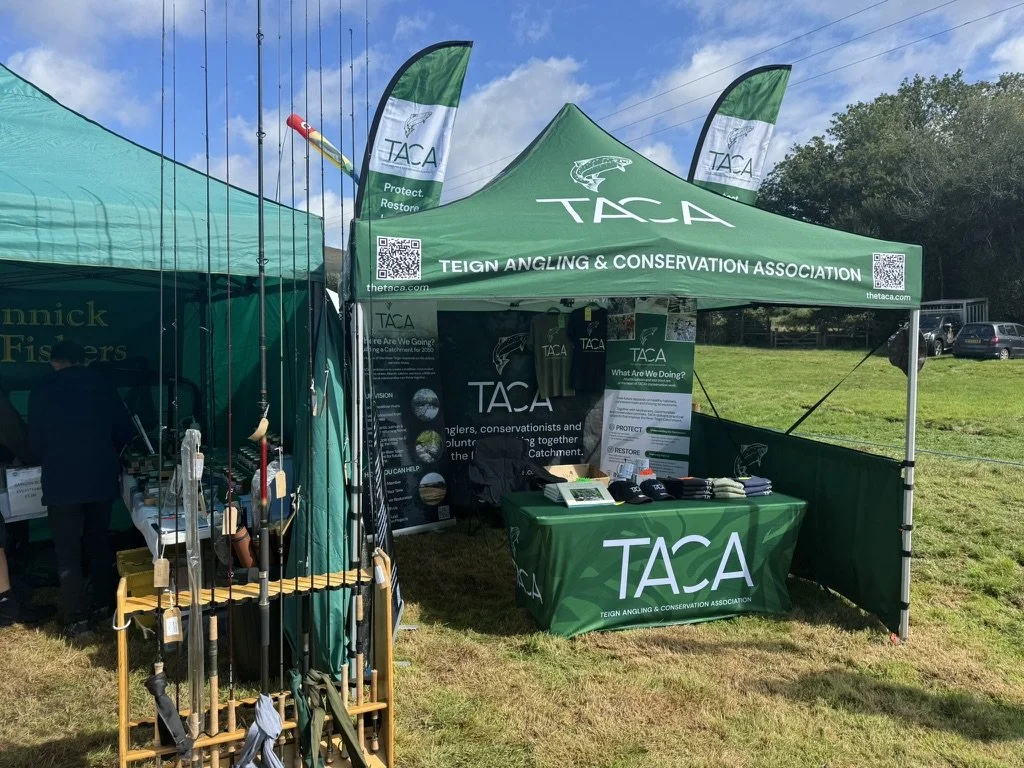
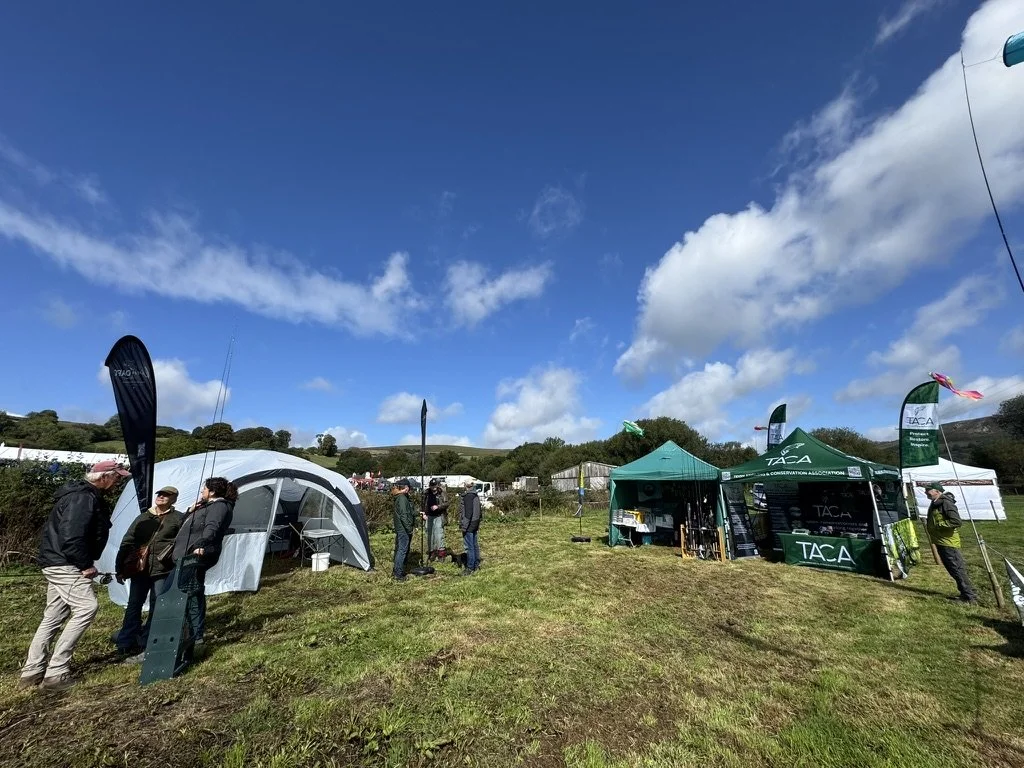
For the first time, fly fishing had a dedicated presence at the Fair, bringing together the Kennick Fly Fishers, Dart Angling Association, TACA and Snowbee representative, and fly fishing sage, Simon Kidd in one area devoted to fishing, rivers and the species that depends upon them. The whole idea was the brainchild of John Hern from Kennick Fly Fishers, and by the end of the day I think we'd all realised that he'd stumbled upon something rather good.
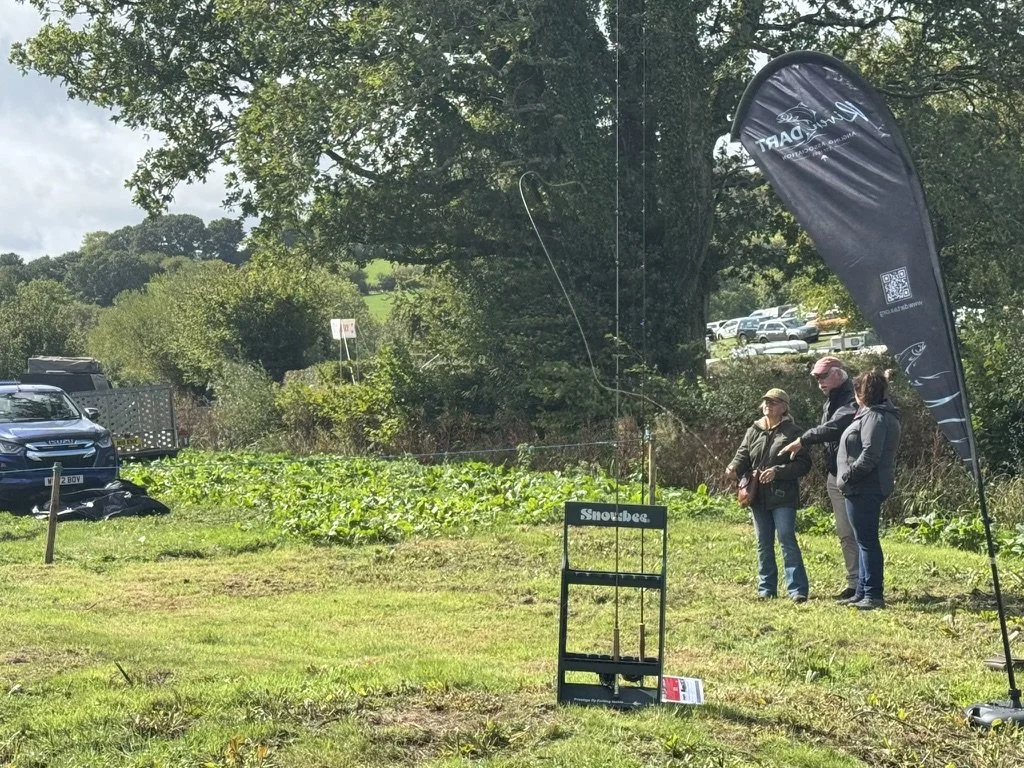
Something to cast at
The really clever part was having enough space alongside the stands for people to actually pick up a fly rod and have a go. Fly casting is one of those things that’s so visual. Even if you've never held a fly rod in your life, there's something about watching physics in action and a line unroll through the air that makes you stop and look. Simon and the Kennick team were soon taking complete beginners out onto the grass and introducing them to the basics. And that's when something else started happening.
Someone would wander over and have a go at casting. Their partner, family or friends would watch for a while before inevitably drifting towards the surrounding stands. Suddenly we had conversations happening everywhere and people engaged.
Some were about fishing. Some were about rivers. Others were about salmon, habitat, insects, conservation or where somebody could actually go and try this for themselves. The area we had for ourselves became a very effective little ecosystem in its own right!
Although, unlike most ecosystems we deal with, this one contained a surprisingly large amount of waterproof material and Gore-Tex!
From the riverbed to the fly box
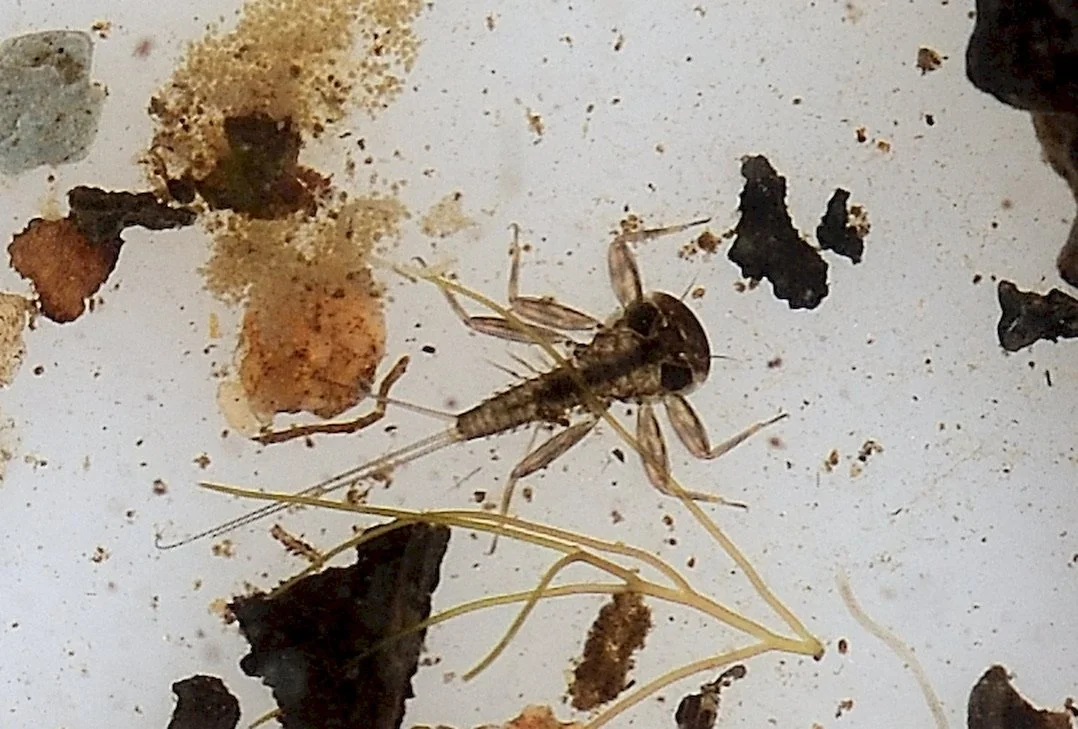
The Dart Angling Association had brought along a Riverfly kit and carried out some kick samples from the nearby West Webburn, giving visitors the chance to get a close look at some of the Riverfly species living beneath the surface. Alongside that were fly-tying demonstrations, which created a rather strong connection between the two worlds… Here’s something living beneath a stone in a Dartmoor stream and here is the artificial fly an angler might tie to imitate it. And, somewhere between the two is a trout deciding whether we've done a remotely convincing job.
It's also a perfect example of why angling and conservation sit so naturally together.
An angler interested in catching trout soon becomes more interested and aware in what those trout are eating. That means understanding insects. Understanding insects means paying greater attention to habitat, flow, temperature and the general health of the river. Before you know it, somebody who came over to learn how to cast is peering into a tray of invertebrates and unknowingly being immersed in the condition of a Dartmoor stream. That's quite a journey for ten minutes at a country show!
One careful owner
Meanwhile, the Kennick boys had arrived with a great collection of pre-loved rods, reels, tackle and flies. There were bargains to be had, and plenty of people seemed quite happy to have a rummage through the collection. If ever someone wanted to get started, then this was a perfect place to start without overly investing in terms of cost.
John had also brought something slightly less conventional for a fly-fishing stand. Some of his Kennick Honey. It was at this point that I thought John doesn't have quite enough hobbies already!
Naturally, I felt it was important to support this particular diversification and came home with a jar… I can report that it's very good, although whether honey technically counts as fishing tackle is something I haven't yet managed to establish. Give us another show or two together and I'm sure we'll find a tenuous connection!
Fishing closer to home
One of the most interesting things for me was how many conversations we had with people who simply hadn't realised what fishing was available locally. There was genuine surprise when we talked about the season permits offered by our local angling associations and just how affordable access to some wonderful stretches of river can be.
We spend a great deal of time talking about encouraging new people into angling, but sometimes one of the biggest barriers isn't equipment or ability. It's simply knowing where you can go and which associations to speak to.
The Teign catchment offers some fantastic wild trout and sea trout fishing, while Kennick provides another wonderful opportunity to discover fly fishing on a reservoir. Our local associations offer memberships and day-ticket opportunities which can make getting onto the water considerably more accessible than many people imagine.
I'd be very surprised if some of the conversations we had at Widecombe don't result in new members, day tickets being bought or somebody just picking up a fly rod again for the first time in years. And if they do, that's a pretty good result from a day spent in a field.
Angling & conservation
For TACA, though, there was another important element to the day. We've always thought of Angling & Conservation sitting side by side for a reason. They aren't separate conversations.
Healthy fisheries need healthy rivers. Healthy rivers need functioning habitat, clean water, insects, shade, spawning gravels, woody material and all the wonderfully complicated things we've spent so much time writing about.
So when somebody comes across to talk about catching trout, it's remarkably easy for that conversation to move towards Riverfly monitoring, habitat improvement or what we're doing to help Atlantic salmon. And equally, somebody who initially stops because they're interested in wildlife might discover that angling offers another way of connecting with the river, and more importantly, a route into making this happen.
Widecombe demonstrated that relationship particularly well. We weren't standing there telling people that angling and conservation belong together. They could actually see it… and more importantly, get involved and have a go.
Broadcasting from Widecombe
We even managed to spread the message slightly further than the showground when BBC Radio Devon came over for a chat.
It gave us an opportunity to explain who this slightly eclectic collection of people were, why we'd turned up at Widecombe and what these rivers have to offer. And, naturally, I wasn't going to miss the opportunity to mention salmon. Because one of the things that still surprises people is learning that Atlantic salmon continue to return to the River Teign to spawn.
Their numbers may be nothing like those remembered by previous generations, but they're still here. And every opportunity we have to tell people that story matters.
If somebody listening at home suddenly thinks, “Hang on, there are salmon in the Teign?”, then we've already achieved something. Curiosity is a pretty good place for decent conservation to be born from.
Something was missing
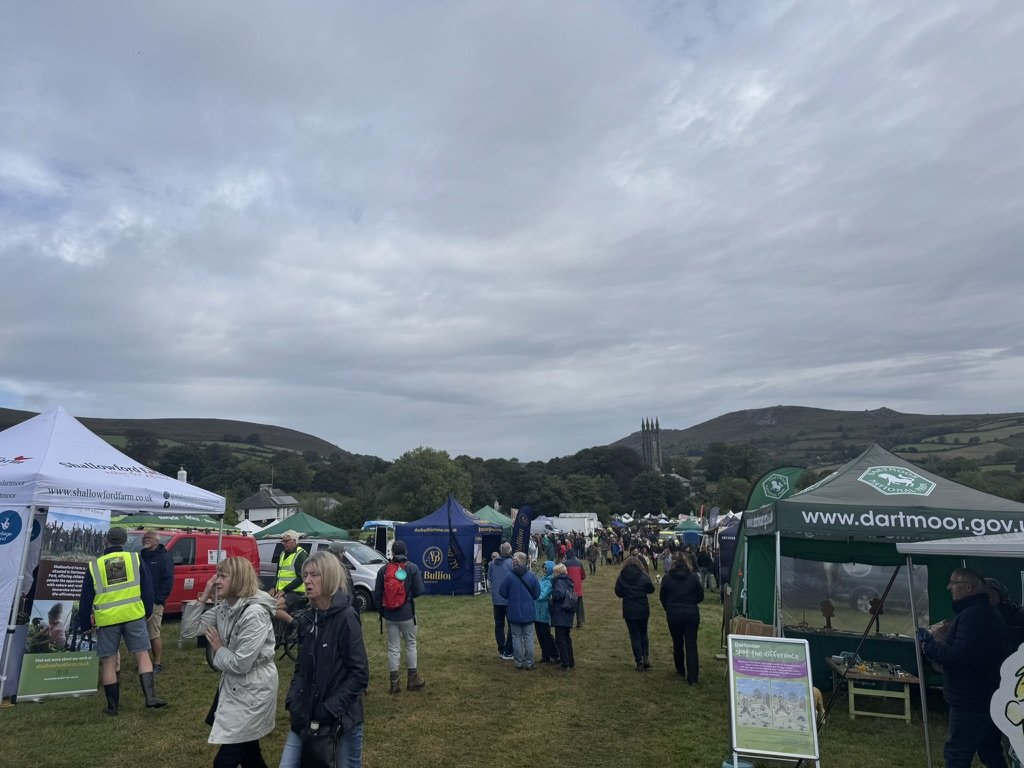
For all the new things happening at Widecombe this year, there was also one very noticeable absence. Livestock weren't present at the Fair because of the risk from bluetongue, with cases having been recorded in Devon. At an event so firmly rooted in Dartmoor's farming traditions, their absence inevitably changed the feel of the showground, and it was something quite a few of the people we spoke to commented upon during the day.
A country show without its cattle and sheep does feel slightly odd. A bit like a fly box without any flies in it… technically still a box, but you can't help feeling something important is missing.
There were, however, some very welcome four-legged representatives.
Three magnificent heavy horses made their way around the showground pulling an equally impressive trailer, and they certainly drew a crowd whenever they passed. There is something about seeing working horses together that makes almost everyone stop what they're doing for a moment and watch.
Four seasons in one showground
Of course, none of this would have been complete without the weather. We arrived to set up in what can best be described as ‘proper sideways rain’. Gazebos suddenly became sailing equipment and waterproofs were tested rather more thoroughly than anticipated.
Then, almost perfectly timed with the gates opening, the clouds began to lift. By the end of the afternoon we were packing everything away in bright, warm sunshine. Classic British summertime had finally arrived!
The unexpected bonus was that those few hours of sunshine gave the access tracks a fighting chance to dry out after hundreds of vehicles had spent the day turning them into something resembling a particularly ambitious Natural Flood Management project!
Although, looking around the showground, I wasn't especially concerned. If you're going to get your vehicle stuck in a muddy field, Widecombe Fair is probably the best possible place to do it as there were tractors everywhere!
And having just watched three heavy horses hauling their way around the showground, we probably had a reasonable backup plan too!
A recipe worth repeating
By the end of the day, though, I think we'd discovered something considerably more useful than an emergency tractor recovery service. Our little fishing enclave worked and worked well.
Bring the angling associations together. Give people somewhere to actually try fly casting. Show them the insects that live in our rivers. Demonstrate fly tying. Offer information about where they can fish. Talk about habitat and conservation. Throw in some pre-loved tackle and, apparently, a jar or two of honey. Then allow the conversations to happen naturally.
It created an area people wanted to stop at rather than simply walk past. That's something that I think is worth building upon as we start thinking about the 2027 show calendar.
Because country shows give us access to an extraordinary mixture of people. Some already fish. Some used to fish. Some have always fancied trying it. Others are interested in wildlife, farming, rivers or simply want to know why someone is waving a 9 foot carbon stick around in a field! Every one of those is an opportunity to start a conversation and engage.
And if a few of those conversations lead to someone joining an angling association, buying a day ticket, volunteering for Riverfly, helping with habitat work or simply looking at their local river a little differently, then I reckon John was onto something and the day was a success.
A huge thank you to John Hern and Kennick Fly Fishers, Dart Angling Association and Simon Kidd from Snowbee for making our first Widecombe Fair such an enjoyable one. We'll certainly be back.
Although next year I'm putting John’s Kennick Honey on the risk assessment. Once word gets out, I suspect that's going to be the most dangerous thing on the stand!