
The River Does the Rest
First of all, an apology. If you've been patiently waiting for your usual TACA blog to arrive in your inbox over the past few weeks, you may have begun to wonder whether I'd fallen into the river, been eaten by a particularly ambitious trout or simply run out of things to say.
I can assure you it's none of the above. The truth is that we've been rather busy doing some of the things I usually spend my time writing about!
And nowhere has that been more apparent than on the upper River Teign at Rushford, where we've recently completed six days of practical habitat improvement work through the Environment Agency's Fisheries Improvement Programme.
Those of you who read our earlier piece, Licence to Improve, might remember us talking about what we hoped to achieve along this stretch of river. Well, the plans have now become reality. And I must say, it's rather satisfying to see.
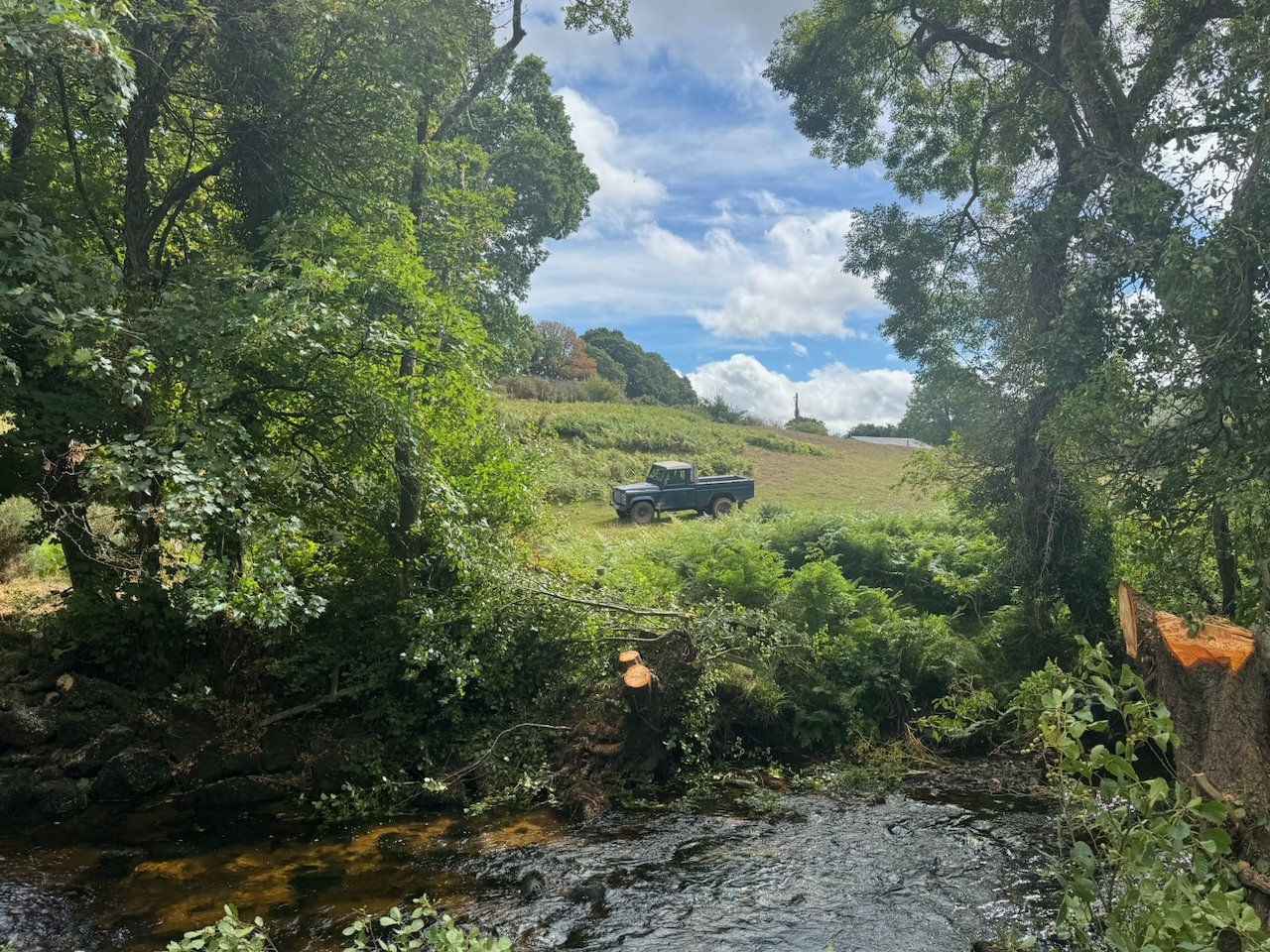
Finally, some light allowed to reach the riffle below…
From licence to landscape
One of the things I particularly like about this project is the story behind how it came together. The Environment Agency's Fisheries Improvement Programme, or FIP, uses income from rod fishing licences to help fund projects that improve fisheries and the habitats on which fish depend. In our case, that funding was supported by contributions from the Upper Teign Fishing Association and TACA.
It's a rather good example of how relatively modest investments, combined with local knowledge, practical expertise and a healthy dose of enthusiasm, can turn into something tangible. And at Rushford, tangible meant getting into the river and doing some proper work.
Earlier walkovers had identified sections of degraded and eroding bank, opportunities to improve bankside vegetation and places where we could introduce a little more of the natural complexity that healthy rivers need. Nothing particularly glamorous. No enormous concrete structures or grand engineering schemes. Just trees, timber, willow, natural materials and a plan to help the river do more of what rivers are supposed to do.
Six days, several trees & a fair bit of muscle
Over six working days, we set about putting those plans into practice. Some days were supplemented by our wonderful TACA volunteers, while others were spent working alongside the mighty Kier Collings and Finn from Kier Collings Estate Management.
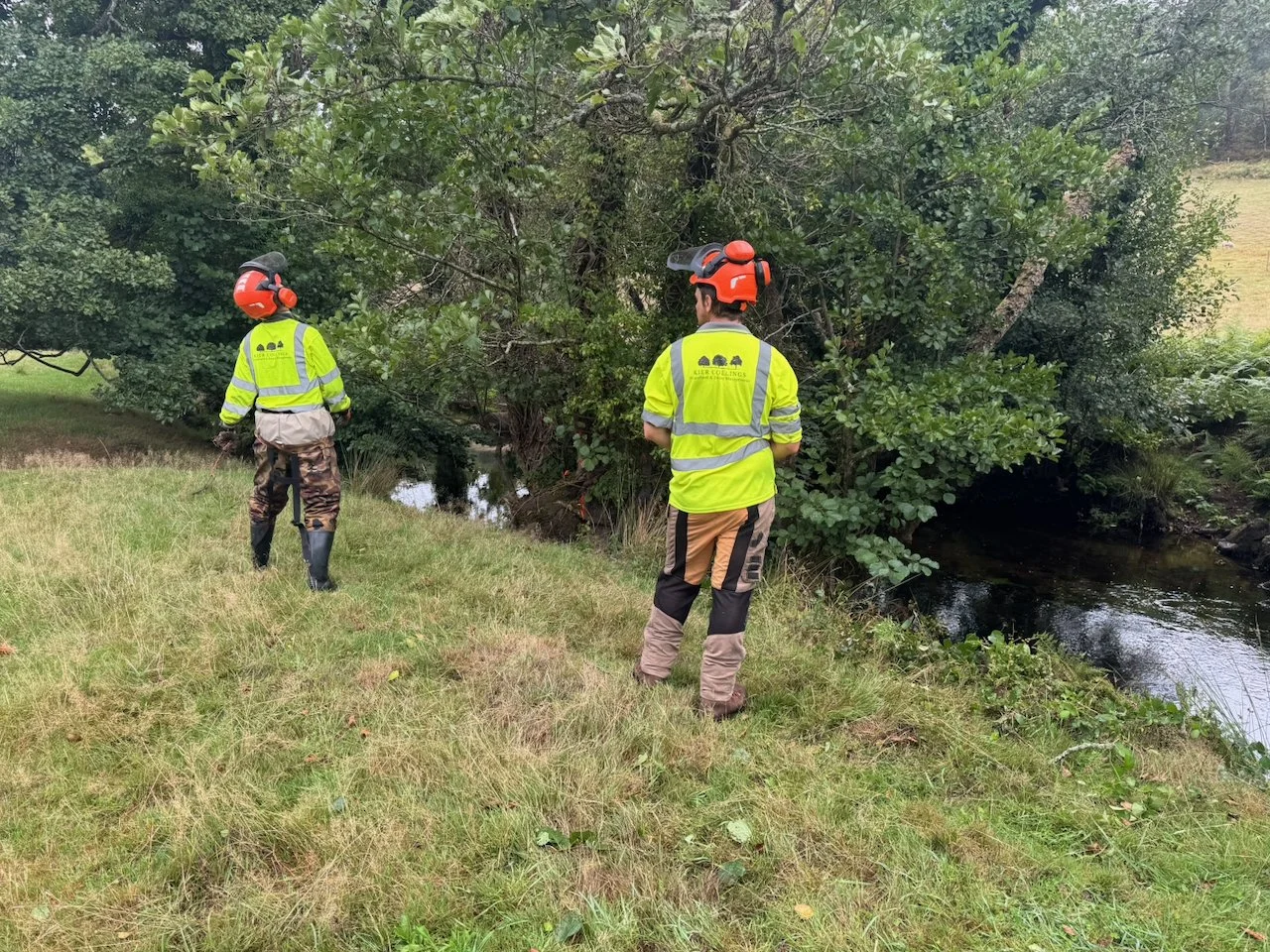
Kier & Finn… Legends!
And when I say working alongside Kier and Finn, I should probably clarify that their definition of a manageable piece of timber and mine are occasionally rather different. What I regard as a substantial tree requiring considerable thought, they tend to regard as something that just needs moving a little further to the left.
Fortunately, that's exactly why we have them involved!
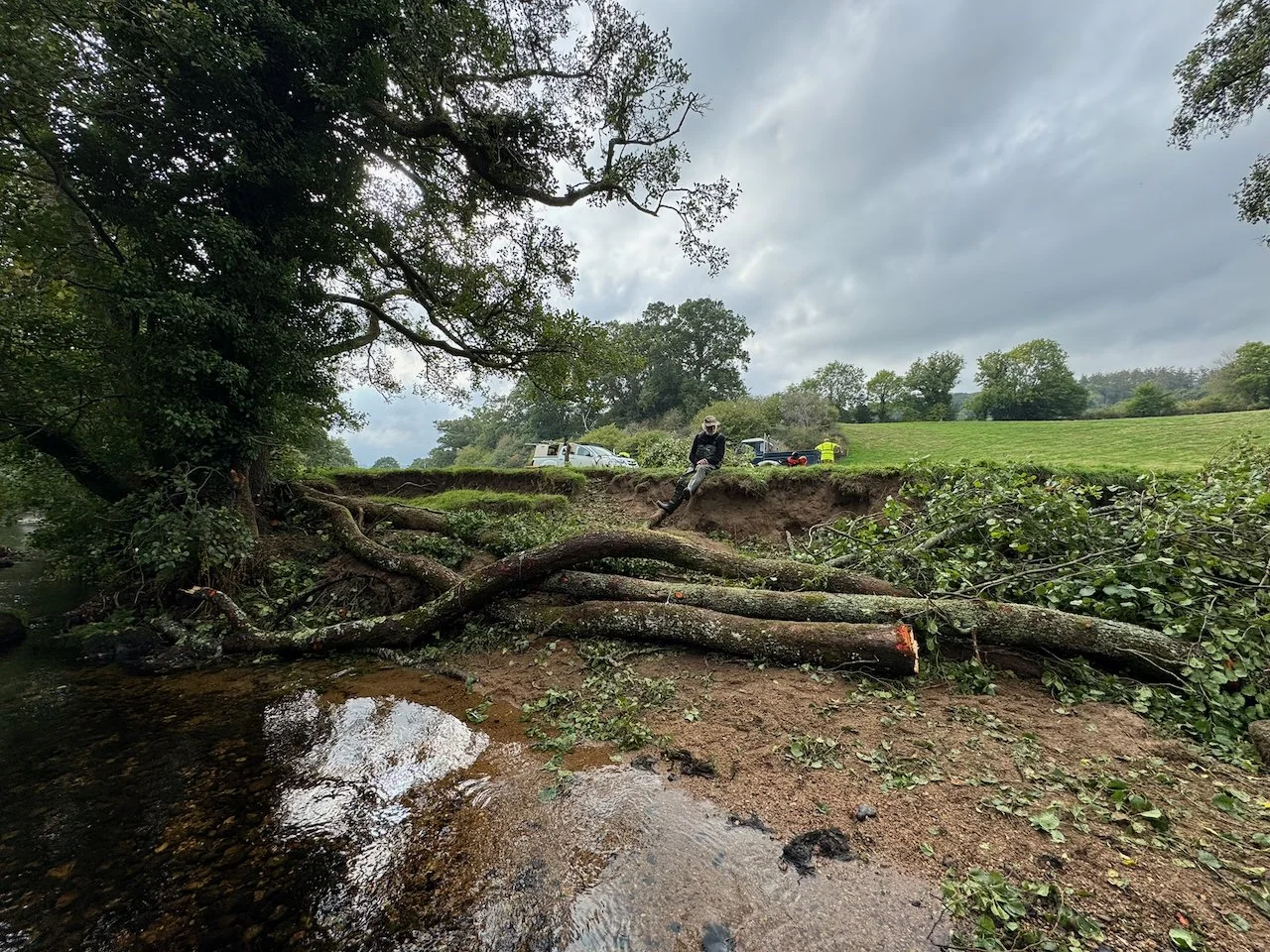
A heavily eroded section beginning to take shape…
The work centred on repairing vulnerable sections of riverbank using felled trees and woody material, carefully positioned to provide structure and encourage the river to begin rebuilding those margins naturally. Rather than treating every eroding bank as something that needs a hard, engineered solution, we're looking at ways of using materials already found within the landscape.
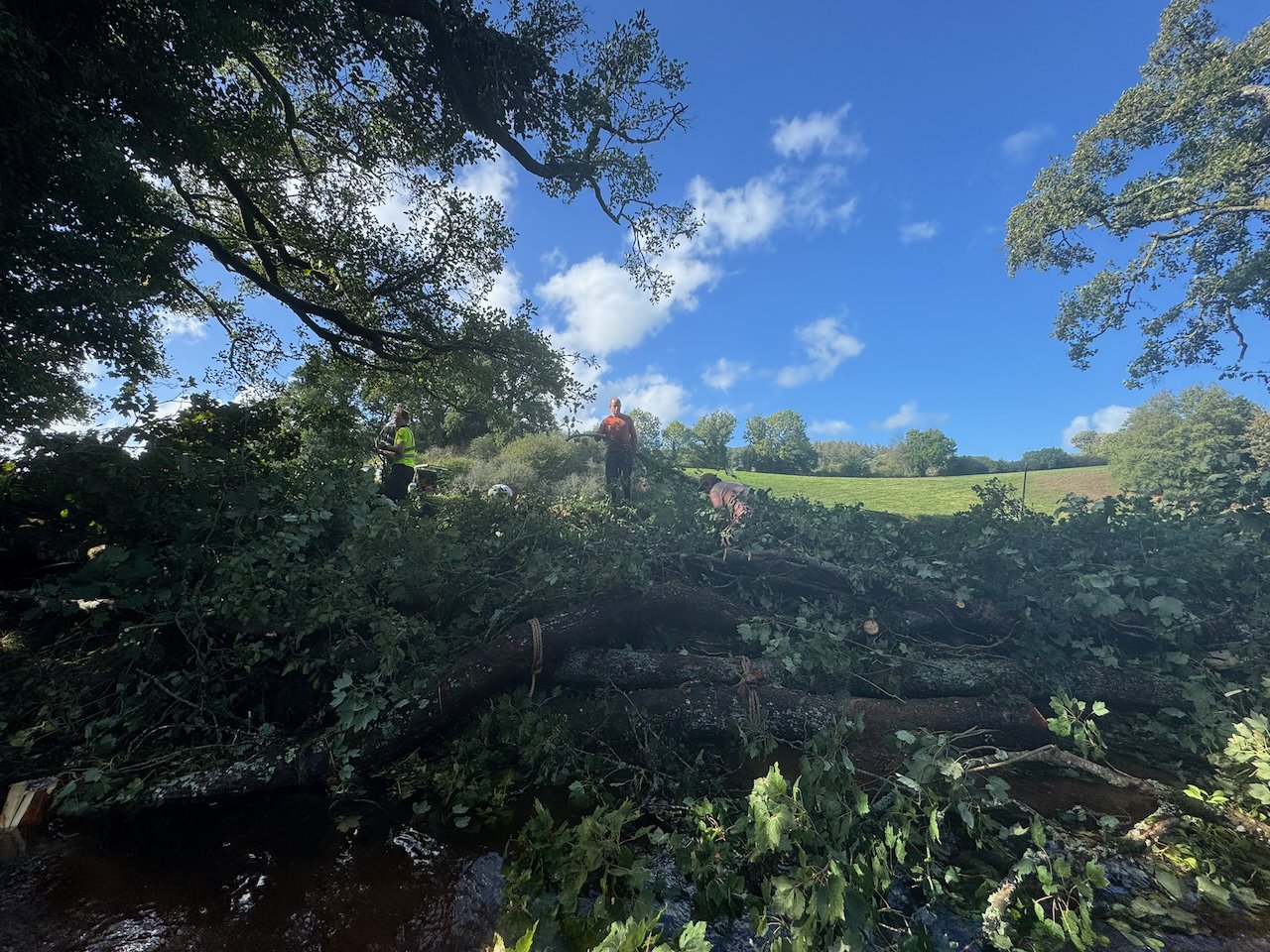
The same section, all tied in and being back filled with material…
Timber can help protect vulnerable margins and create areas where sediment and organic material accumulate. Woody structures add variation to the water's edge, providing cover and refuge for fish while allowing natural processes to gradually take over.
We've also been managing bankside vegetation to improve the balance of light and shade over the river, particularly around important riffle habitat. And, of course, there was willow.
Letting nature take over
Willow is one of those wonderfully obliging trees that seems almost designed for this sort of work. By coppicing suitable green willow and planting slips into vulnerable banks and bundling into faggots, we can encourage new growth and establish living root systems that help bind the soil together.
As those slips become established, they'll provide additional cover, shade and structure along the water's edge. The important thing is that we're not trying to create a perfectly manicured riverbank.
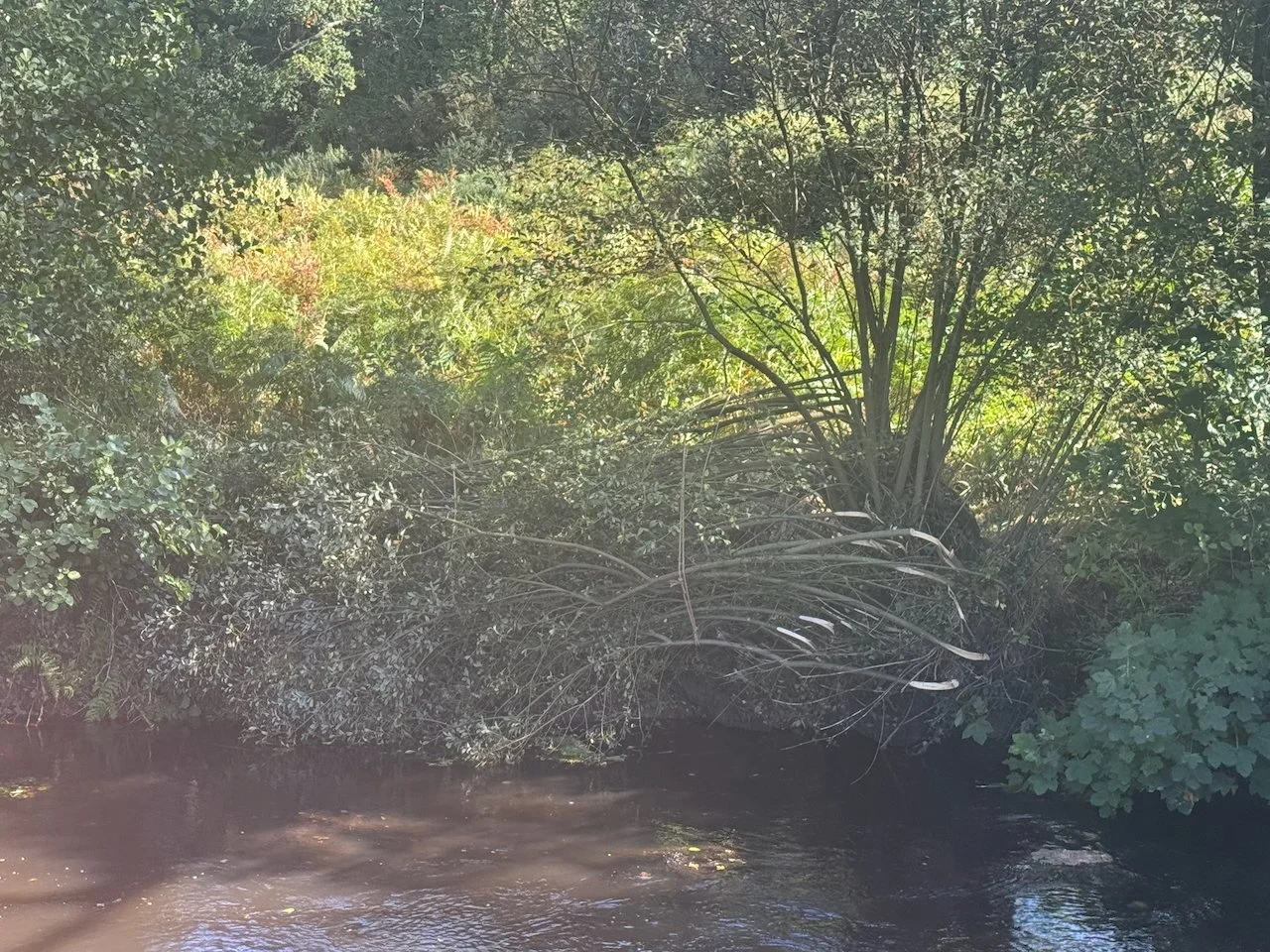
A lovely bit of live hedge laid by one of our volunteers…
Quite the opposite. A healthy river should have variation. Shallow margins, deeper pockets, exposed gravels, woody material, vegetation and areas of dappled shade all contribute to the habitats needed by fish and the countless other species that share the river. And while a newly completed intervention can look rather obvious, the real changes happen afterwards.
Water moves around the timber. Sediment begins to settle. Vegetation establishes. Roots grow. The river gradually incorporates the work into its own landscape. In many ways, the best outcome is that, in a few years' time, somebody walking along the bank might struggle to tell we'd done anything at all. Which, considering the amount of effort involved, might sound a slightly disappointing ambition! But that's rather the point.
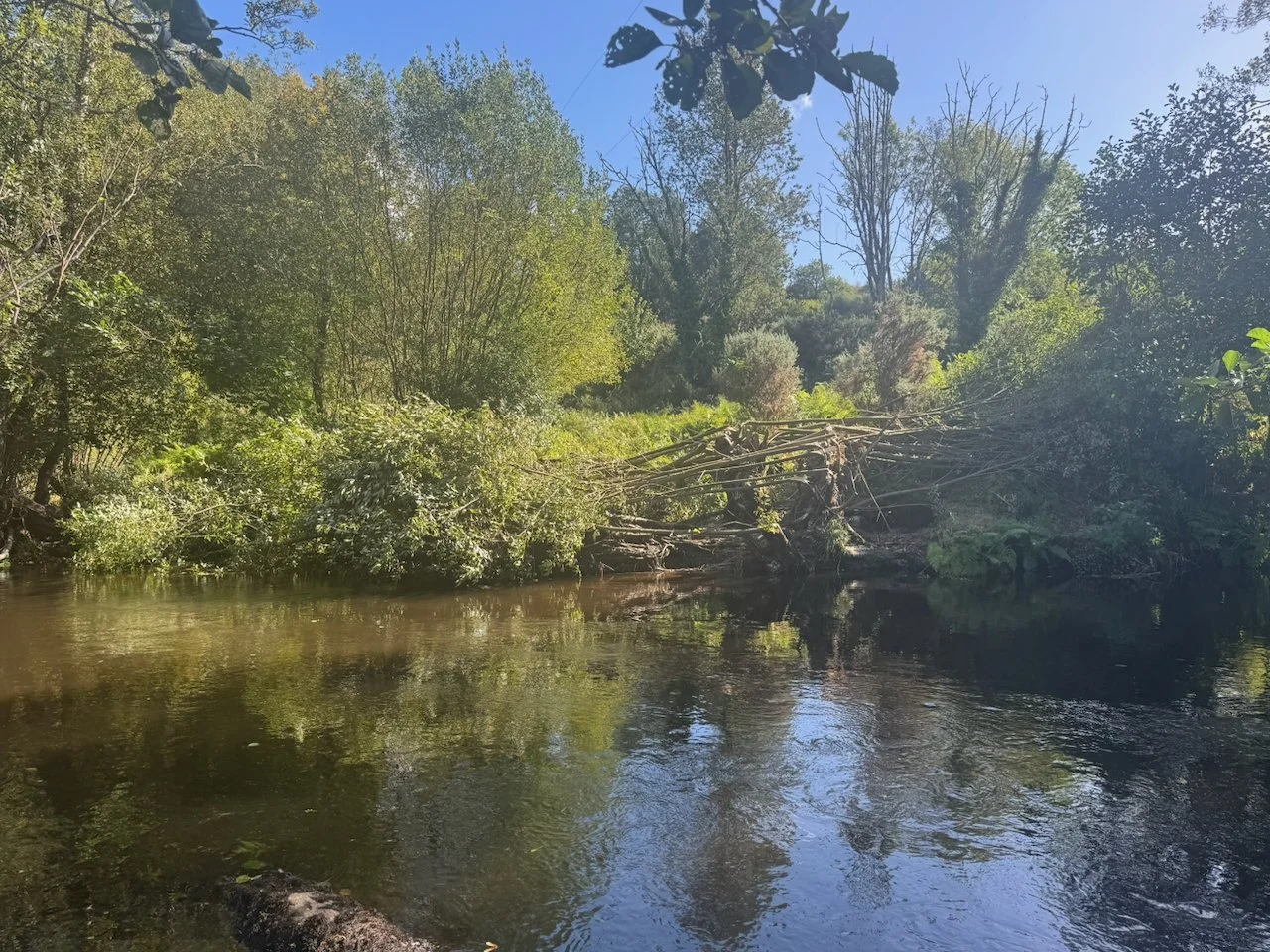
Another section of willow laid live to protect a vunerable bank…
The people who make it possible
There's something else about this project that deserves considerably more recognition than it usually gets. The landowners.
It's easy to talk about river restoration in terms of funding, volunteers, contractors and the work itself, but none of that counts for much if we can't actually get down to the river. At Rushford, we've been incredibly fortunate to have the support and cooperation of the people who own and manage the land alongside this stretch of the Teign.
A particularly big thank you must go to Jane and Belinda Hayter Hames, Rory Hardick, and Lewis and Flora Steer of the Dartmoor Shepherd. Their willingness to engage with us, provide access and help manage livestock around the working areas made an enormous difference.
And that last point is particularly important. Working safely beside a river with machinery, timber and volunteers requires a fair amount of planning. When the surrounding land is also being actively managed for livestock, there's an additional layer of coordination that can easily go unnoticed.
Moving animals, adjusting access and accommodating several days of activity isn't simply a case of opening a gate and wishing us luck. It's a genuine contribution to the cause. We talk a great deal about improving habitat across the Teign catchment, but the reality is that much of this work will only ever happen through positive relationships with the people who live and work alongside our rivers. At Rushford, those relationships have been absolutely fundamental. And we're enormously grateful. Thank you!
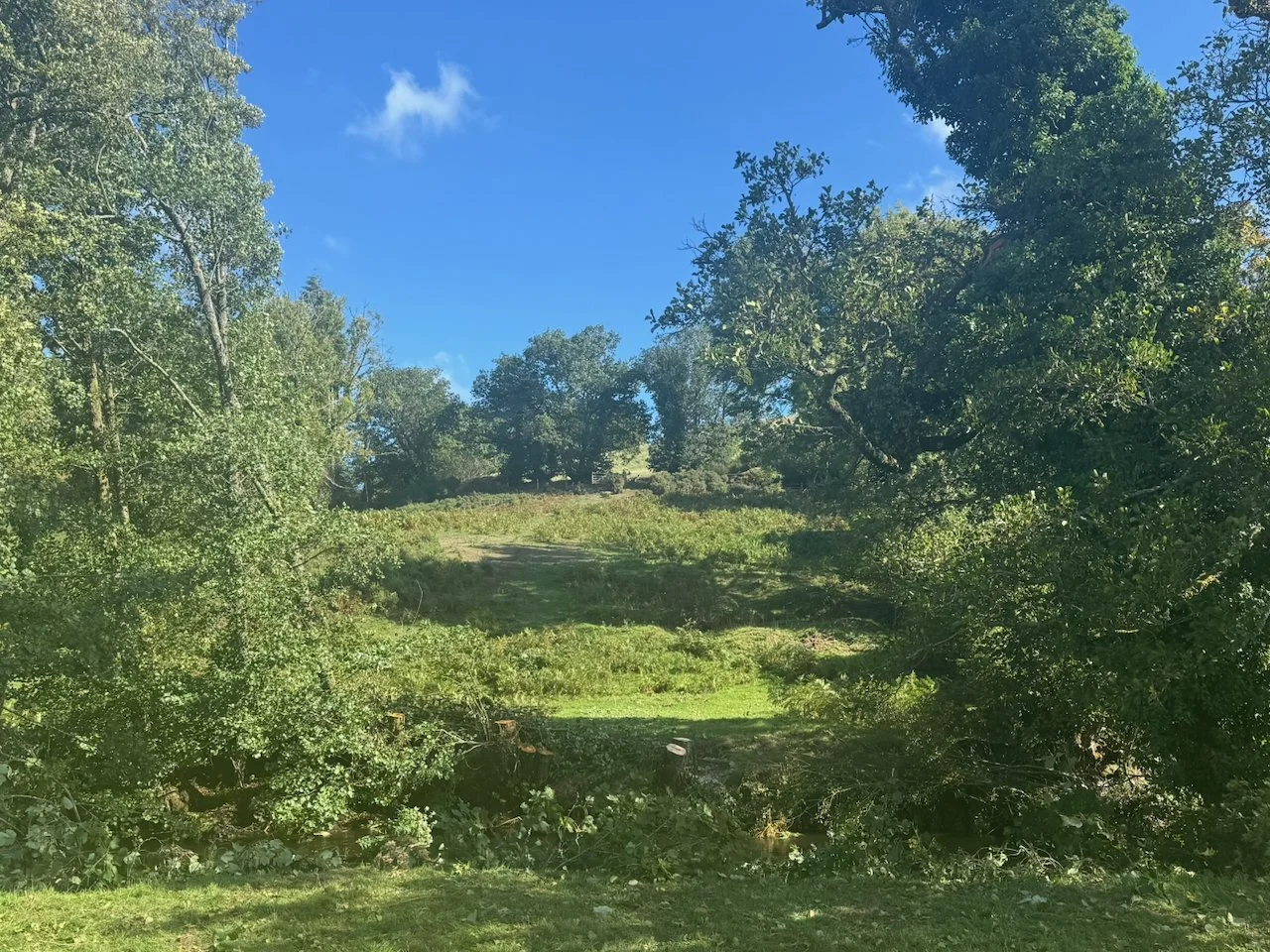
Let there be light…
Back for another look
One of the advantages of living relatively close to the work is that I've been able to return to Rushford several times since we finished. And I must say, it's been lovely watching things begin to settle down. When you've spent days moving timber, securing structures and working along a stretch of river, it's very easy to become focused on the individual interventions. But walking back along the bank afterwards gives you the opportunity to look at the whole reach again.
To see how everything sits within the river. To consider how the flow is moving around the structures and material is beginning to settle. Of course, this is early days! These aren't instant fixes, and the real measure of their success will come over the months and years ahead as the river experiences different flows, sediment moves and vegetation becomes established. We'll continue keeping an eye on things and learning from what we see.
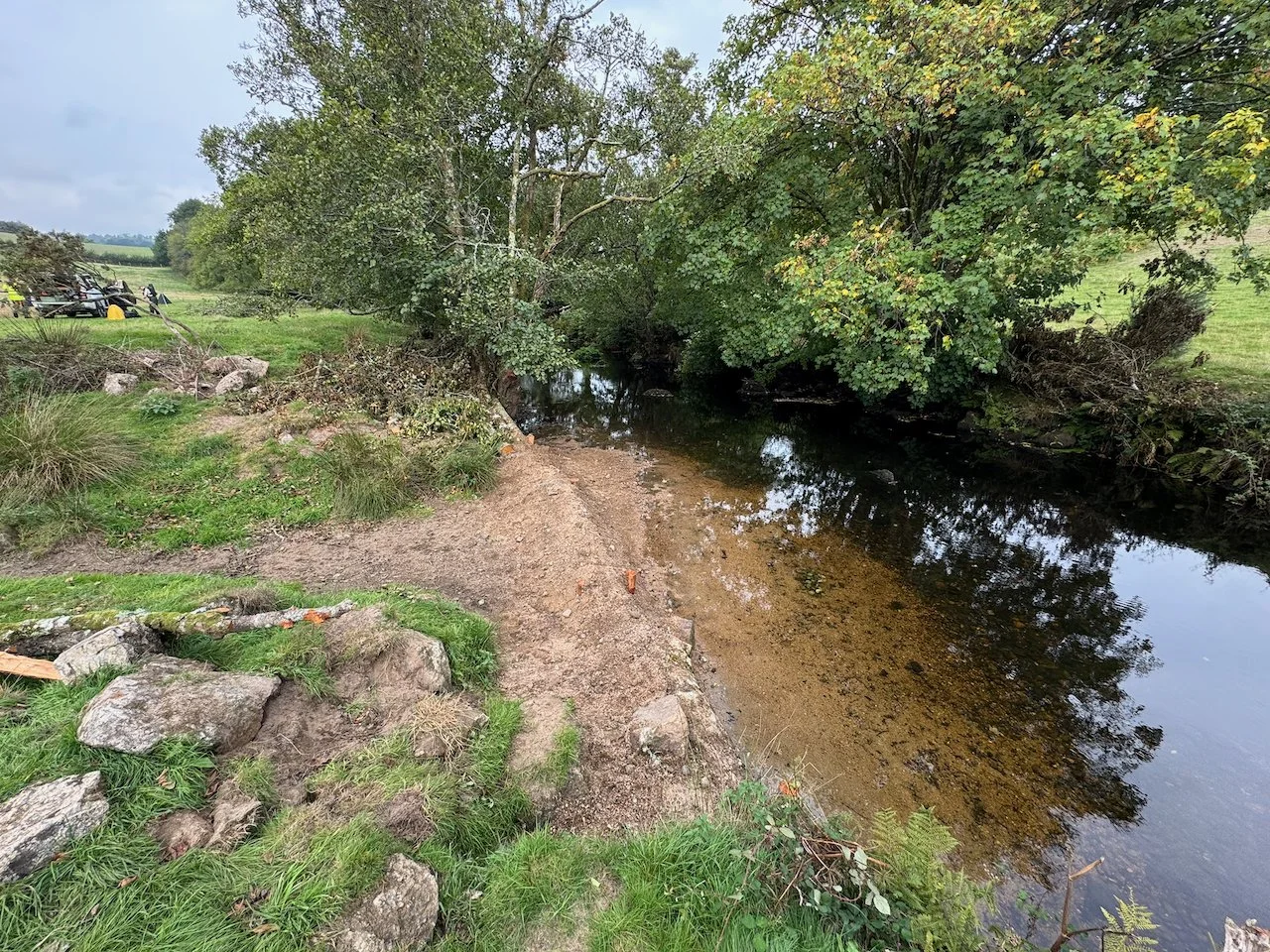
Re-establishing the bankline to a washed out beach area…
Because that's another important part of river restoration. You don't simply finish a job, pack away the tools and assume everything will work exactly as intended. You go back. You watch. And, where necessary, you adapt and fix! Now we need some water!
Which brings me to the one thing we haven't yet managed to arrange. A proper bit of rain. After the extraordinarily dry conditions we've experienced this year, I'm rather looking forward to seeing some decent water moving through this section of the upper Teign.
Partly because it will give us an opportunity to see how the interventions behave under higher flows. But, more importantly, because autumn is upon us.
And with it comes the prospect of our beloved Atlantic salmon and sea trout beginning their journeys back towards the upper spawning grounds.
These fish have spent much of their lives at sea, only to return to the rivers and tributaries where their own lives began. Their journey upstream depends on suitable flows, access to spawning habitat and the right conditions when they finally arrive. After such a prolonged dry spell, a sustained rise in river levels would certainly be welcome.
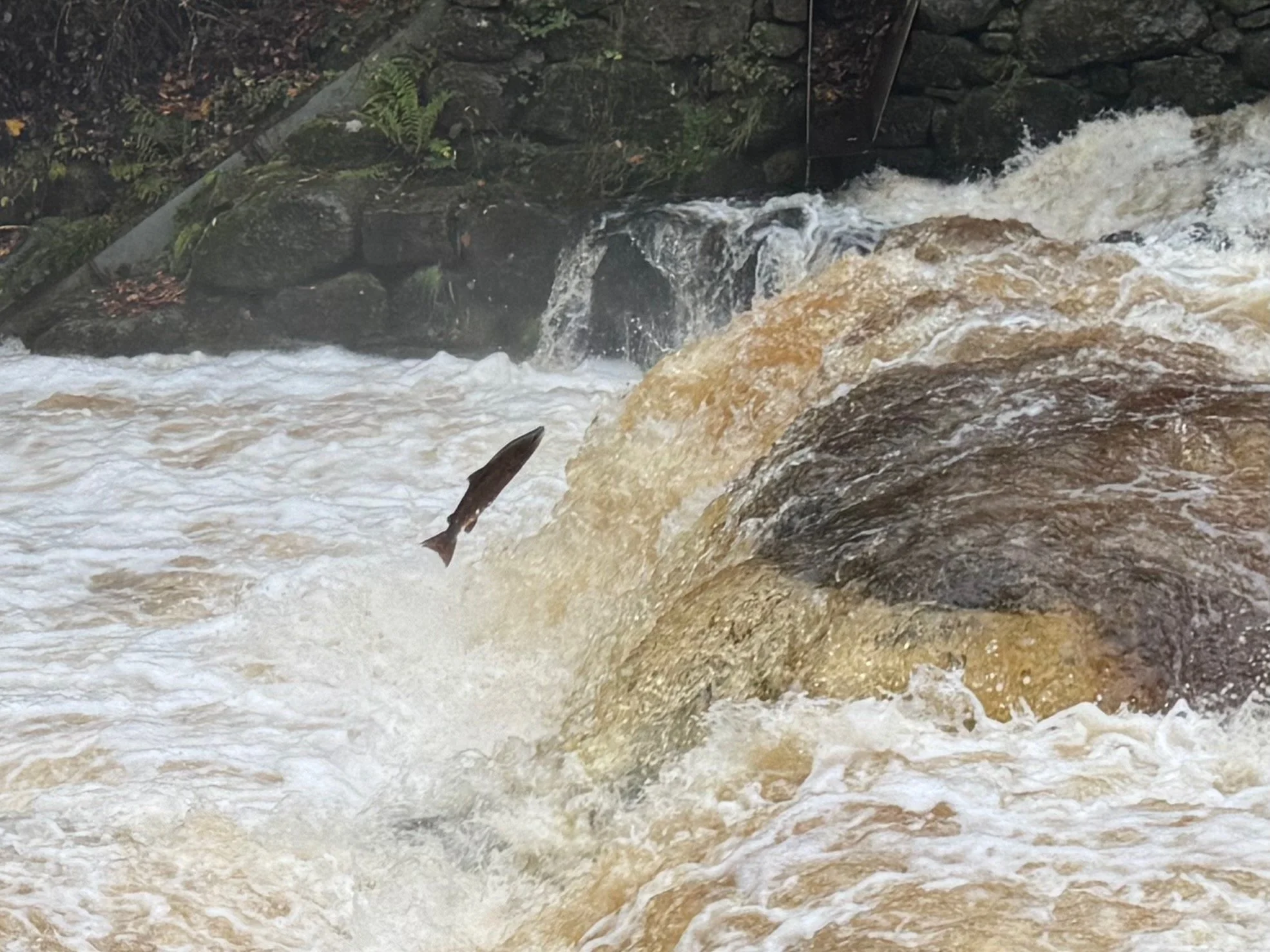
Not just to give our timber arrangements a proper test, but to help reconnect the river and provide the conditions these remarkable fish need to continue their journey. I'll admit that, after spending six days working on the river, there's a small part of me that would quite like the next decent spate to arrive while I'm standing somewhere safely above the water watching what happens. Preferably with a coffee! And possibly Kier's telephone number on speed dial!
A river worth working for
It's easy to become overwhelmed by the scale of the challenges facing our rivers. Declining salmon populations, warmer summers, changing rainfall patterns, degraded habitat and all the other pressures we've talked about over recent months can sometimes make the task ahead seem rather daunting.
But projects like Rushford are a reminder that there's plenty we can actually do. We can identify opportunities. We can work with landowners. We can bring funding and practical expertise together. We can involve volunteers, share knowledge and make improvements that give natural river processes a better chance of functioning. One stretch at a time.
And when those improvements begin to add up across a catchment, the potential becomes rather exciting.
A huge thank you once again to the Environment Agency, the Upper Teign Fishing Association, our TACA volunteers, the landowners who made the work possible, and of course Kier and Finn from Kier Collings Estate Management, whose enthusiasm and hard work helped turn our plans into reality.
And now? Well, the tools are packed away, the timber is in place and the river is beginning to settle around our efforts. All we need is a little help from upstairs... Some proper autumn rain would be lovely.
Preferably enough to bring the salmon home, but not so much that Kier has to come back and collect the trees from somewhere near Chudleigh!