
It's funny how some conservation projects begin. Sometimes there's a carefully prepared proposal, several meetings, a funding application and enough paperwork to keep a small office looking untidy! And sometimes it just starts with a conversation in a field… How very Devonian!
Earlier this year, while attending one of our local country shows, I got chatting with Pete Rich, a longstanding Dartmoor National Park Ranger. As is often the case when you get two people talking about Dartmoor National Park, rivers and conservation, the conversation eventually turned to what we might be able to do together. And that got me thinking.
We've spent a great deal of time working alongside our friends at the National Trust, improving river habitat, managing bankside erosion and encouraging natural processes to do more of the work for us. But wouldn't it be rather good to get some younger people involved too?
Well, on Sunday 22nd November, that's exactly what we're going to do. And we'd love you to join us.
Joining Resources
One thread we've talked about repeatedly through these blogs is that you can't really separate the River Teign from the landscape surrounding it. The water flowing through Fingle Gorge has travelled down from the high moor, through smaller streams, woodland and farmland before finding its way into the main river.
What happens up there affects what happens down here. Rainfall, soil, vegetation, woodland, peatland and the countless little water courses feeding the catchment all influence how water moves through the landscape. And, ultimately, the habitats available to the wildlife living in our rivers.
That's why I particularly like the idea of bringing the Dartmoor Youth Rangers down into the Fingle Gorge. Because while much of their work takes place across the wider National Park, the rivers running through it are every bit as important as the moorland itself. And helping young people understand those connections is something that could make a real difference in the years ahead.

The next generation
For those unfamiliar, the Dartmoor Youth Rangers are a programme run by Dartmoor National Park for young people aged 12 to 17. Established in 2015, the programme gives youngsters opportunities to develop practical conservation skills, explore different parts of Dartmoor and get involved with the management and protection of its landscapes and wildlife. And I think that's rather brilliant and something our countryside needs more of!
Because there's only so much you can learn about conservation from a classroom, a website or, dare I say it, blogs like these! Sometimes you just need to get outside. To understand why a riverbank is eroding, why a fallen tree might actually be useful or why a seemingly insignificant patch of vegetation can make a difference to the wildlife living nearby.
And preferably discover all of this while wearing wellies and getting covered in mud… That's generally when the best learning happens!
Back to the Fisherman's Path
Those of you who read our recent article Freed from Desire might remember the work we've been carrying out with the National Trust along the Fisherman's Path in Fingle Gorge. The path is an incredibly popular route, and it's not difficult to understand why. The woodland, the river and the constantly changing scenery make it one of those places where it's very easy to lose track of time.
Unfortunately, all those visitors can also leave their mark.
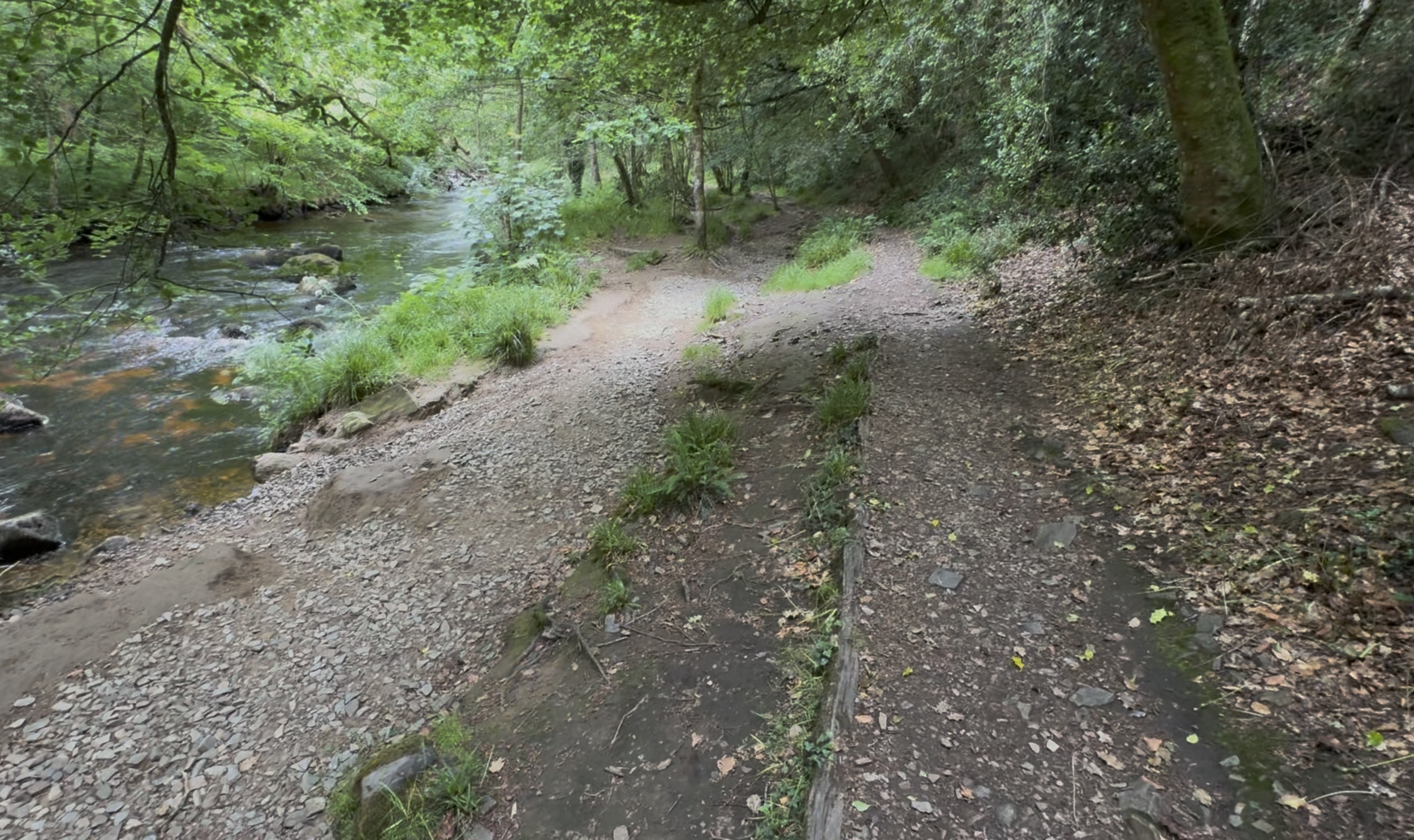
Over time, repeated footfall can compact the soil, wear away vegetation and encourage people to create alternative routes, or desire lines, along vulnerable sections of riverbank. And where those banks begin to erode, loose soil and fine sediment can find their way into the river.
That's particularly important when we consider the spawning habitat used by Atlantic salmon and sea trout. Their eggs develop within the spaces between riverbed gravels, relying on oxygen rich water flowing through them. Excessive fine sediment can clog those spaces and make formative life considerably more difficult for the next generation of fish.
So while improving a footpath might not initially sound like river restoration, the two are rather more closely connected than you might imagine.
A little more work to do
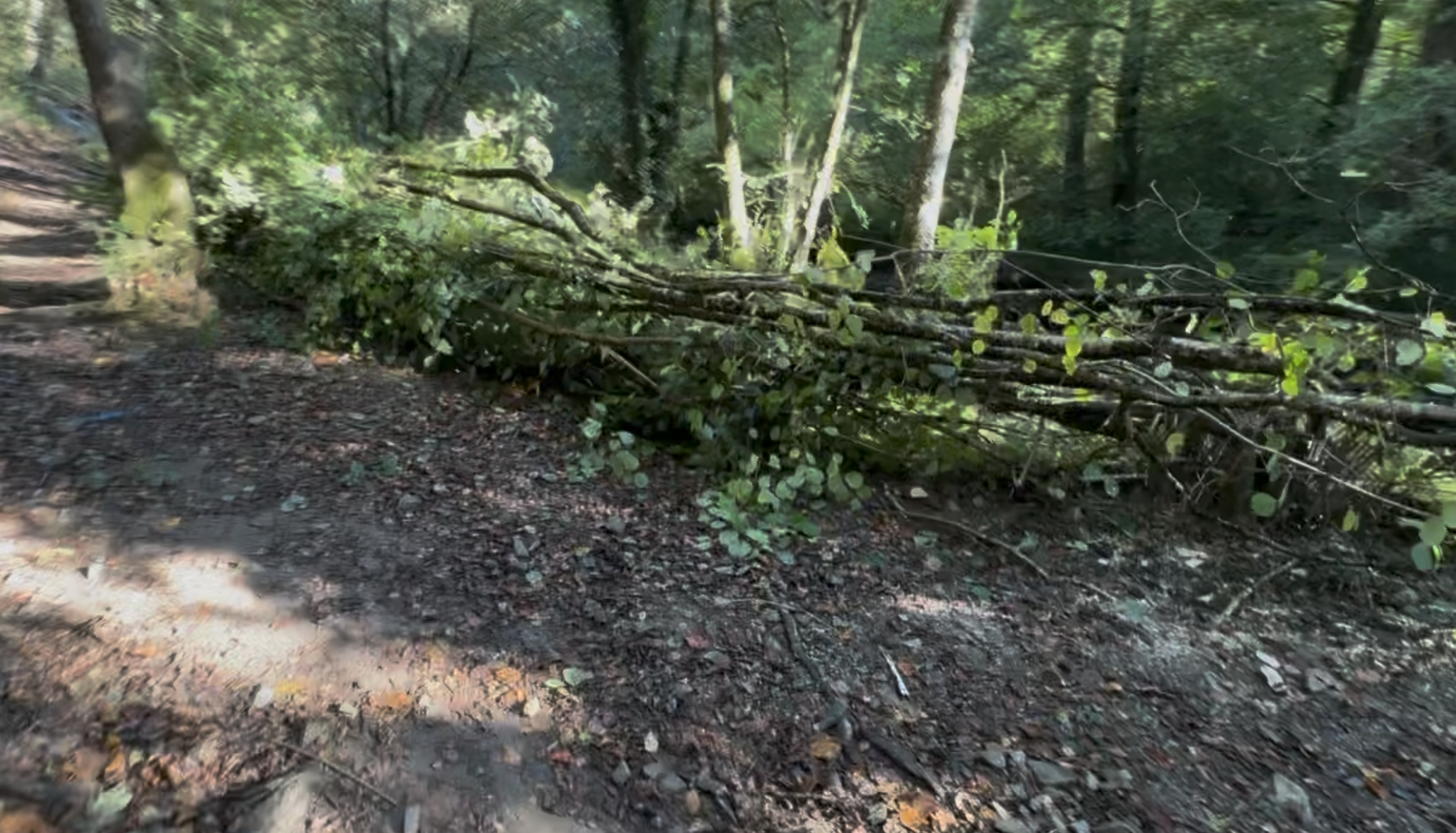
Our next session will continue the work we've already started with the National Trust, helping to define access along the Fisherman's Path while protecting the adjacent riverbank.
We'll be carrying out some revetment work, using natural materials to help support vulnerable areas, alongside further improvements to the path itself. The aim is to encourage people to follow a more suitable route while allowing previously damaged and compacted areas an opportunity to recover. It's not about preventing people from enjoying the river. Quite the opposite.
We want people to visit these places, discover their wildlife and develop the same connection with the landscape that encourages so many of us to volunteer. But we also need to make sure that the paths we use don't gradually damage the very habitats we've come to enjoy.
Fancy joining us?
This particular volunteering day is a little different for TACA. We're holding it on a Sunday.
Most of our practical conservation work tends to happen during the working week, which isn't always particularly convenient for people who have jobs, studies or other commitments. So this time we're doing things differently. We're hoping that a Sunday session will give some of you who've wanted to get involved, but haven't previously been able to make our weekday events, an opportunity to come along.
And of course, we'll be joined by the Dartmoor Youth Rangers, which should make for a particularly enjoyable day.
Sunday 22nd November 2026
Meeting point: Iron Bridge at Drogo Pool, Fingle Gorge
Meeting time: 10am
What3Words meeting point: ///prevented.survive.flank (the iron bridge at Drogo Pool)
Work location: ///freshest.clerk.envelope
We'll meet at the Iron Bridge before walking downstream along the Fisherman's Path to the area where we'll be working. Please bring suitable outdoor footwear, ideally something waterproof with a decent grip, and gardening or work gloves to protect your hands. TACA and the National Trust will provide the hand tools needed for the work, so there's no need to arrive with half the contents of your garden shed.
You don't need any previous conservation experience either. There'll be plenty of opportunities to learn, lend a hand and understand why we're carrying out the work. And as ever, we'll keep an eye on the weather as the day approaches.
If you'd like to join us, please click the registration button below so we can get an idea of numbers.
Some rather welcome arrivals
And while we're talking about the upper Teign, there's been another rather exciting development over recent weeks. Our Atlantic salmon are returning!
Following some much needed autumn rainfall, we've been seeing salmon making their way into the upper river, including fish negotiating Drogo Weir on their journey towards the spawning habitat available upstream. After the prolonged dry conditions we experienced through the summer, it's wonderful to see fish moving again. And with the recent cold snap, our attention is now turning towards the spawning season itself.
Over the coming weeks we'll be getting out to some of the likely spawning areas to look for signs of redds. For anyone unfamiliar with the term, a redd is the nest created by a female salmon or trout within the riverbed gravels. By using her tail to move stones, she creates a depression where her eggs can be deposited before covering them with gravel.
To the untrained eye, these can be surprisingly difficult to spot.
But once you know what you're looking for, the disturbed, often lighter coloured mound of gravel can reveal something rather extraordinary happening beneath the surface. And that's another reason why protecting riverbanks and managing sediment matters so much.
Somewhere beneath those gravels could be the next generation of Atlantic salmon. Fish that, if everything goes to plan, will eventually leave the Teign, head out into the Atlantic and hopefully return to these same waters in the years to come. That’s quite a thought when you're standing beside a river with a spade in your hand.
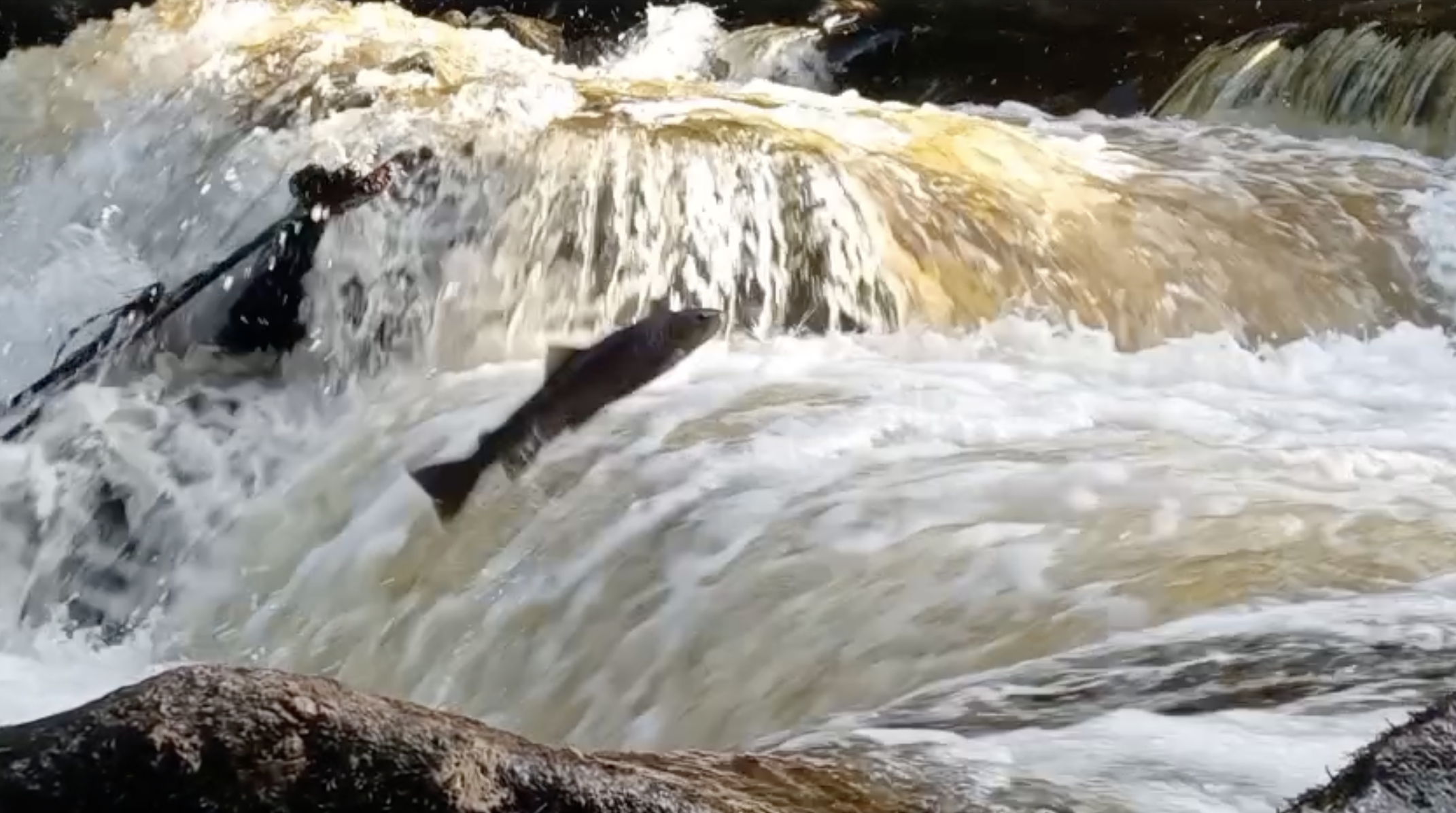
Thanks to volunteer Charlie Michell for this great pic of a fish navigating Drogo Weir…
It all starts somewhere
What I particularly like about this upcoming day is how naturally it's all come together. A conversation with Pete Rich at a country show led to the idea of working with the Dartmoor Youth Rangers. Our friends at the National Trust already had a stretch of the Fisherman's Path where further improvements would be beneficial. And TACA has experience and a shared enthusiasm for getting people involved in practical river conservation.
Put those things together and suddenly we have an opportunity for different generations and organisations to work alongside one another, share knowledge and make a difference to a little corner of the Teign catchment. No enormous funding application required. Just people talking to one another and finding something useful they can do together. And perhaps that's the part I find most encouraging.
Because if we want the rivers of Dartmoor to be healthier in twenty, thirty or fifty years' time, we need people who understand how these landscapes work and why they're worth looking after. The people who'll be doing it long after we've decided that sitting beside the fire with a cup of tea is a considerably more sensible way to spend a November afternoon.
So a big thank you to Pete Rich, the Dartmoor Youth Rangers and our friends at the National Trust for helping bring this opportunity together.
And if you fancy joining us on Sunday 22nd November, we'd be delighted to see you. And remember, dress appropriately, November in Fingle Gorge isn't generally renowned for its tropical climate!