
Tiny Things that tell a Bigger Story
There’s something reassuring about standing in a river, staring into a tray full of tiny wriggling creatures while a group of grown adults nod seriously at each other and say things like, ‘That’s definitely a Heptageniidae…’
And if you don’t know what a flat-bodied Heptageniid is yet, don’t worry. By the end of this week’s blog, you’ll at least understand why some of us get far too excited about them!
Recently, TACA’s own Louise Davis and Michael Thomas delivered Riverfly training to 16 new volunteers in Bovey Tracey, helping grow what has quietly become one of the most important monitoring networks within the entire Teign catchment. And what a network it’s becoming…
Watching passionate people share knowledge is always a good thing, but what makes Riverfly training particularly enjoyable is how quickly people become hooked. What starts as mild curiosity very rapidly turns into grown adults enthusiastically kick sampling through stones and debating the finer points of freshwater shrimp!
Thanks to the continued enthusiasm of our volunteers, the Teign catchment now has an incredible 55 active Riverfly monitoring sites spread across the system. That’s a phenomenal achievement and one that the entire catchment should feel proud of.
Back in 2024, as part of the River Teign Restoration Project, the Teign even made it into Riverfly’s top ten most surveyed rivers within the whole of the UK! For a relatively small catchment tucked away in Devon, that’s no small thing.
And honestly? It says an awful lot about the people involved.
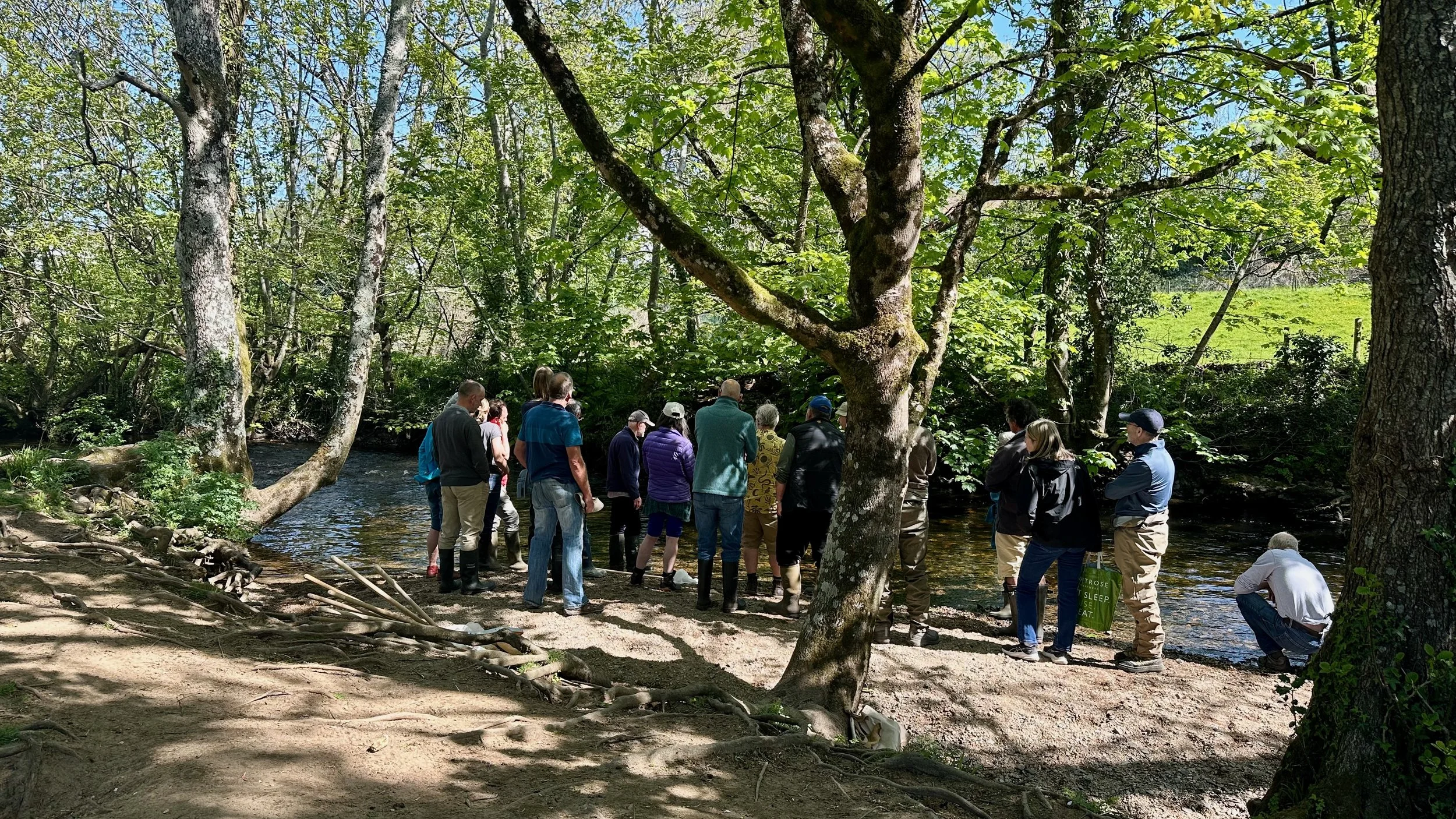
Our new 2026 volunteers at Bovey Tracey…
Small creatures - Big indicators.
For those unfamiliar with Riverfly monitoring, the principle is actually beautifully simple.
Certain invertebrates are highly sensitive to changes in water quality and habitat condition. If rivers become polluted, overly sedimented, starved of oxygen or heavily stressed, these species are often among the first to disappear.
Which means if you regularly monitor them, they become an early warning system for river health.
The surveys themselves take place three times each year. In May, July & September, and help build a seasonal picture of how the catchment is functioning over time. Volunteers monitor eight key groups of river invertebrates, including mayflies, stoneflies, caddisflies and freshwater shrimp. Some thrive only in clean, well-oxygenated water, making them excellent indicators of overall river health.
And once you start looking closely at these creatures, something strange starts to happen… You stop seeing rivers simply as water moving and begin seeing them as entire living ecosystems.
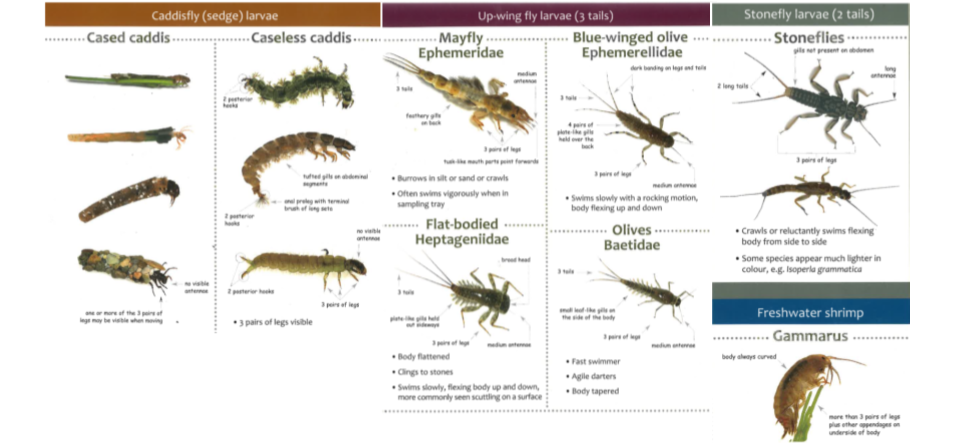
The 8 Key Indicator species counted during a Riverfly Survey…
Why Rushford keeps standing out
One site that continues to perform particularly well is at Rushford Mill, located higher up in the Teign River, near Chagford. Now, there are several reasons for this, and it’s a brilliant example of how rivers function as connected systems where lots of smaller factors quietly stack together.
Firstly, the site benefits from riffled flow moving over a gravel substrate. That tumbling water keeps oxygen levels high and creates an ideal habitat for many invertebrate species. But what’s especially interesting is the role played by the historic Rushford stepping stones.
Those stones, which have sat in the river for generations, quietly help hold these gravels upstream during spate events. Rather than allowing everything to wash downstream during high flows, the stepping stones help retain and stabilise sections of clean gravel habitat right where the river needs them.
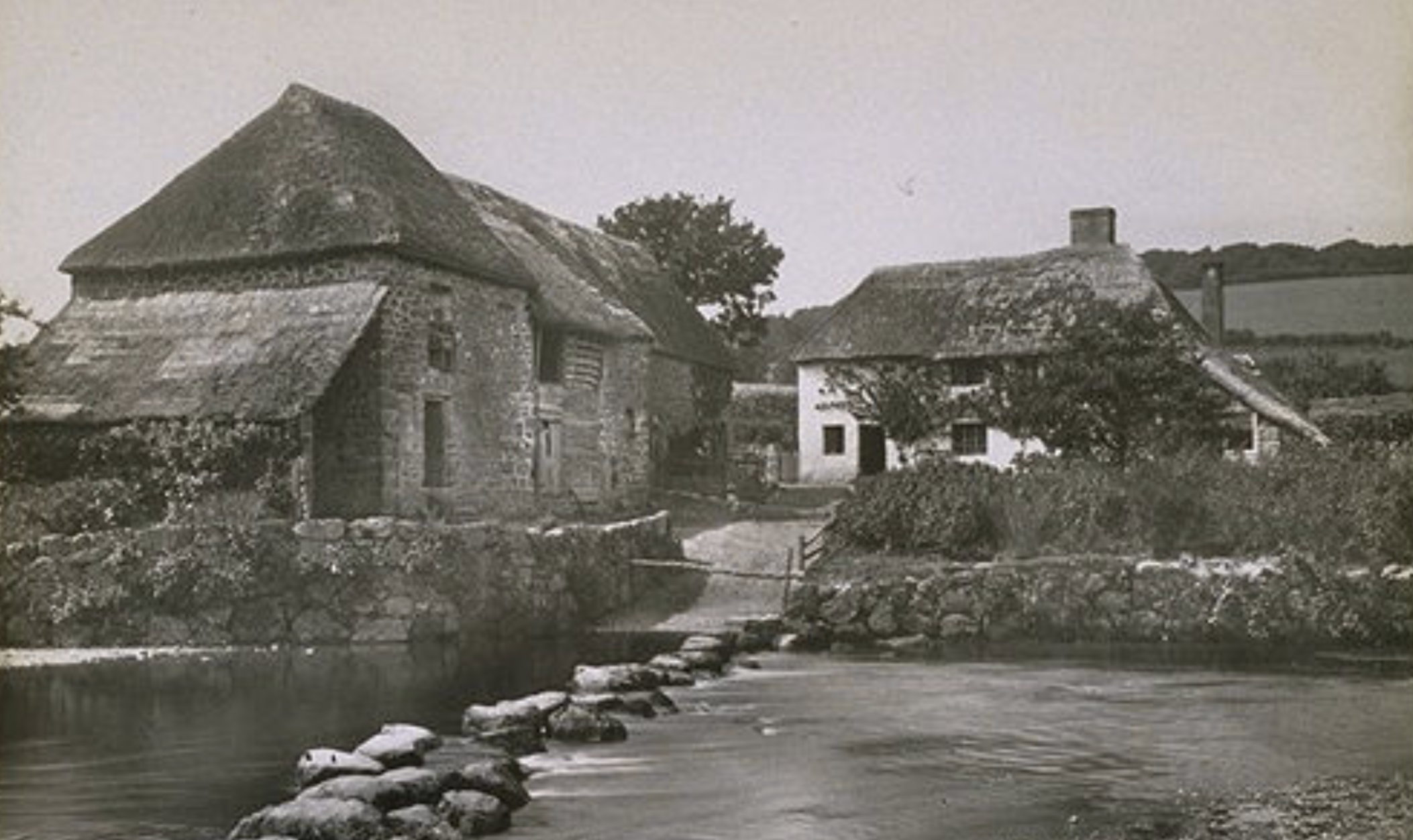
Rushford Mill - way back…
It’s actually a surprisingly effective principle that has been deliberately replicated elsewhere on rivers such as the River Lune in Lancashire to improve spawning habitat for Atlantic salmon. Sometimes old infrastructure accidentally gets a lot right! Shame we didn’t apply quite the same thinking everywhere else during the Industrial Revolution when we started dropping larger weirs into the system.
The site also benefits from something we’ve spoken about more and more recently across the catchment: balance. This time, in the form of dappled shade. Some sections receive good sunlight, encouraging healthy weed growth, while other areas remain cooler and shaded. That mixture creates a wonderfully varied habitat structure and provides refuge for many invertebrate species throughout the year. Again, rivers rarely want extremes. They tend to thrive somewhere with the needle right in the middle.
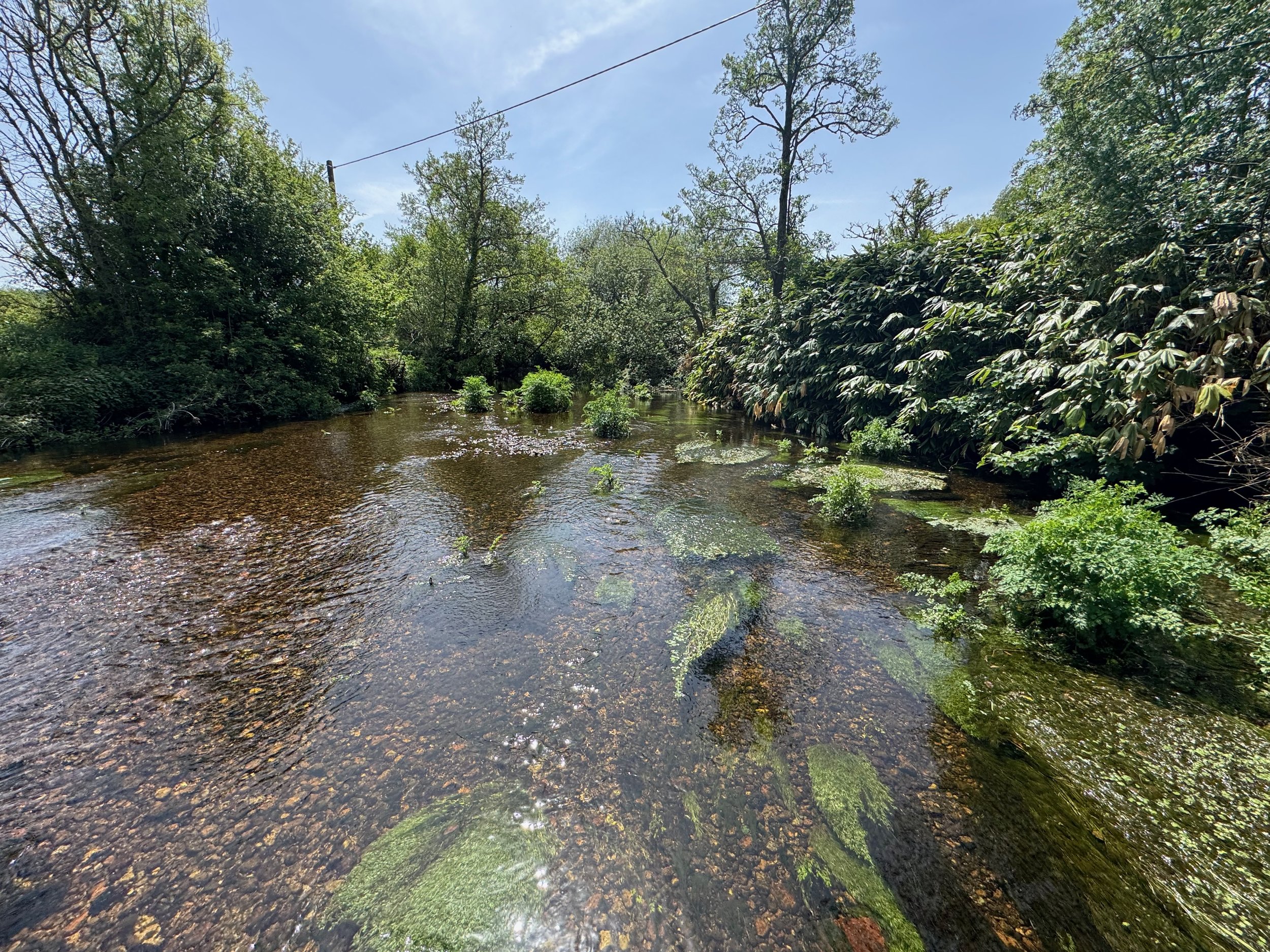
Looking Upstream at Rushford Steps during the May 2026 Riverfly Survey…
More than numbers
What’s perhaps most encouraging about reaching 55 monitoring sites isn’t simply the number itself. It’s what the number represents. More volunteers. More eyes on the river throughout the year. More understanding. More awareness of how these systems function and change through time.
Because Riverfly monitoring, over time, does something pretty special. Very quickly, volunteers stop seeing ‘just water’ and begin recognising habitat quality, flow diversity, sediment issues, and the tiny creatures quietly holding up the entire food chain.
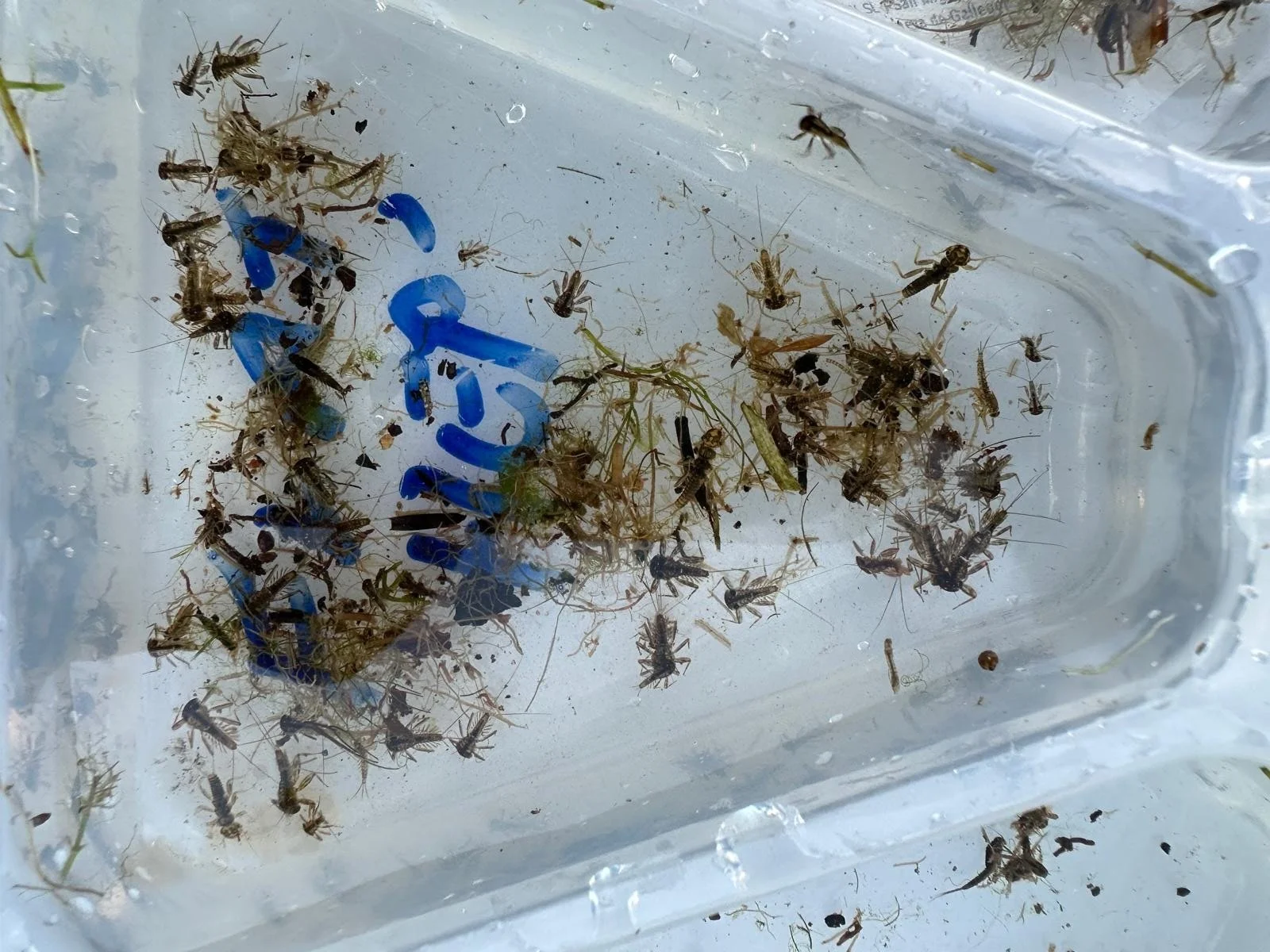
Stand up and be counted Flat Bodied Heptageniidae…
Volunteer effort that matters
A lot of our conservation work and data collection isn’t particularly loud. It’s people in wellie boots standing in rivers with a net and a bucket. It’s volunteers kneeling over sorting trays, getting oddly excited whenever they count a Blue Winged Olive nymph. It’s data. Thermometers. Gravel. Tiny freshwater creatures no bigger than your thumbnail. But all of it matters.
Because year after year, survey after survey, that information builds into something incredibly valuable: longer-term understanding. And the better we understand the Teign, the better chance we have of protecting it properly into the future. So to every volunteer involved, whether you’ve monitored one site or twenty, thank you! To Louise and Michael… a massive thank you too for putting the training together and helping upskill everyone involved. Those kinds of numbers are no mean feat. And to our catchment co-ordinator, the Lower Teign’s very own Mick Megee, for pulling everything together as the sample data starts landing.
55 monitoring sites across the catchment is something genuinely special. And honestly… it feels like we’re only just getting started.