
The Hidden Half
A couple of weeks ago we talked about reading rivers… learning to recognise and identify the language of currents, seams, shadows and structure.
But there’s a quiet underworld that sits just beneath all of this. When we stand on the bank reading a river, we’re only ever seeing half of it. The rest of the story lies beneath the surface.
And for fish, particularly our salmonid friends, that hidden half often matters more than the water flowing above it.
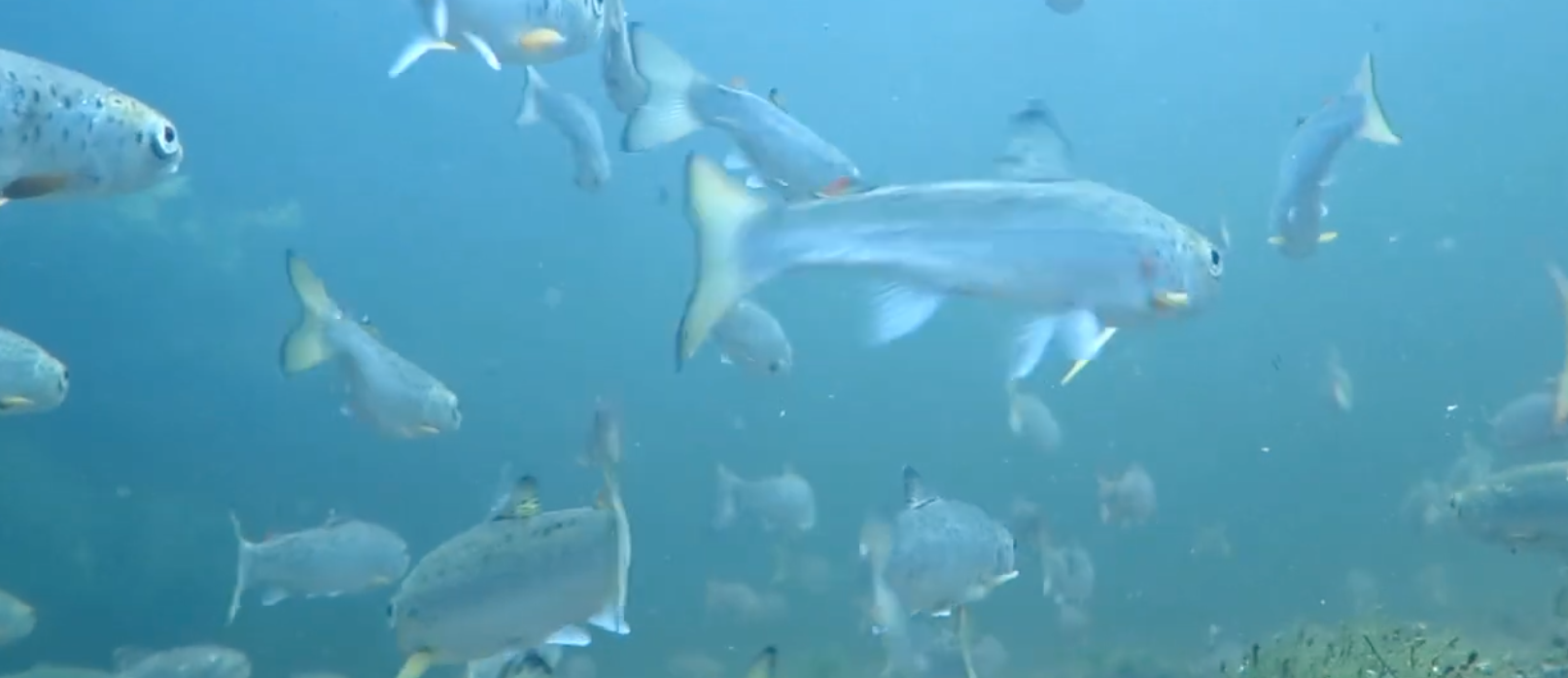
More than Moving Water
To most of us, a river appears to be little more than a ribbon of water moving downstream. Watch it for long enough and, aside from the occasional bout of motion sickness, you begin to notice subtle surface behaviours… where the currents accelerate, where they slow, where a fish might hold.
But beneath it lies an entire second world.
A riverbed made of gravels, rocks, boulders and sand. Tiny gaps between stones. Water moving through those spaces, carrying oxygen and nutrients. Those same spaces are home to invertebrates, and to salmonid eggs tucked safely below the current.
We river folk even have a name for this unseen world, and it sounds more like something from a science fiction film: the hyporheic zone.
You don’t need the term to understand its importance, although what if this ever came up as a deciding question in a pub quiz! For now, just imagine the river doing its thing, not just flowing over the bed, but through it.
That breathing space is where life begins.
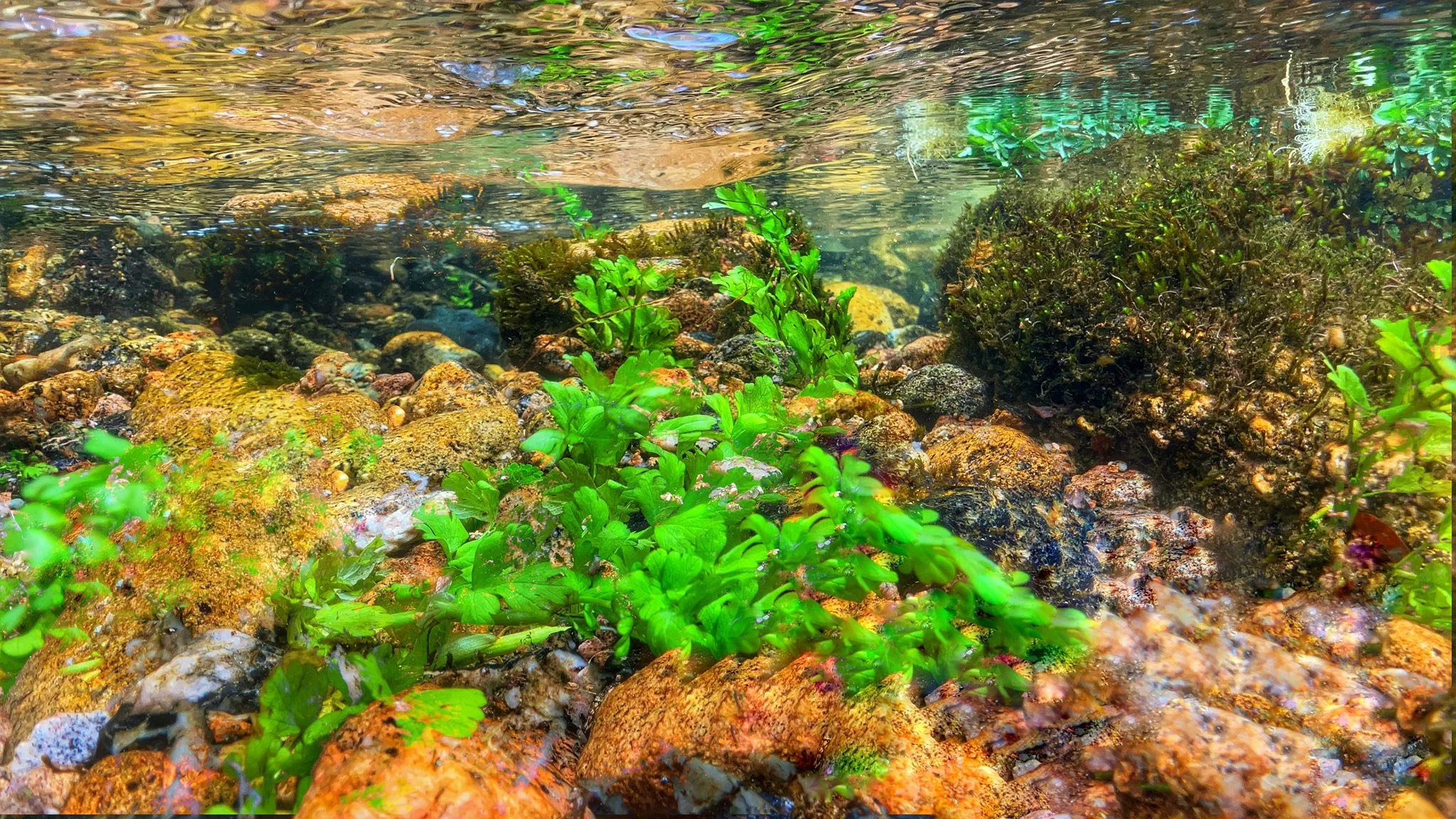
The Nursery Beneath Your Feet
Every winter, salmon and trout carve shallow depressions in river gravels called redds. These spawning nests are deceptively simple and incredibly fragile. Just a patch of disturbed gravel in the right place, where flow conditions are just right.
But what happens next depends entirely on the riverbed.
Eggs settle between stones, protected from the current above. Clean water filters through the gravel, delivering oxygen and carrying away waste. Over the following weeks and months, tiny fish develop there in the darkness.
If the gravel is clean and open, the eggs survive.
If the gravel becomes clogged with fine sediment, silt, sand, and organic debris, those tiny spaces disappear. Water stops circulating. Oxygen levels drop, and the redd can suffocate.
The difference between a thriving river and a struggling one can sometimes be measured in just a few millimetres of silt.
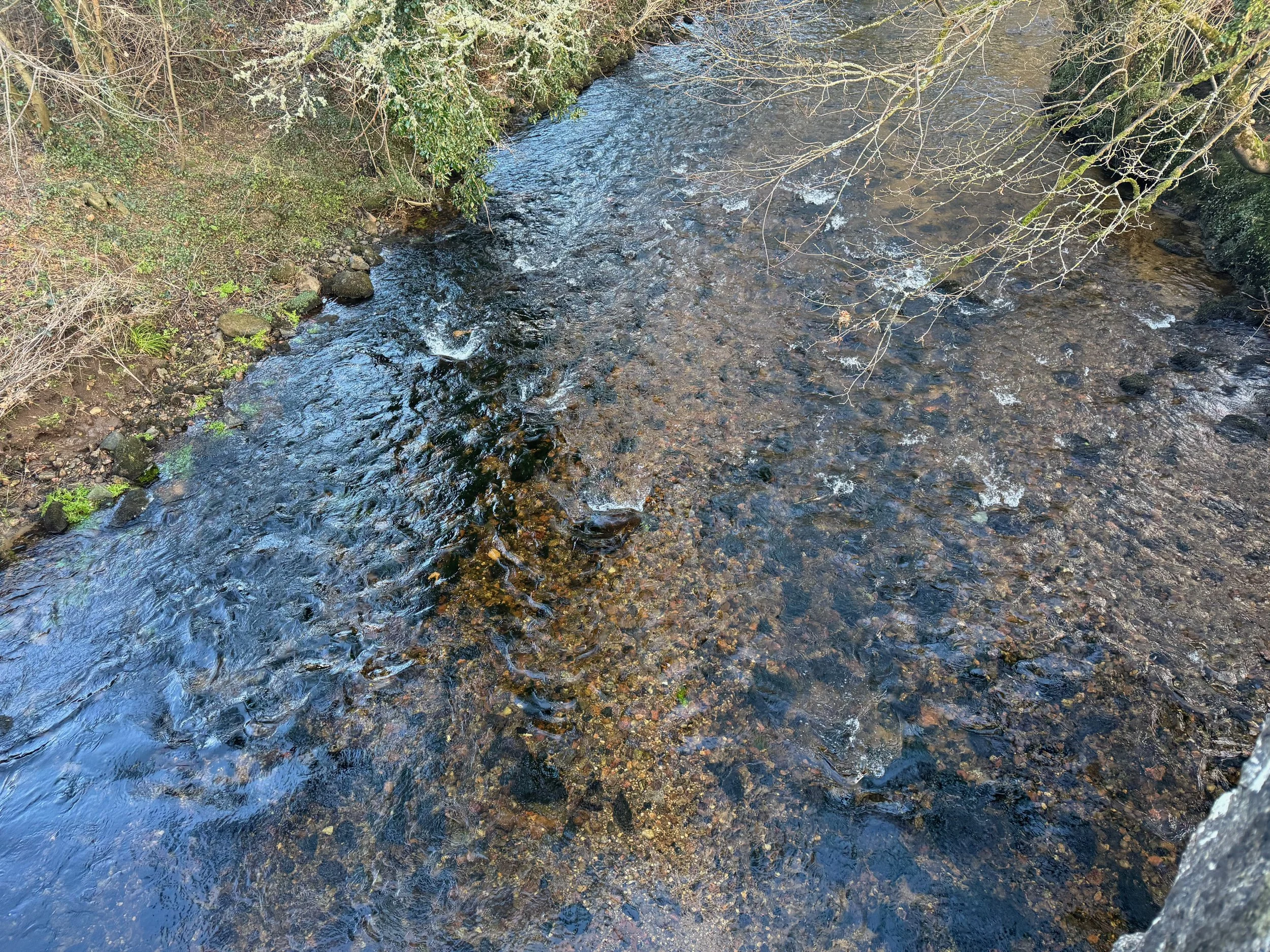
Good flow keeps gravels clean and free of silt build up…
Why Silt Matters so Much
Silt is one of the most underestimated pressures on a river system.
Unlike other pollution events, it’s rarely dramatic. There’s no sudden colour change or fish gasping at the surface. Instead, it works quietly, often unnoticed, slowly filling the spaces that life depends on.
In our catchment, the sources are many: soil washed in from neighbouring fields, eroding banks, forestry tracks, road runoff, and drainage channels carrying fine material directly into streams.
Left unchecked, particularly during times of low flow, that sediment settles into the gravels, sealing them like concrete when baked in the sun.
The river can still look healthy from the bank, but beneath the surface, the spaces where life thrives have been lost.
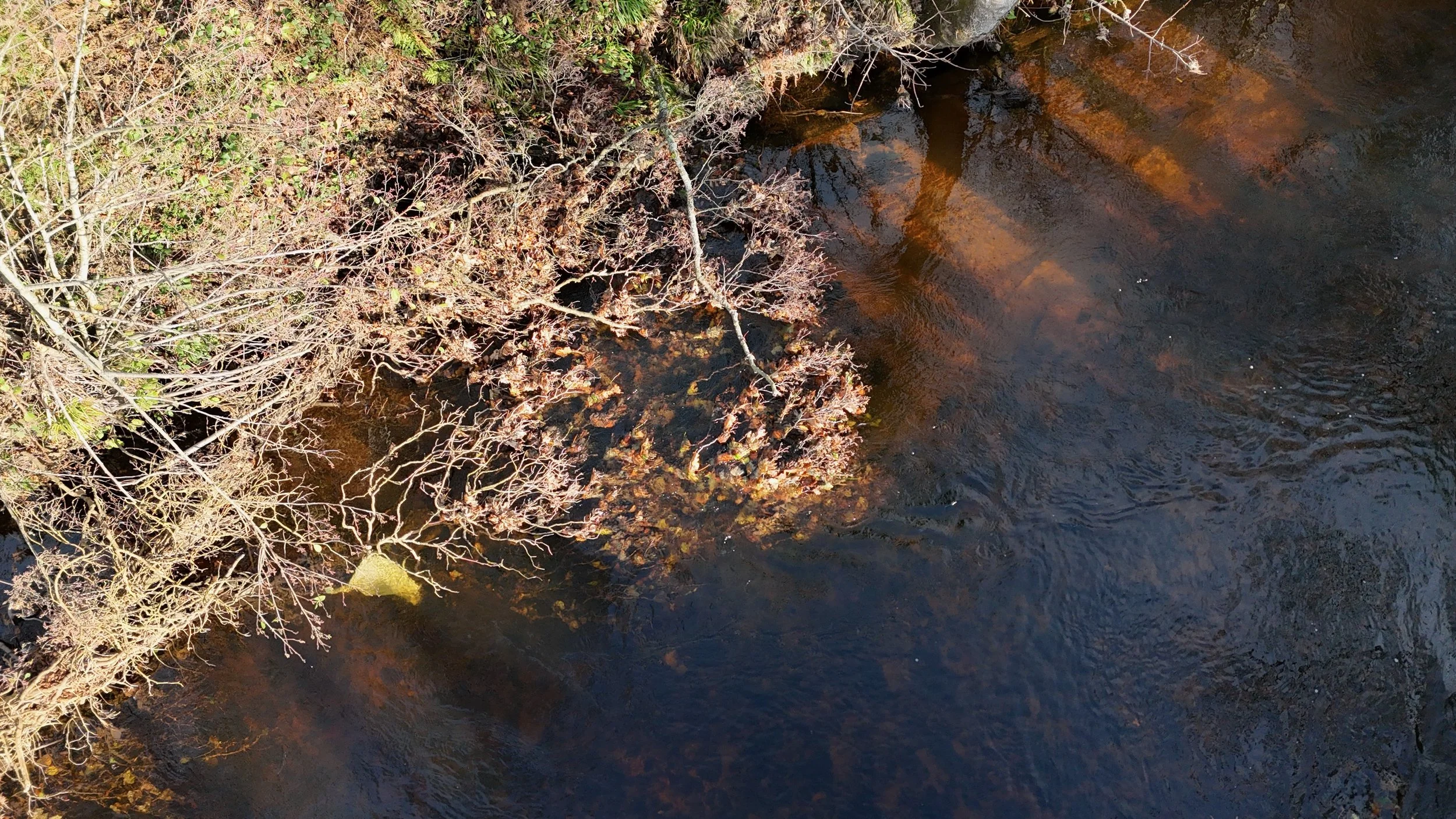
Using hinged trees into the river helps build up sediment in the quieter flow behind. Thanks again to Keir Collings and his extra long selfie stick for this pic…
A Different Way of Seeing Rivers
Once you start to understand the riverbed, it changes how you look at water entirely.
A shallow riffle becomes more than just water flowing over rocks; it’s a conveyor belt of oxygen pushing through spawning gravels, keeping them clean and breaking up suspended solids like silt. A patch of bright, freshly turned stones might just be the work of spawning fish cutting a redd. And a slow glide filled with fine sediment may be quietly losing its ability to support life. Perhaps a place where introducing some large woody material could help nudge things back in the right direction.
You begin to realise that the most important processes in a river are often happening where we just can’t see them. And if you really want to connect with that hidden world, there’s a simple way to do it.
Activities like Riverfly monitoring allow you to get hands-on with the invertebrates living beneath the surface - the small creatures that form the foundation of the river’s food chain. Spend a bit of time kick sampling, and suddenly that “invisible” part of the river becomes very real indeed.

Kick Sampling, or just dropped your house keys!?…
Restoration Starts Sub-surface
This is why so much of river restoration work focuses on structure and sediment.
Out on the smaller tributaries and brooks, simple leaky dam structures can make a real difference. Built from woody material already on site, they gently slow the water, taking the edge off flows and encouraging suspended sediment to settle out before it ever reaches the main river. They’re small interventions, but in the upper reaches of a catchment, they help hold water back, trap fine material, and begin restoring the natural rhythm of these streams.
Further down on the main river, the approach is slightly different. Here we tend to work with whole trees and larger woody material, carefully positioning them to introduce structure into the channel. These features help vary flow, sort gravels naturally, and create pockets of slower water and refuge that fish and invertebrates rely on.
Alongside this, reconnecting floodplains allows rivers somewhere to spread during higher flows, dropping their heavier loads safely, while stabilising vulnerable banks reduces the amount of soil entering the system in the first place.
None of these interventions look particularly dramatic when you stand back from them.
But over time, they help the river quietly rebuild that hidden, bustling world beneath the surface - cleaner gravels, oxygen-rich water moving through the bed again, and the space life needs to begin and sustain.
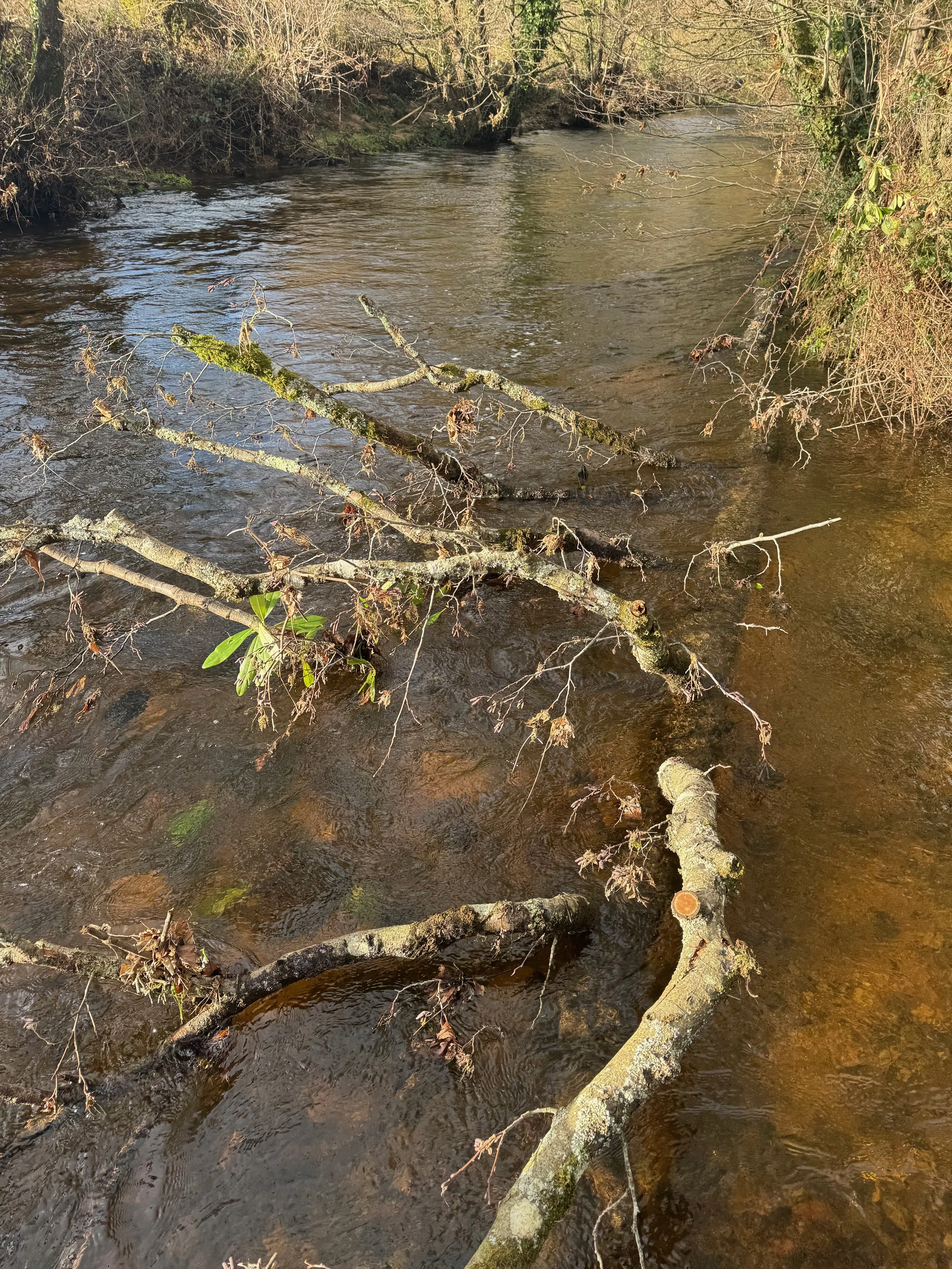
Trapping silt, protecting eroded banks and offering habitat for juveniles - what’s not to like…
Reading the Unseen
I probably spend more time standing beside rivers than most would consider normal. But I always find it amazing - rising fish, shifting currents, hatches of insects, the flash of a kingfisher, the bobbing of a dipper. And I’d wholeheartedly recommend you all make a bit of time to do the same… It’s good for the soul!
But the longer you spend around rivers, the more you realise that their real magic lies beneath the surface… in what I think of as the hidden half. The quiet space where water moves through gravel. Where eggs sit unseen through the winter months. Where oxygen moves, life begins, and the next generation of the river quietly takes shape. It’s not dramatic. It doesn’t shout. But blimey, does it count!
Next time you visit a river, try something simple. If you can, gently turn over a flat stone in the flow and take a moment to see what’s living beneath it. You’ll likely find a whole community of small creatures quietly going about their lives.
That’s the hidden half. And once you’ve seen it, you don’t just look at a river differently, you begin to understand it.